CERVICAL VERTEBRAE ANATOMY
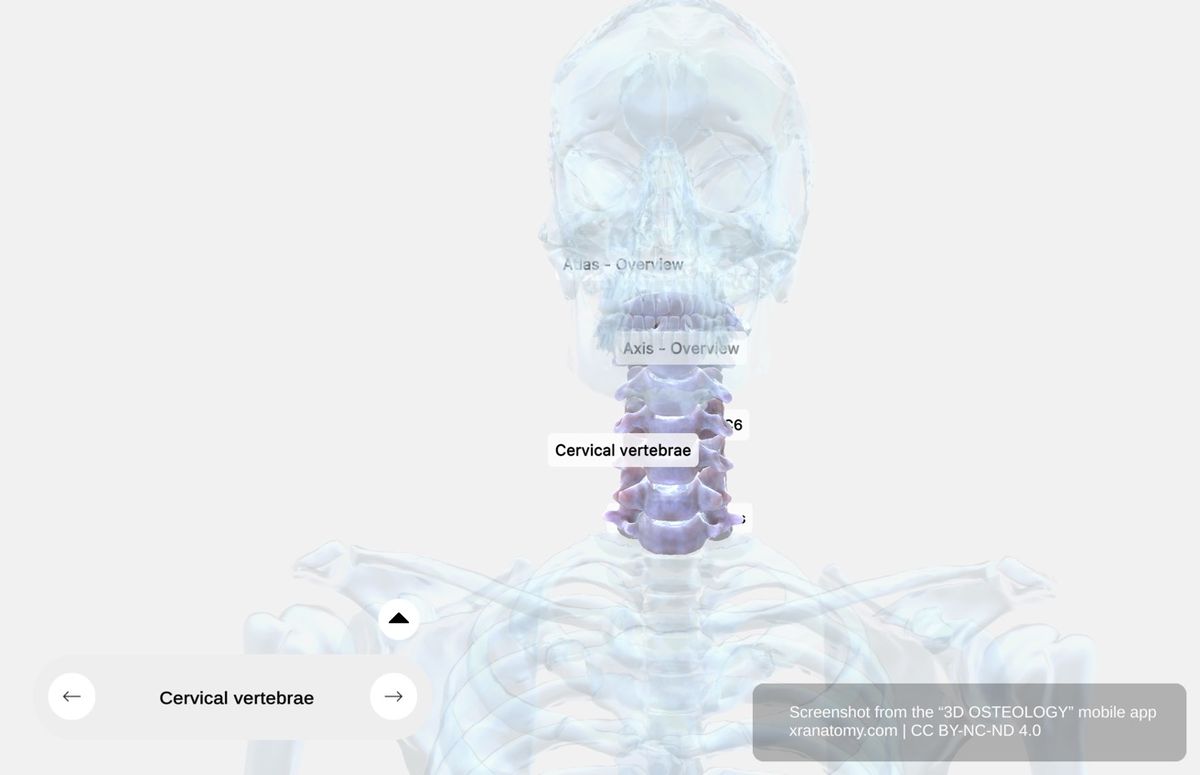
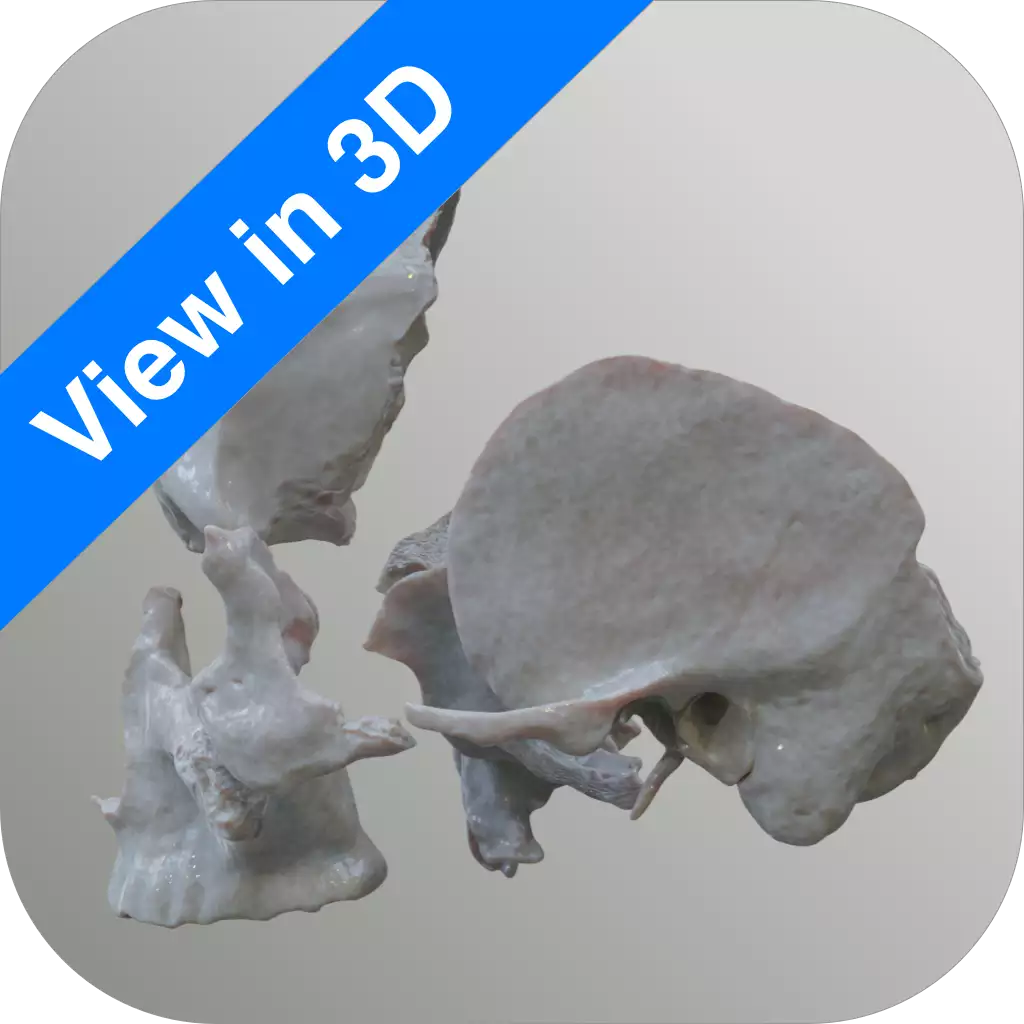
Cervical Vertebrae - Overview, Preview from the app. Download 3D OSTEOLOGY for full 3D control—multiple views, x-ray mode, and unlimited zoom.
WHY THIS MATTERS
Your cervical vertebrae are the smallest true vertebrae, yet they form the flexible framework of your neck. Each one contains a foramen transversarium that transmits your vertebral artery, vein, and sympathetic nerves. Understanding the shared features of C3 to C6 gives you the foundation for recognizing how your cervical spine balances mobility with protection.
CERVICAL OVERVIEW
Your cervical spine consists of seven vertebrae. C1 (atlas), C2 (axis), and C7 (vertebra prominens) are clearly recognizable with unique structures. C3 to C6 share similar structural characteristics.
GENERAL FEATURES
Cervical vertebrae are the smallest true vertebrae. You can identify them by a foramen in each transverse process, called the foramen transversarium. The features described below characterize C3 to C6; C1, C2, and C7 have unique structures.
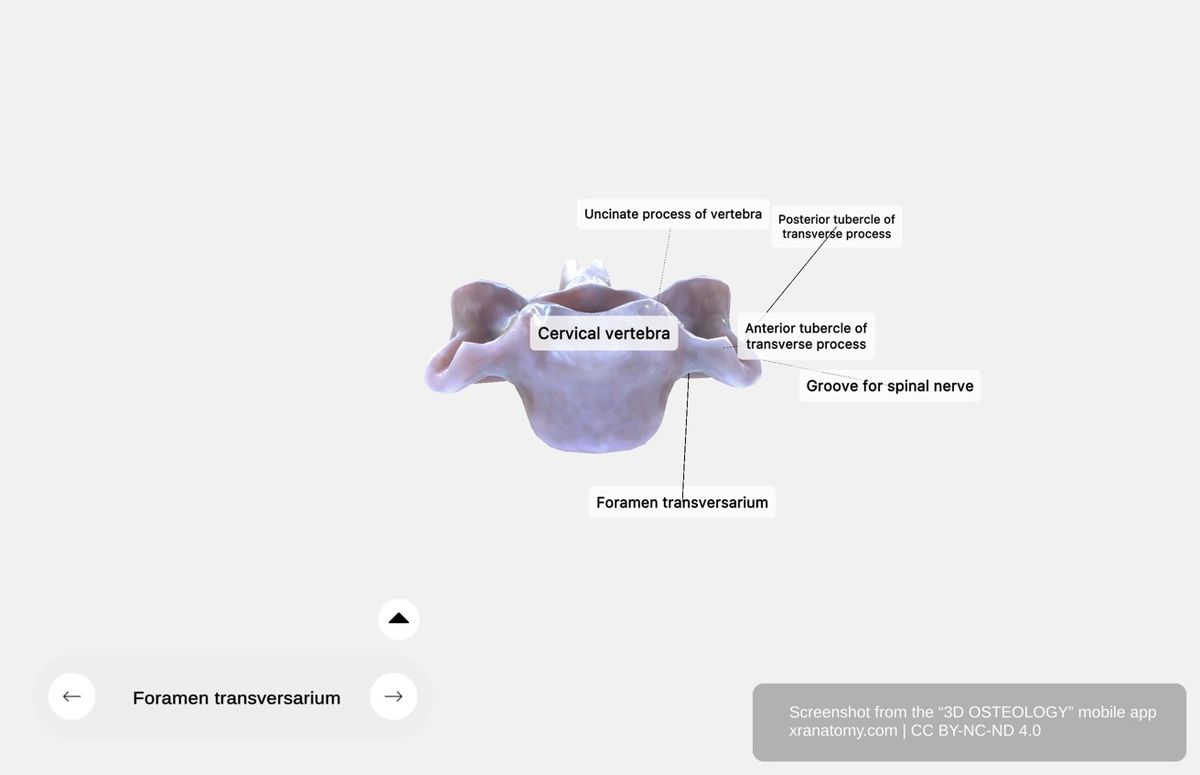
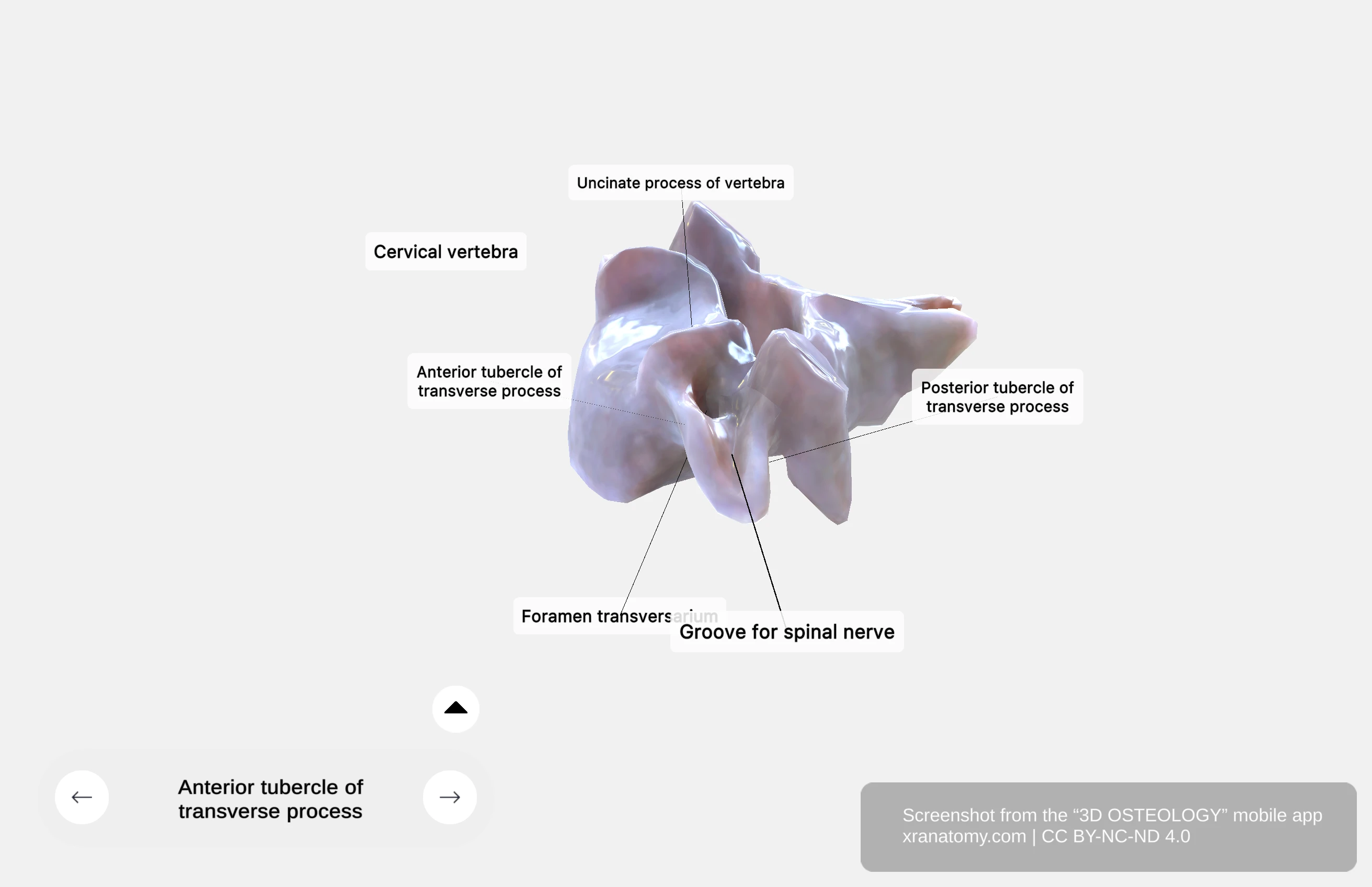
Cervical Vertebra - Detailed Structure, Preview from the app. Download 3D OSTEOLOGY for full 3D control—multiple views, x-ray mode, and unlimited zoom.
BODY
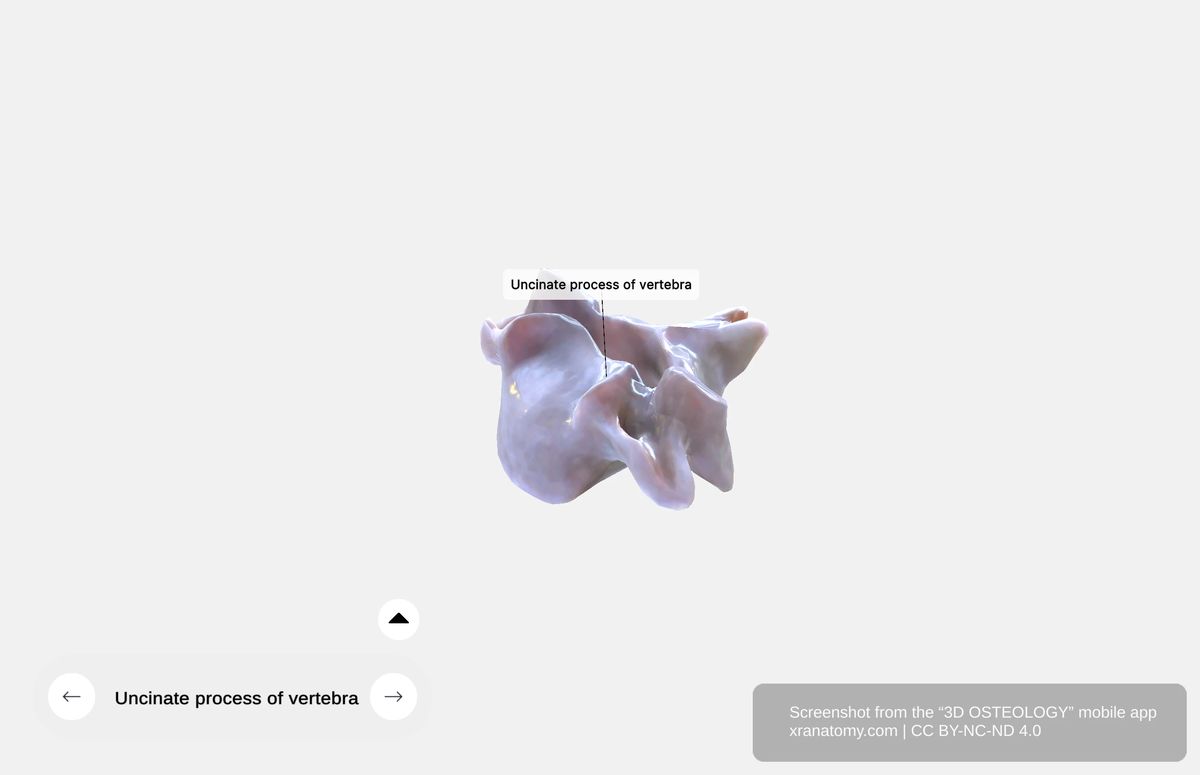
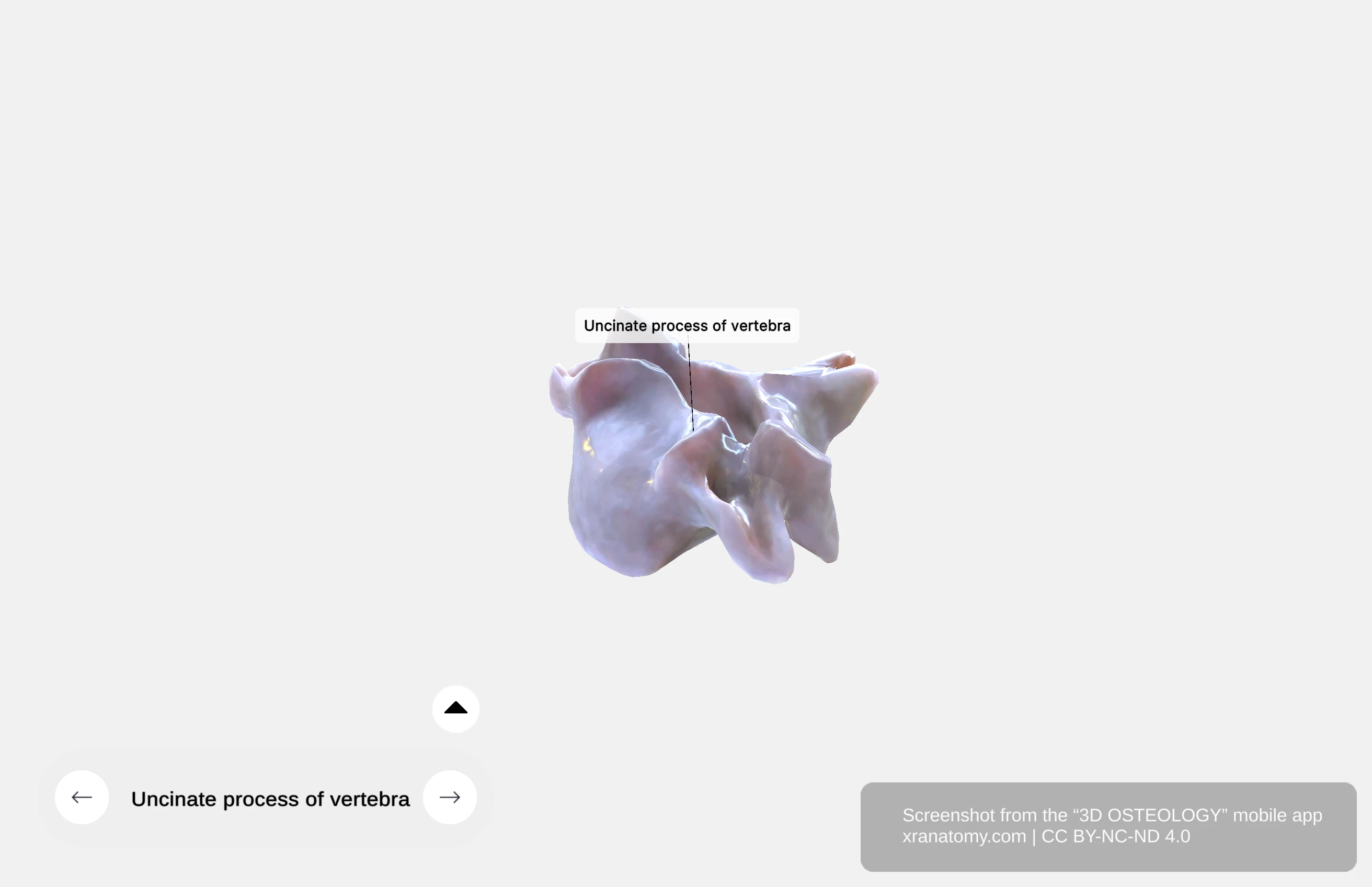
The vertebral body is small and wider from side to side than front to back. The upper surface is concave and has raised edges called uncinate processes, which project upward from the body. The lower surface fits the vertebra below using shallow lateral depressions.
PEDICLES AND LAMINAE
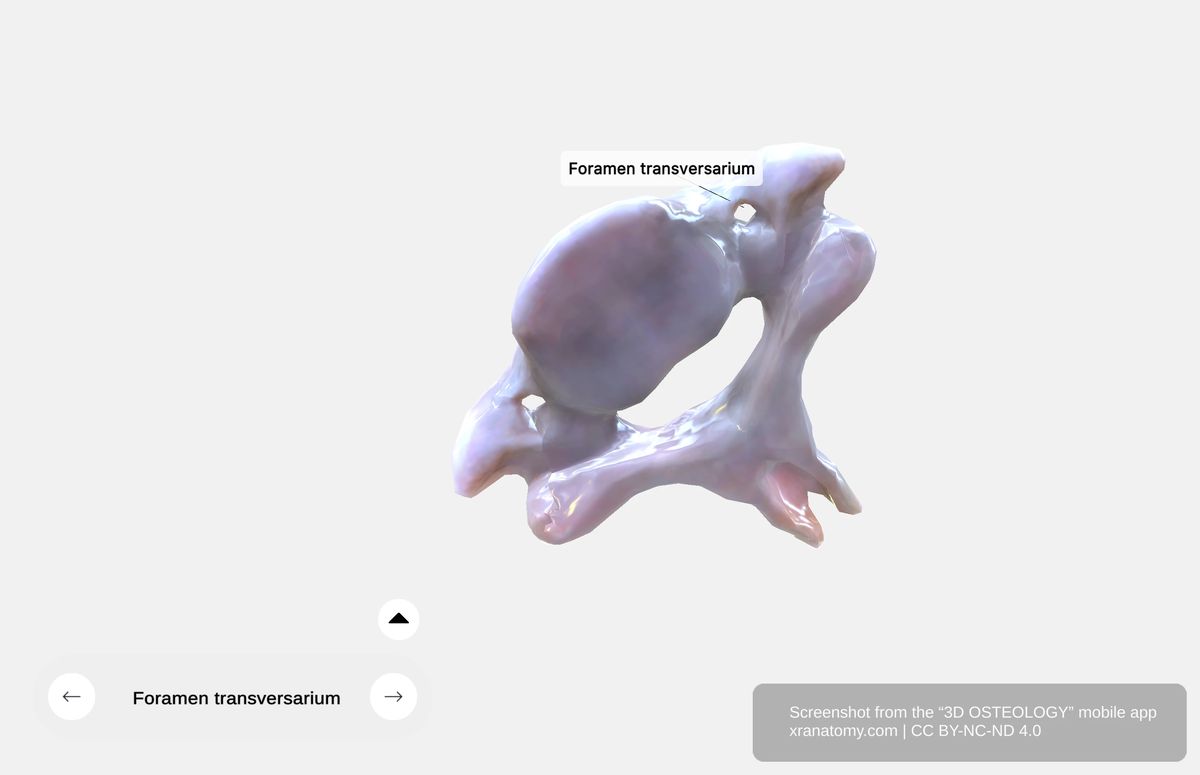
The pedicles extend backward and slightly outward from the body, forming your superior and inferior vertebral notches. The laminae are narrow and create a large triangular vertebral foramen.
SPINOUS PROCESS
The spinous process is short and commonly bifid.
ARTICULAR PROCESSES
The superior and inferior articular processes form a vertical column on each side called the articular pillar. The superior facets face upward and backward, while the inferior facets face downward and forward.
TRANSVERSE PROCESSES
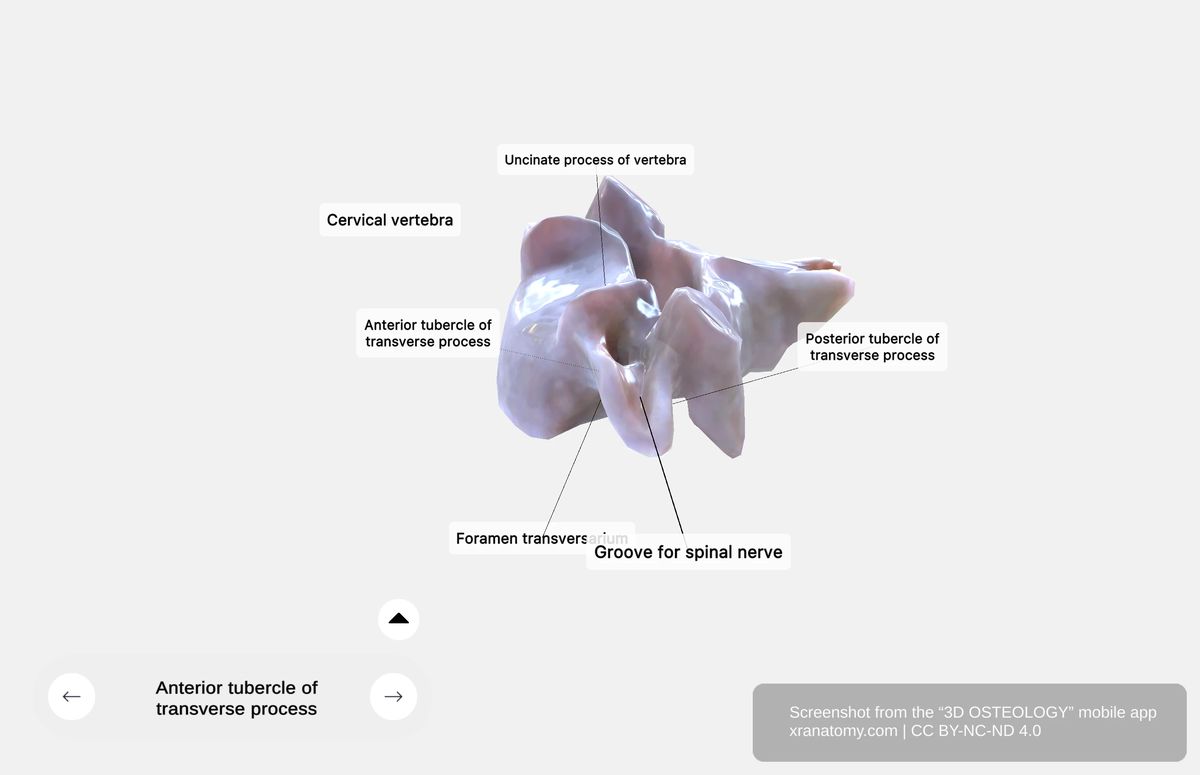
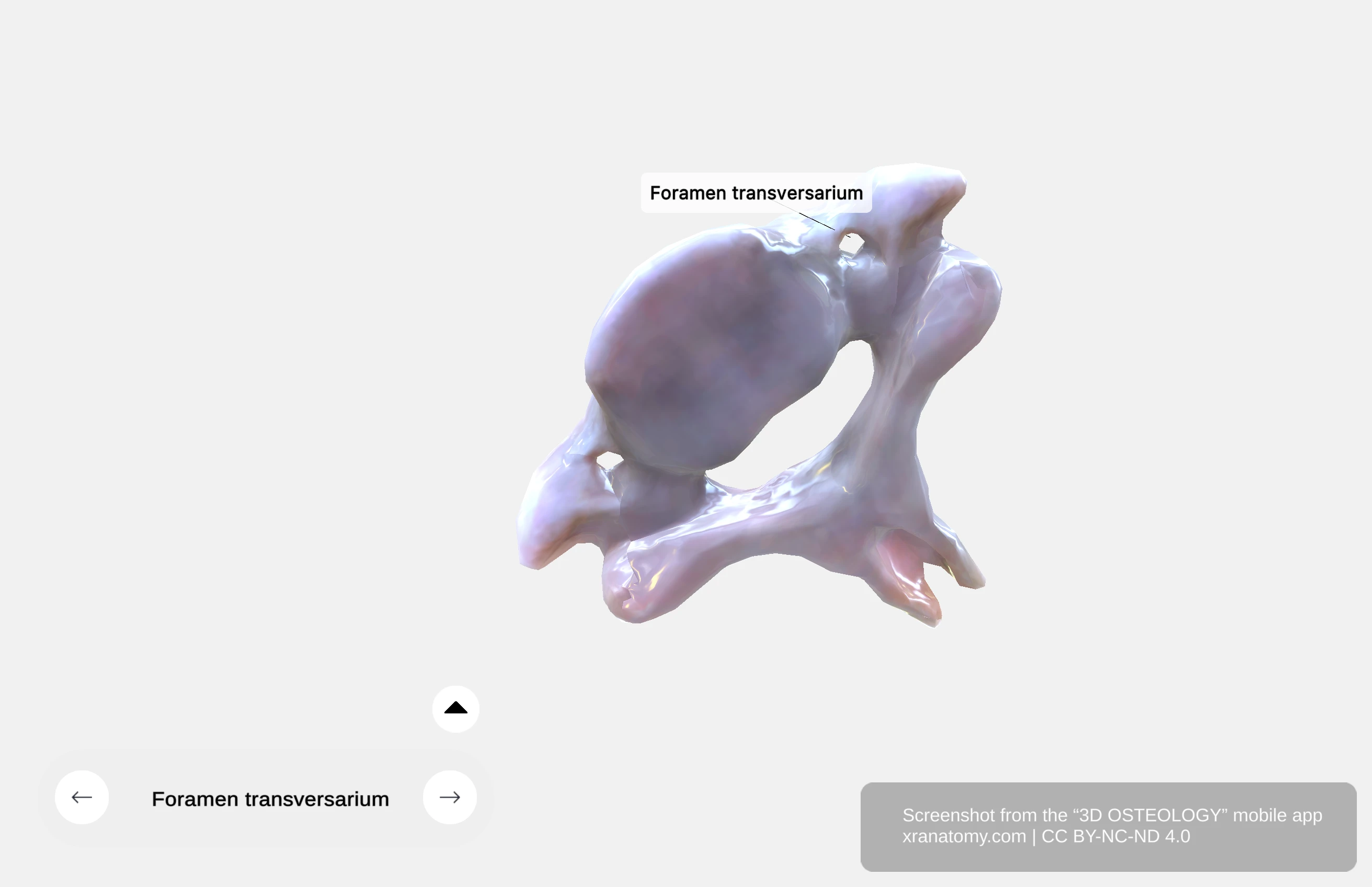
Each transverse process contains a foramen transversarium. In C1 to C6, it carries your vertebral artery, vein, and sympathetic nerves.
Each transverse process has two parts. The anterior part forms the anterior tubercle, located in front of the foramen. The posterior part forms the posterior tubercle, located behind the foramen. A groove for the spinal nerve lies on the upper surface between the anterior and posterior tubercles.
CHECK YOUR UNDERSTANDING
1. What single feature identifies a vertebra as cervical?
Reveal Answer
A foramen in each transverse process (foramen transversarium).
2. Name the raised edges on the upper surface of the cervical vertebral body.
Reveal Answer
Uncinate processes, which project upward from the body.
3. What structures pass through the foramen transversarium in C1 to C6?
Reveal Answer
The vertebral artery, vein, and sympathetic nerves.
WHAT'S NEXT
Next, explore the Thoracic Vertebrae. You will study the twelve vertebrae that articulate with your ribs through specialized costal facets, forming the bony framework that protects your heart and lungs.
Review this page again in 3 days to reinforce what you have learned.
BIBLIOGRAPHY
1. Henry G, Warren HL. Osteology. In: Anatomy of the Human Body. 20th ed. Philadelphia: Lea & Febiger; 1918. p. 129–97.