ROOT OF PULMONARY TRUNK
In-Depth AR Atlas Available
Read the comprehensive anatomy description with AR illustrations and videos
Read AR Atlas →
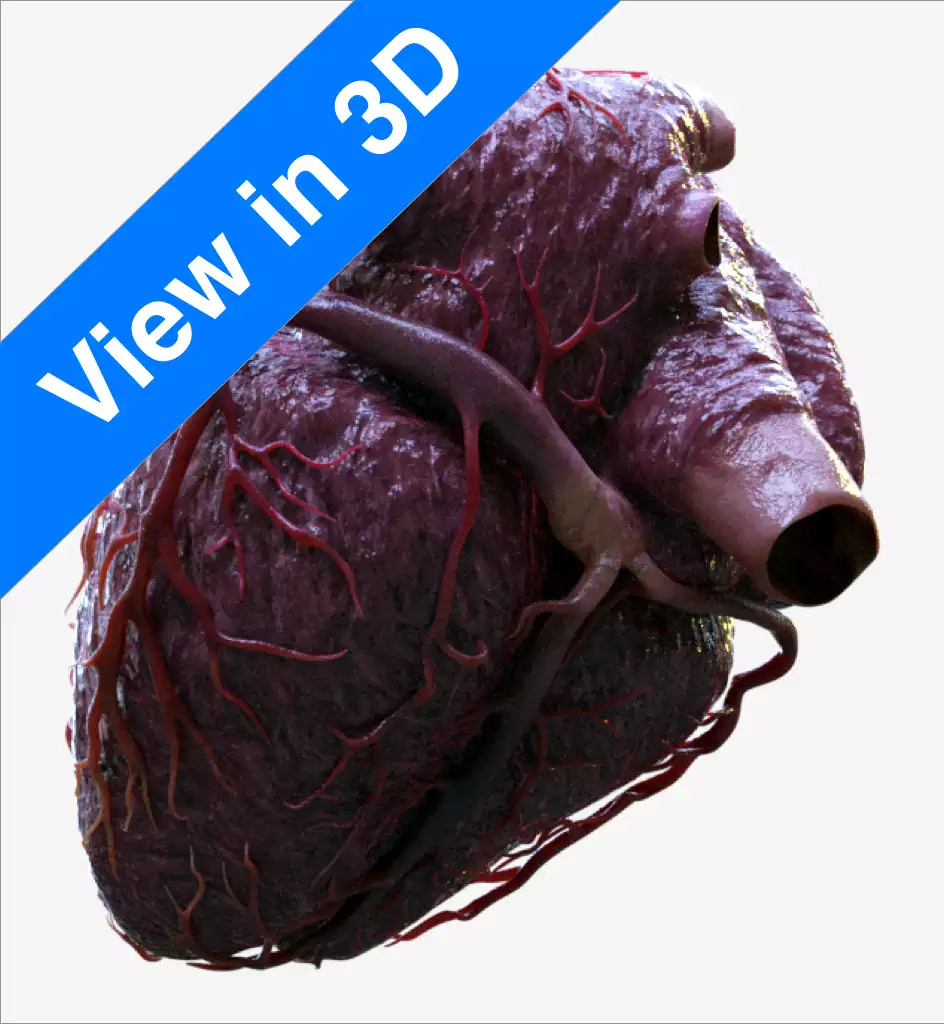
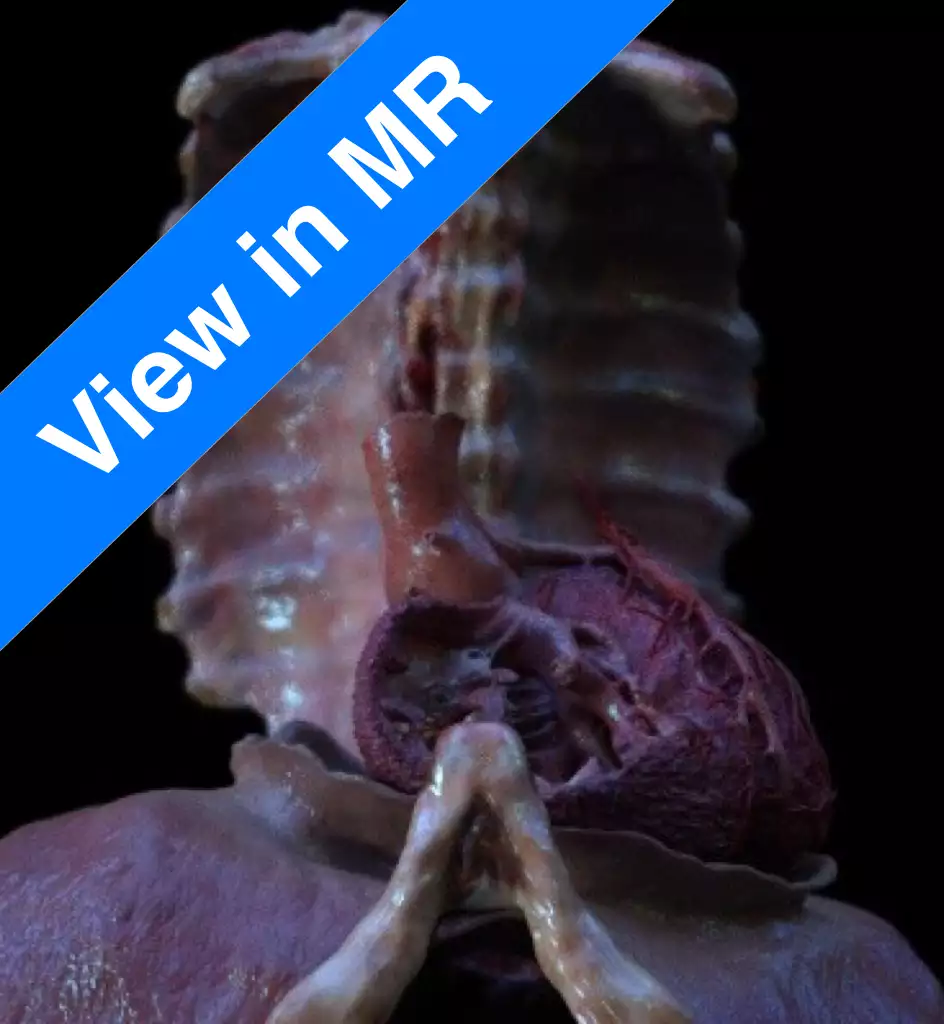
Root of Pulmonary Trunk - Overview, Preview from the app.
WHY THIS MATTERS
The root of the pulmonary trunk is where deoxygenated blood leaves your right ventricle and heads toward your lungs. It supports your pulmonary valve, which ensures blood flows in one direction. Understanding this structure helps you see how your heart keeps blood moving through pulmonary circulation.
ROOT OF PULMONARY TRUNK
The root of the pulmonary trunk is the initial segment of the pulmonary artery arising from your right ventricle. It supports your pulmonary valve and directs deoxygenated blood from your right ventricle to your lungs. Its components include the pulmonary valve leaflets and the proximal portion of the pulmonary trunk. Together, these structures ensure smooth blood flow and proper valve function.
PULMONARY VALVE
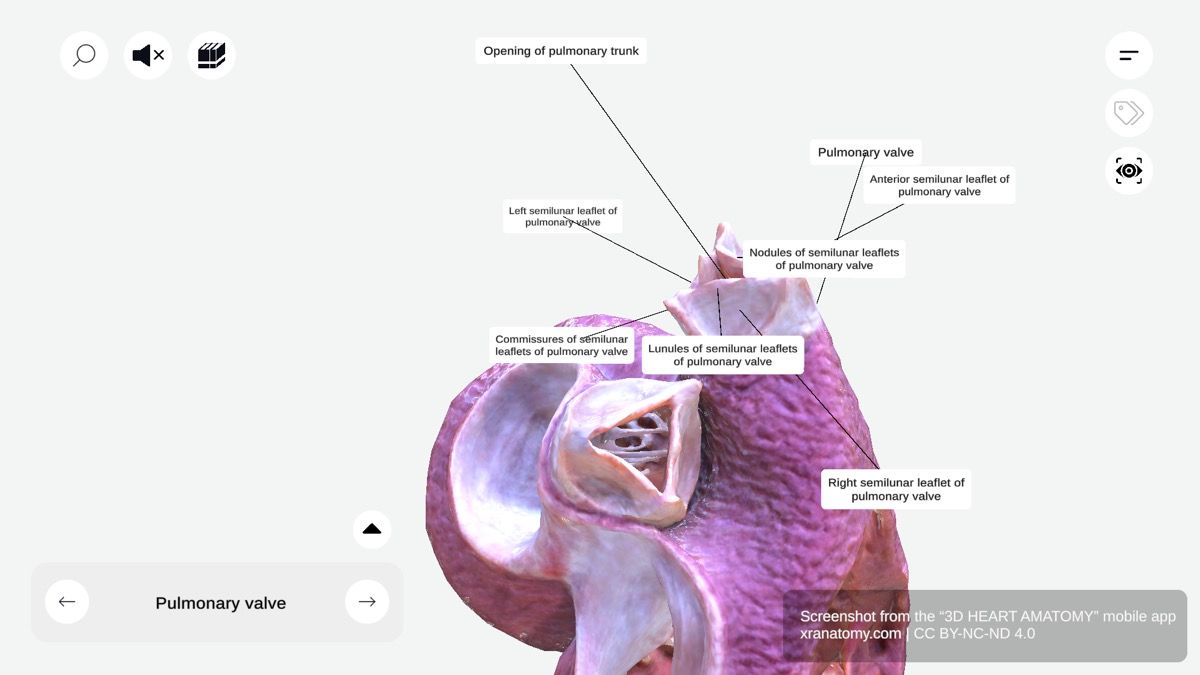
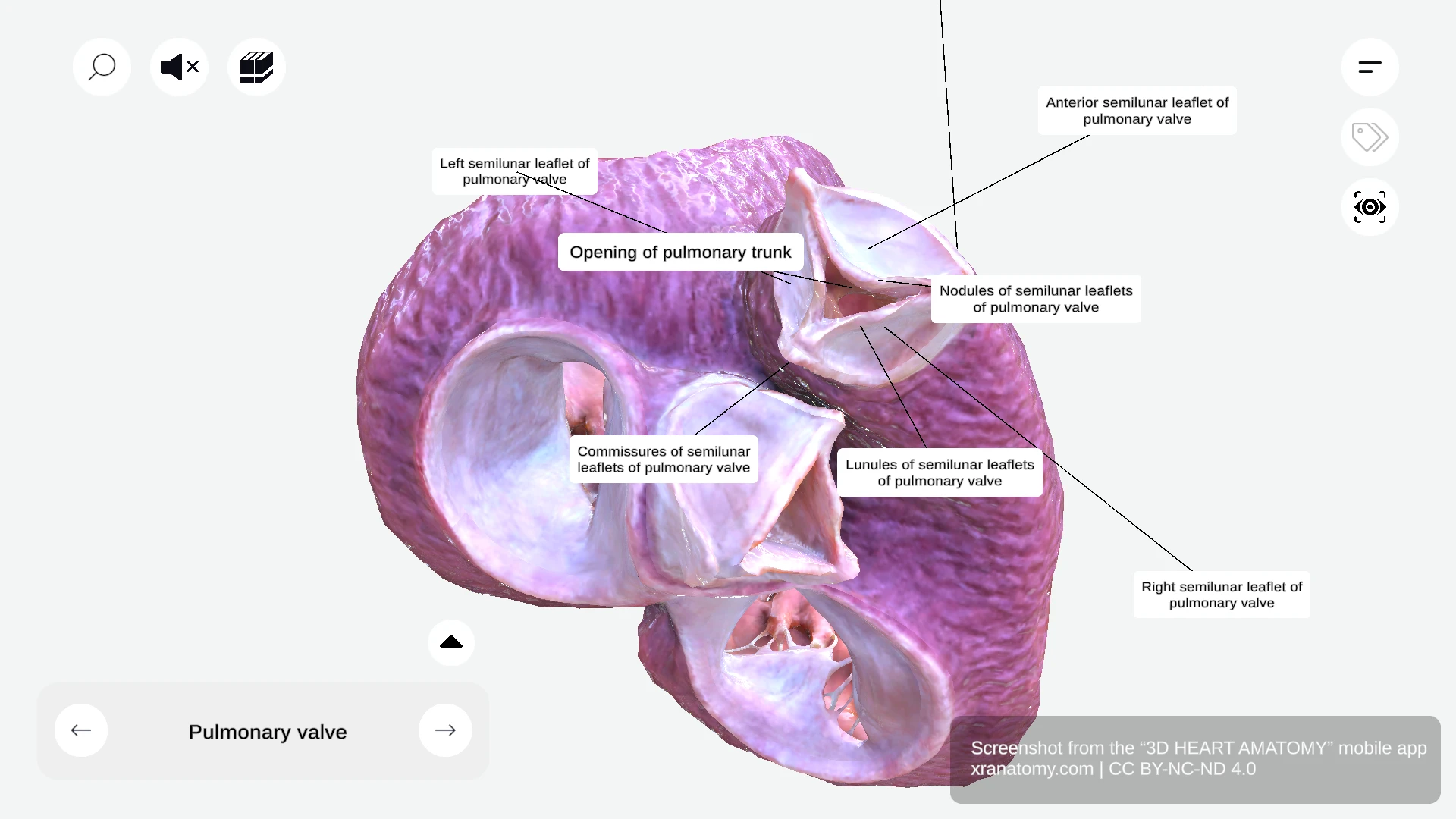
The pulmonary valve is a semilunar valve located between your right ventricle and pulmonary artery. It regulates blood flow from your heart to your lungs. The valve is composed of three semilunar leaflets: the right, left, and anterior semilunar leaflets.
The pulmonary valve opens during ventricular systole, allowing deoxygenated blood into your pulmonary artery. It closes during diastole to prevent backflow into your right ventricle.
OPENING OF PULMONARY TRUNK
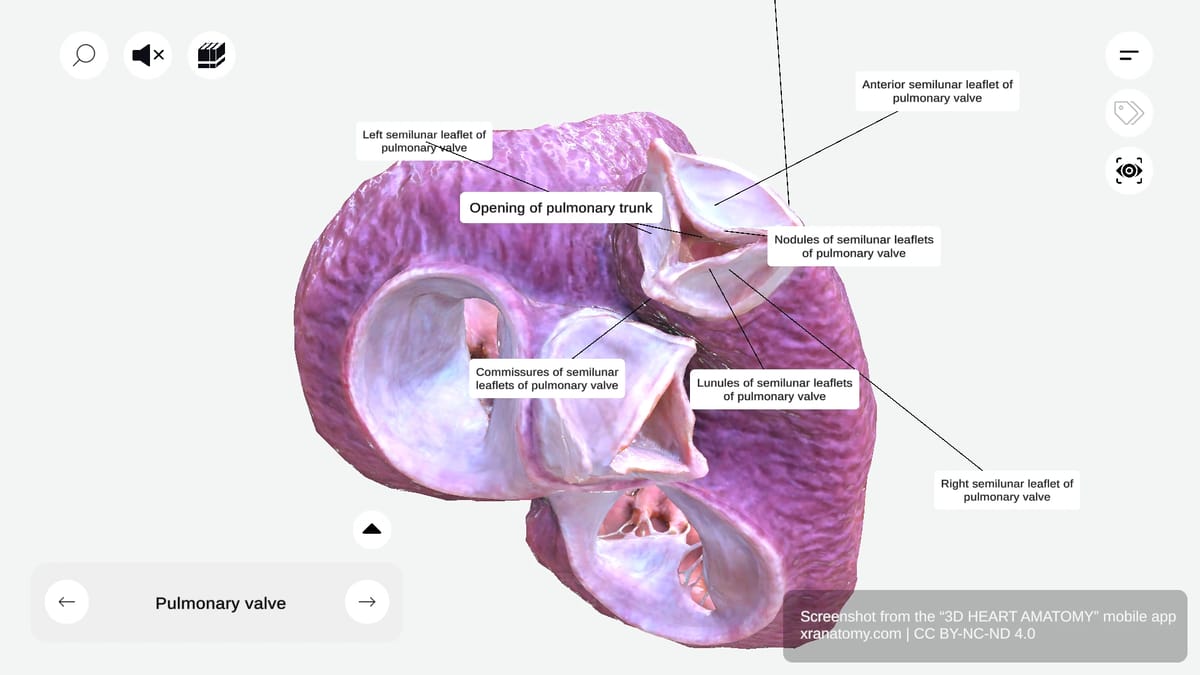
The opening of the pulmonary trunk is the passage for blood ejection from your right ventricle. Blood enters your pulmonary artery during ventricular contraction. This opening is guarded by your pulmonary valve, which ensures unidirectional blood flow.
PULMONARY VALVE LEAFLETS
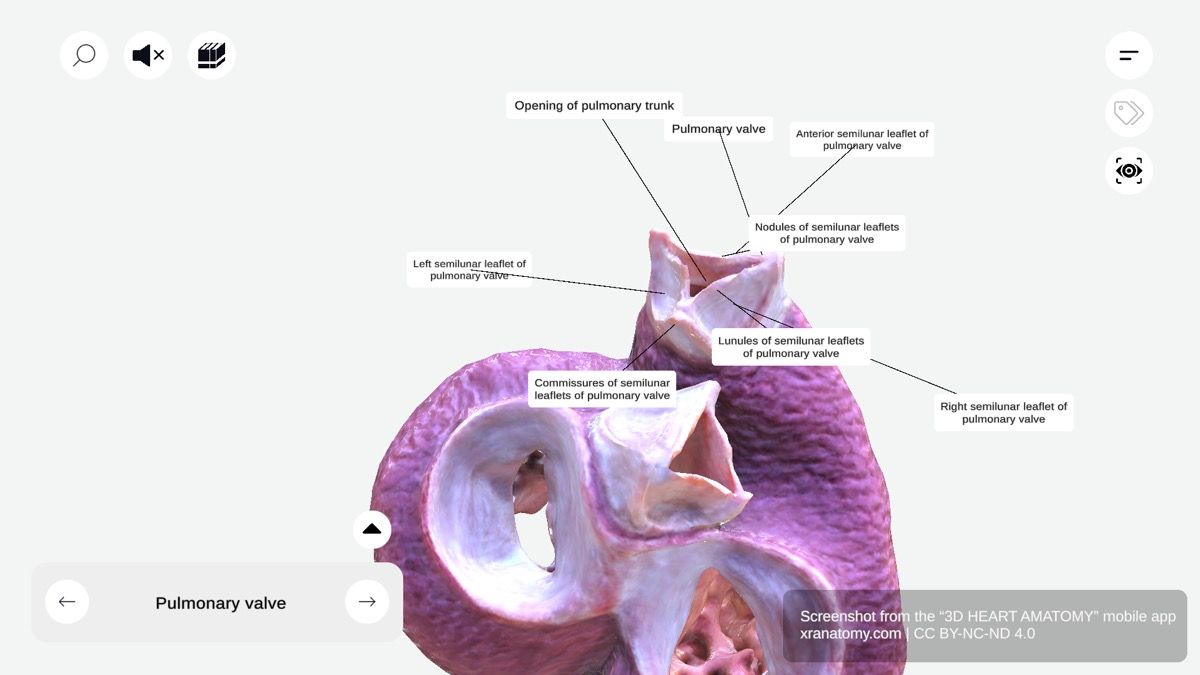
Pulmonary Valve Leaflets, Preview from the app.
The pulmonary valve consists of three leaflets: the right semilunar leaflet, the left semilunar leaflet, and the anterior semilunar leaflet. Each leaflet is named for its anatomical position, and all three function together for proper valve operation.
Right Semilunar Leaflet
The right semilunar leaflet is named for its anatomical position. It sits on the right side relative to the other leaflets.
Left Semilunar Leaflet
The left semilunar leaflet is named for its position on the left side. It is located opposite the left side of the aorta.
Anterior Semilunar Leaflet
The anterior semilunar leaflet is located at the front of the valve and faces anteriorly.
SINUSES OF PULMONARY TRUNK
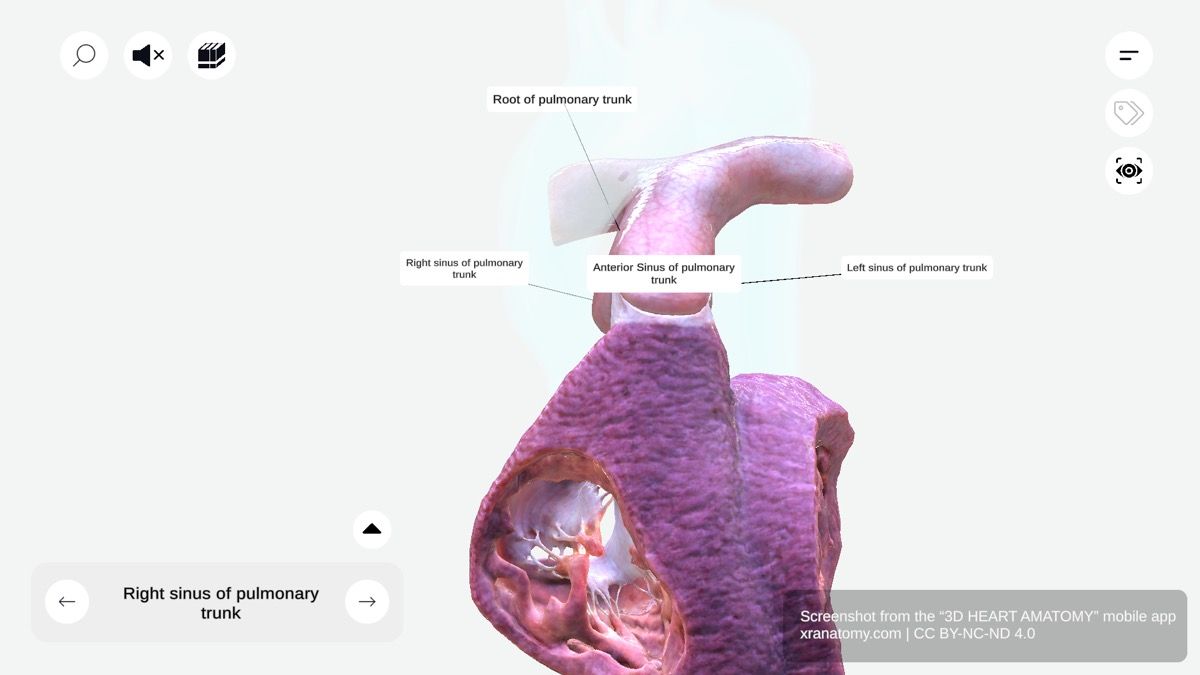
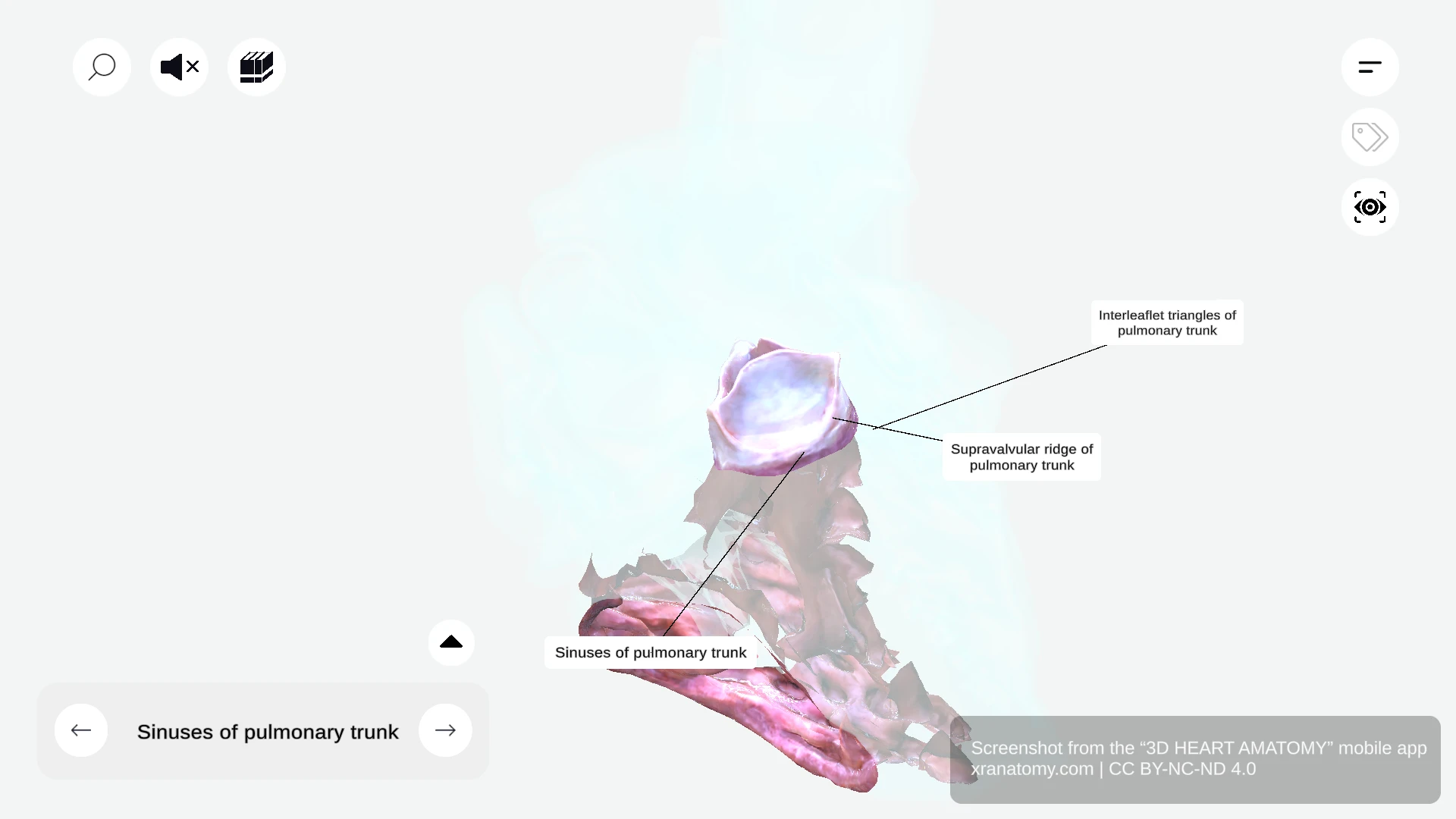
Sinuses of Pulmonary Trunk, Preview from the app.
The sinuses of the pulmonary trunk are three small dilations at the base of the pulmonary trunk, located just behind each semilunar leaflet. They are important for valve function and are named according to anatomical position: the right sinus, left sinus, and anterior sinus. These sinuses facilitate valve opening and closing during your cardiac cycle.
Right Sinus
The right sinus is positioned relative to the aorta on the right.
Left Sinus
The left sinus is located opposite the left side of the aorta.
Anterior Sinus
The anterior sinus is situated at the front, facing your sternum.
INTERLEAFLET TRIANGLES OF PULMONARY TRUNK
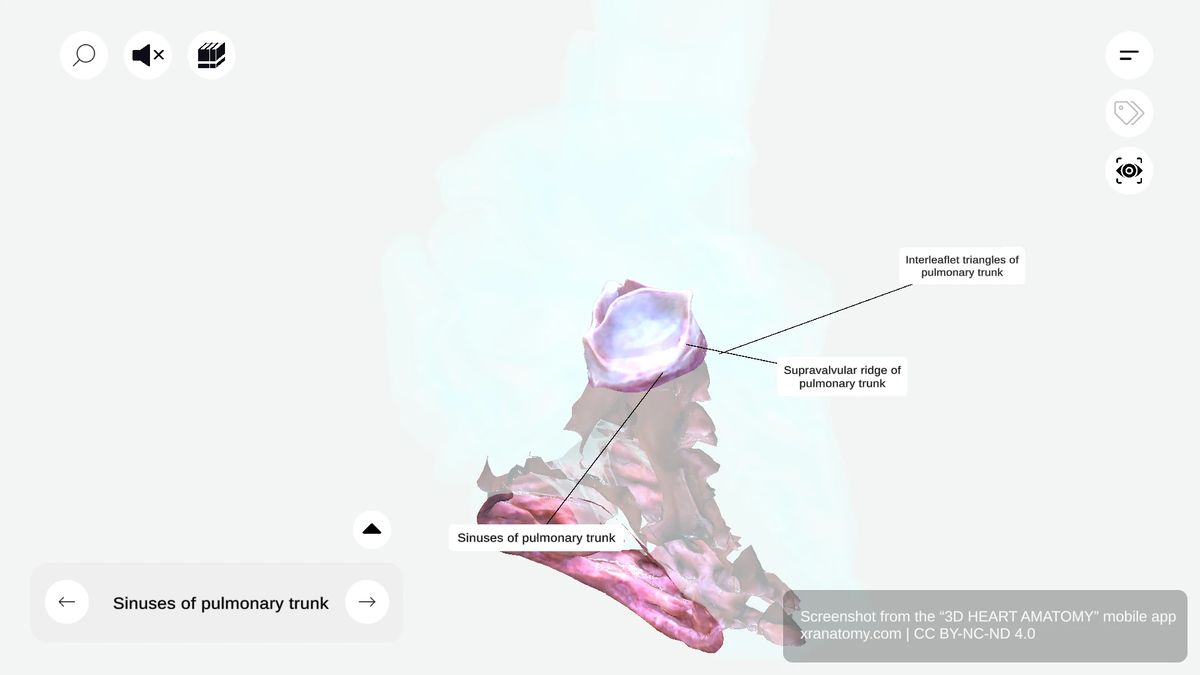
The interleaflet triangles are triangular areas of arterial wall located between the pulmonary valve leaflet attachments. They contribute to leaflet flexibility and allow effective valve movement during your cardiac cycle. These triangles enable proper opening and closing of the valve.
SUPRAVALVULAR RIDGE OF PULMONARY TRUNK
The supravalvular ridge is a circular region at the level of the commissures. Commissures are the points where your leaflets meet. This ridge is located at the junction of the semilunar leaflets.
CHECK YOUR UNDERSTANDING
1. Name the three semilunar leaflets of the pulmonary valve.
Reveal Answer
The right semilunar leaflet, the left semilunar leaflet, and the anterior semilunar leaflet.
2. What are the sinuses of the pulmonary trunk, and where are they located?
Reveal Answer
They are three small dilations at the base of the pulmonary trunk, located just behind each semilunar leaflet. They are named the right sinus, left sinus, and anterior sinus.
3. What role do the interleaflet triangles play in valve function?
Reveal Answer
The interleaflet triangles are triangular areas of arterial wall between the valve leaflet attachments. They contribute to leaflet flexibility and allow effective valve movement during the cardiac cycle.
WHAT'S NEXT
Now that you understand the root of the pulmonary trunk and its valve components, the next page covers the Right Ventricle. You will explore the cardiac chamber that pumps deoxygenated blood into the pulmonary trunk, including its inlet, outlet, trabecular part, septomarginal trabecula, and papillary muscles.
Review this page again in 3 days to reinforce what you have learned.
BIBLIOGRAPHY
1. Gray H, Lewis W. Angiology. In: Anatomy of the Human Body. 1918. p. 526–542.
2. Gosling JA, Harris PF, Humpherson JR, Whitmore I, Willan PLT. Human anatomy: color atlas and textbook. 6th ed. 2017. 45–58 p.
3. Anderson RH, Spicer DE, Hlavacek AM, Cook AC, Backer CL. (2013). Anatomy of the cardiac chambers. In Wilcox’s Surgical Anatomy of the Heart (4th ed., pp. 13–50). Cambridge University Press.
4. Fritsch H, Kuehnel W. Color Atlas of Human Anatomy. Vol. Volume 2, Color Atlas and Textbook of Human Anatomy. 2005. 10–42 p.
5. Moore K, Dalley A, Agur A. Clinically Oriented Anatomy. Vol. 7ed, Clinically Oriented Anatomy. 2014. 132–151 p.
6. Ho SYen. Anatomy for Cardiac Electrophysiologists: A Practical Handbook. Cardiotext Pub; 2012. 5–27 p.
7. Standring S, editor. Gray's Anatomy: The Anatomical Basis of Clinical Practice. 41st ed. London: Elsevier; 2016.
8. Moore KL, Agur AMR, Dalley AF. Essential Clinical Anatomy. 5th ed. Philadelphia: Wolters Kluwer; 2015.