RIGHT ATRIOVENTRICULAR VALVE
In-Depth AR Atlas Available
Read the comprehensive anatomy description with AR illustrations and videos
Read AR Atlas →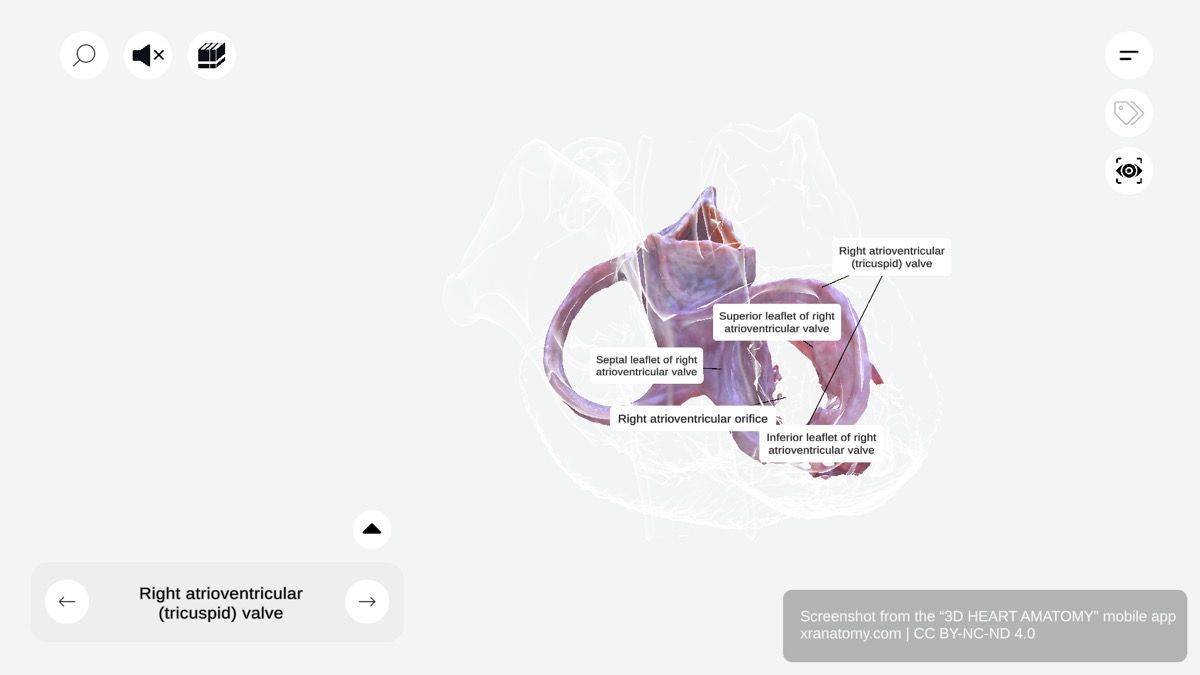
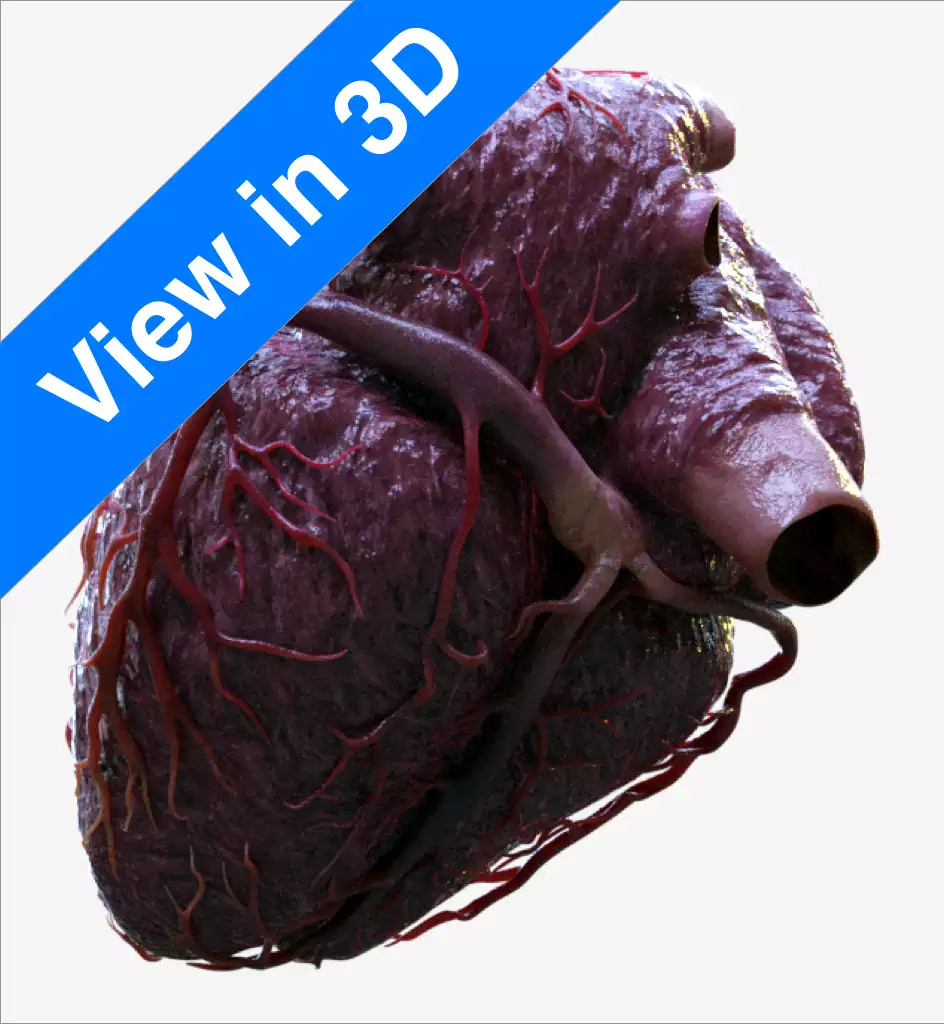
Right Atrioventricular Valve - Overview, Preview from the app.
WHY THIS MATTERS
The right atrioventricular valve (tricuspid valve) controls blood flow between your right atrium and right ventricle. Its three leaflets, supported by a tension apparatus of papillary muscles and chordae tendineae, ensure unidirectional blood flow and prevent backflow during ventricular contraction.
RIGHT ATRIOVENTRICULAR VALVE
The right atrioventricular valve, also known as the tricuspid valve, is one of two atrioventricular valves in your heart. It regulates blood flow between your right atrium and right ventricle, opening and closing during your cardiac cycle. This valve ensures unidirectional blood flow and prevents backflow into your atrium during ventricular contraction.
RIGHT ATRIOVENTRICULAR ORIFICE
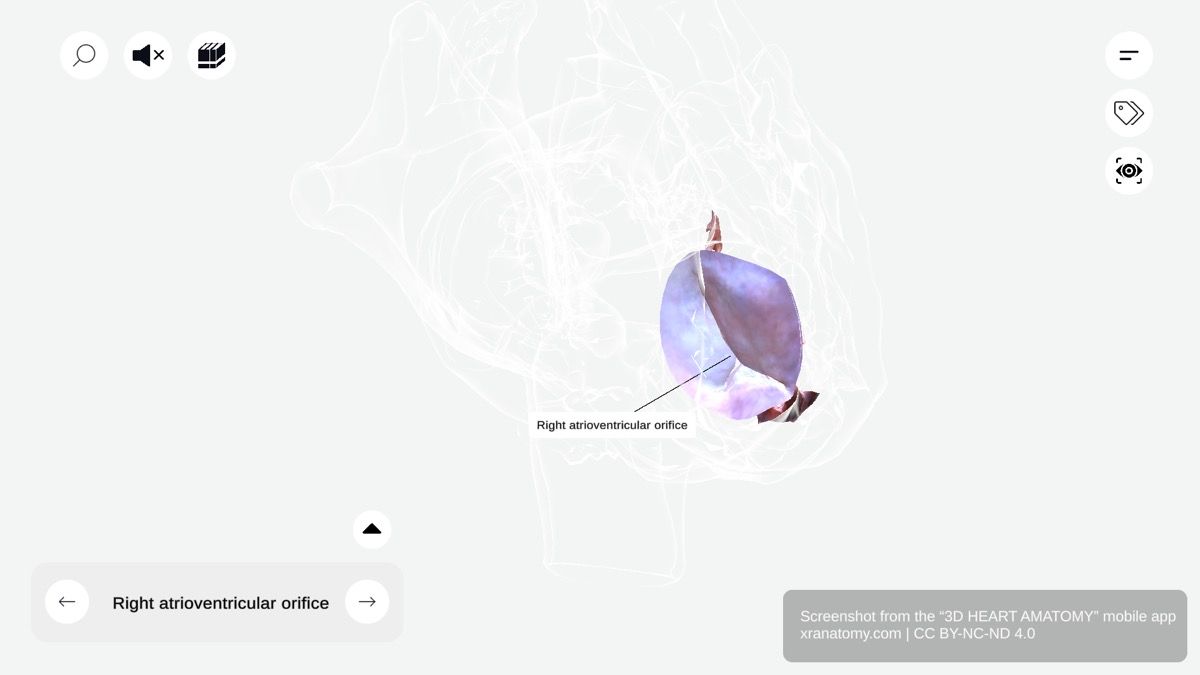
Right Atrioventricular Orifice, Preview from the app.
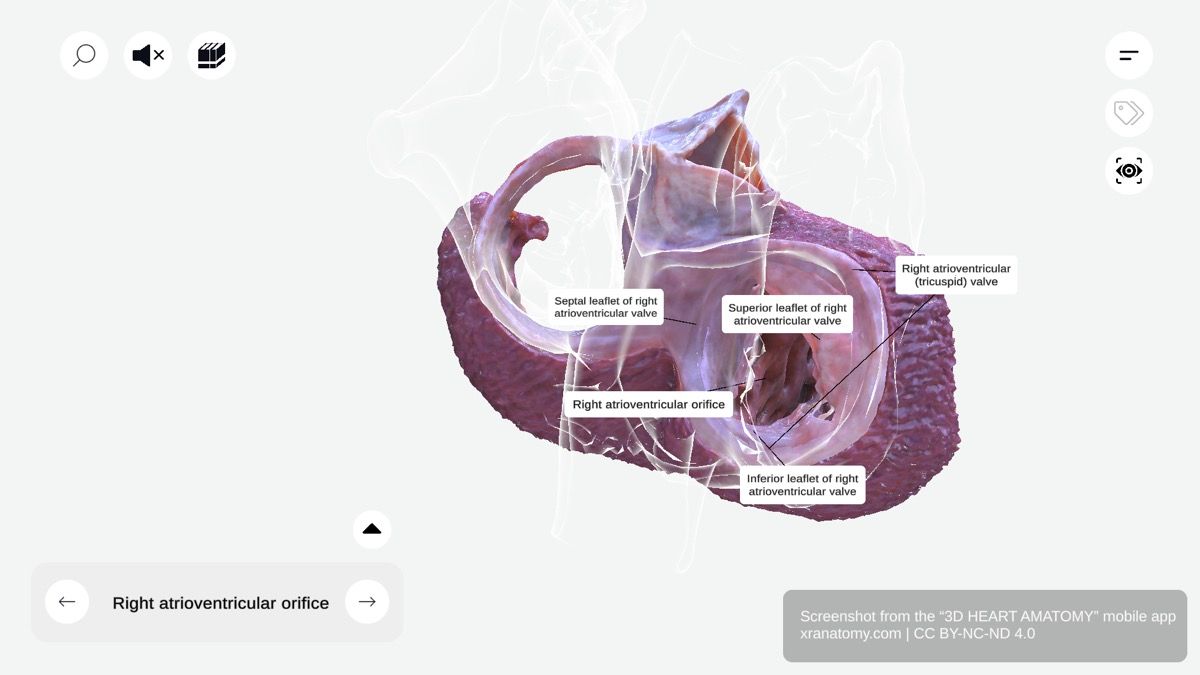
The right atrioventricular orifice is the opening between your right atrium and right ventricle. It is surrounded by the tricuspid valve. This orifice is larger than the left atrioventricular opening and accommodates the venous blood volume returning from your body.
LEAFLETS OF TRICUSPID VALVE
Tricuspid Valve Leaflets, Preview from the app.
The tricuspid valve is characterized by three cusps. These are the superior leaflet (anterior), which is the largest; the inferior leaflet (posterior), which seals the lower portion of the orifice; and the septal leaflet, which sits adjacent to the interventricular septum.
Superior Leaflet (Anterior)
The superior leaflet, also called the anterior leaflet, is the largest of the three leaflets. It sits at the top of the valve structure.
Inferior Leaflet (Posterior)
The inferior leaflet, also called the posterior leaflet, is located at the bottom of the valve. It is vital for sealing the orifice during ventricular contraction.
Septal Leaflet
The septal leaflet is positioned adjacent to the interventricular septum. Numerous tendinous cords attach directly to the ventricular septum. Its annular attachment (hinge point) is displaced approximately 10 mm toward the apex relative to your mitral valve annulus. This annular offset is a key echocardiographic landmark distinguishing the two atrioventricular valves.
TENSION APPARATUS
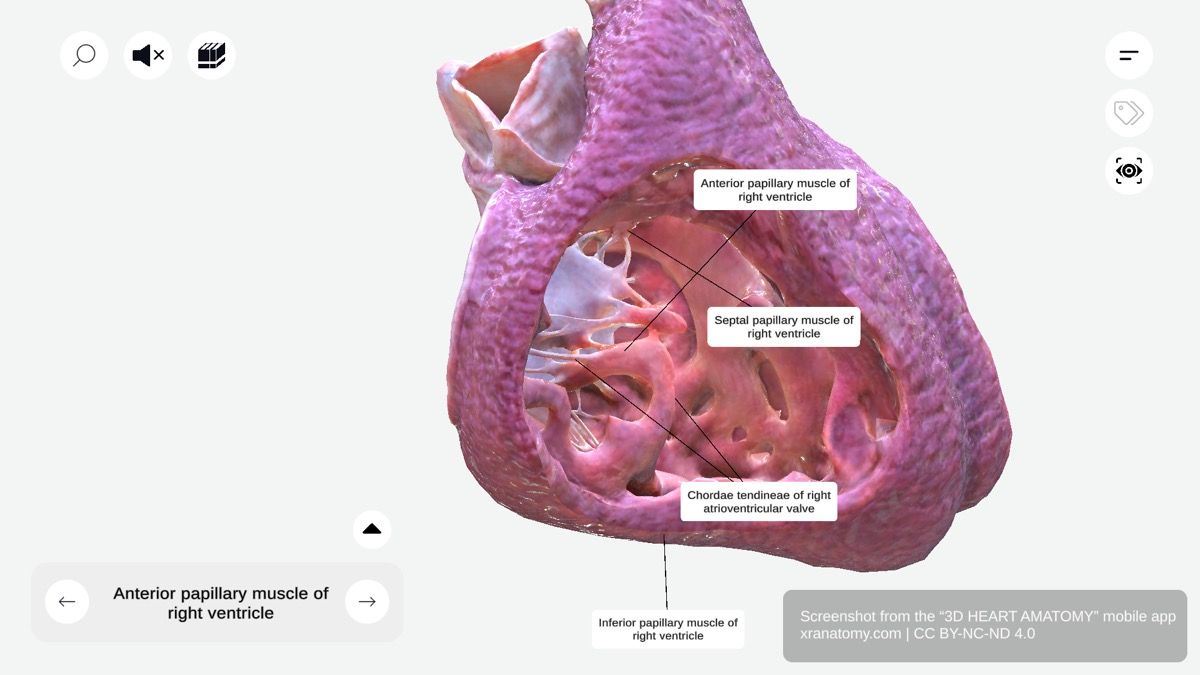
The tension apparatus is essential for proper valve function. It prevents leaflet inversion into your atrium and prevents valve prolapse during ventricular systole. Its two components are the papillary muscles and the chordae tendineae.
Papillary Muscles
The papillary muscles contract with your ventricular myocardium. Their simultaneous contraction with your ventricle tightens the chordae tendineae and secures the leaflets in position.
Chordae Tendineae
The chordae tendineae are tendinous cords connecting the leaflets to the papillary muscles. They are tightened during ventricular contraction and anchor the leaflets to prevent eversion.
Coordinated Action
The coordinated action of the tension apparatus ensures efficient valve closure in your heart. It prevents regurgitation of blood into your right atrium.
CHECK YOUR UNDERSTANDING
1. Name the three leaflets of the tricuspid valve.
Reveal Answer
The superior (anterior) leaflet, the inferior (posterior) leaflet, and the septal leaflet.
2. What two components make up the tension apparatus?
Reveal Answer
The papillary muscles and the chordae tendineae.
3. What echocardiographic landmark distinguishes the two atrioventricular valves?
Reveal Answer
The septal leaflet's annular attachment is displaced approximately 10 mm toward the apex relative to the mitral valve annulus. This annular offset is the key echocardiographic landmark.
WHAT'S NEXT
Next, you will explore the Left Atrioventricular Valve (Mitral). You will study how the mitral valve regulates blood flow between your left atrium and left ventricle using its two leaflets, orifice, papillary muscles, and tension apparatus.
Review this page again in 3 days to reinforce what you have learned.
BIBLIOGRAPHY
1. Gray H, Lewis W. Angiology. In: Anatomy of the Human Body. 1918. p. 526–542.
2. Gosling JA, Harris PF, Humpherson JR, Whitmore I, Willan PLT. Human anatomy: color atlas and textbook. 6th ed. 2017. 45–58 p.
3. Anderson RH, Spicer DE, Hlavacek AM, Cook AC, Backer CL. (2013). Anatomy of the cardiac chambers. In Wilcox’s Surgical Anatomy of the Heart (4th ed., pp. 13–50). Cambridge University Press.
4. Fritsch H, Kuehnel W. Color Atlas of Human Anatomy. Vol. Volume 2, Color Atlas and Textbook of Human Anatomy. 2005. 10–42 p.
5. Moore K, Dalley A, Agur A. Clinically Oriented Anatomy. Vol. 7ed, Clinically Oriented Anatomy. 2014. 132–151 p.
6. Ho SYen. Anatomy for Cardiac Electrophysiologists: A Practical Handbook. Cardiotext Pub; 2012. 5–27 p.
7. Standring S, editor. Gray's Anatomy: The Anatomical Basis of Clinical Practice. 41st ed. London: Elsevier; 2016.
8. Moore KL, Agur AMR, Dalley AF. Essential Clinical Anatomy. 5th ed. Philadelphia: Wolters Kluwer; 2015.


