FIBROUS SKELETON OF HEART
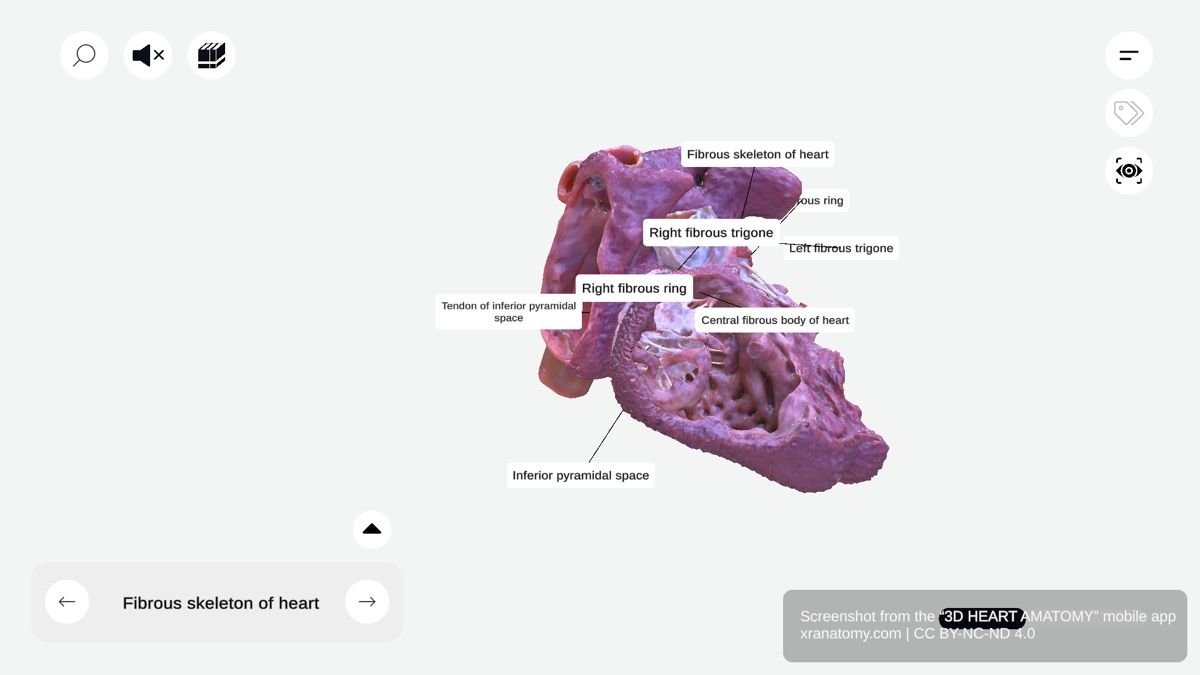
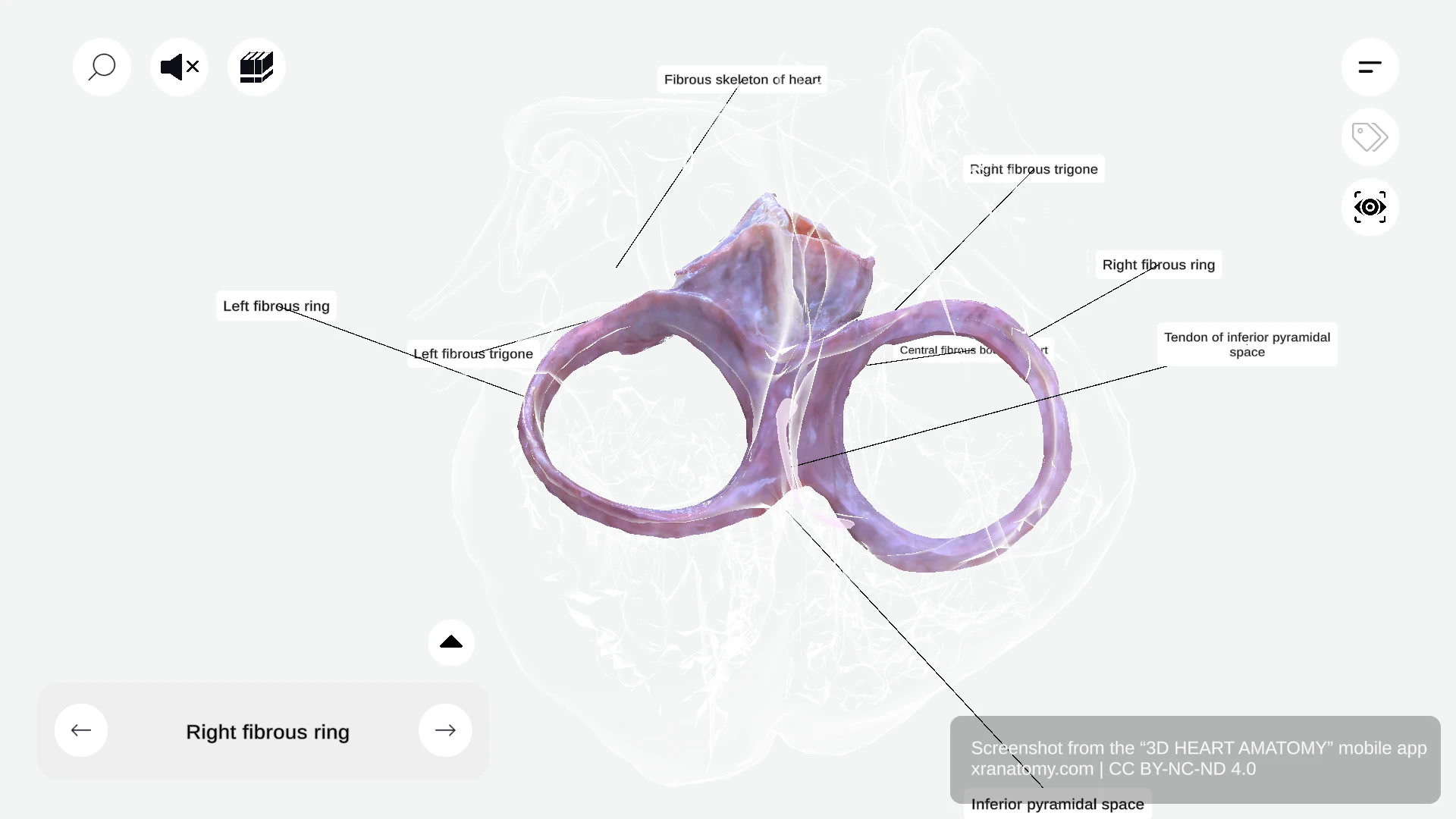
Fibrous Skeleton of Heart - Overview, Preview from the app.
WHY THIS MATTERS
The fibrous skeleton is the connective tissue framework that anchors your heart valves and myocardium in place. It supports valve function, separates your atria from your ventricles electrically, and gives your heart muscle a structured attachment point, similar to how tendons connect skeletal muscle to bone.
FIBROUS SKELETON OF HEART
The fibrous skeleton is a connective tissue structure that provides attachment for your heart valves and myocardium. It connects to your heart muscle in a way analogous to tendon attachment to skeletal muscle. The fibrous skeleton supports your atrioventricular valves with a ring-shaped configuration and supports your aortic valve with a crown-shaped annulus.
Components
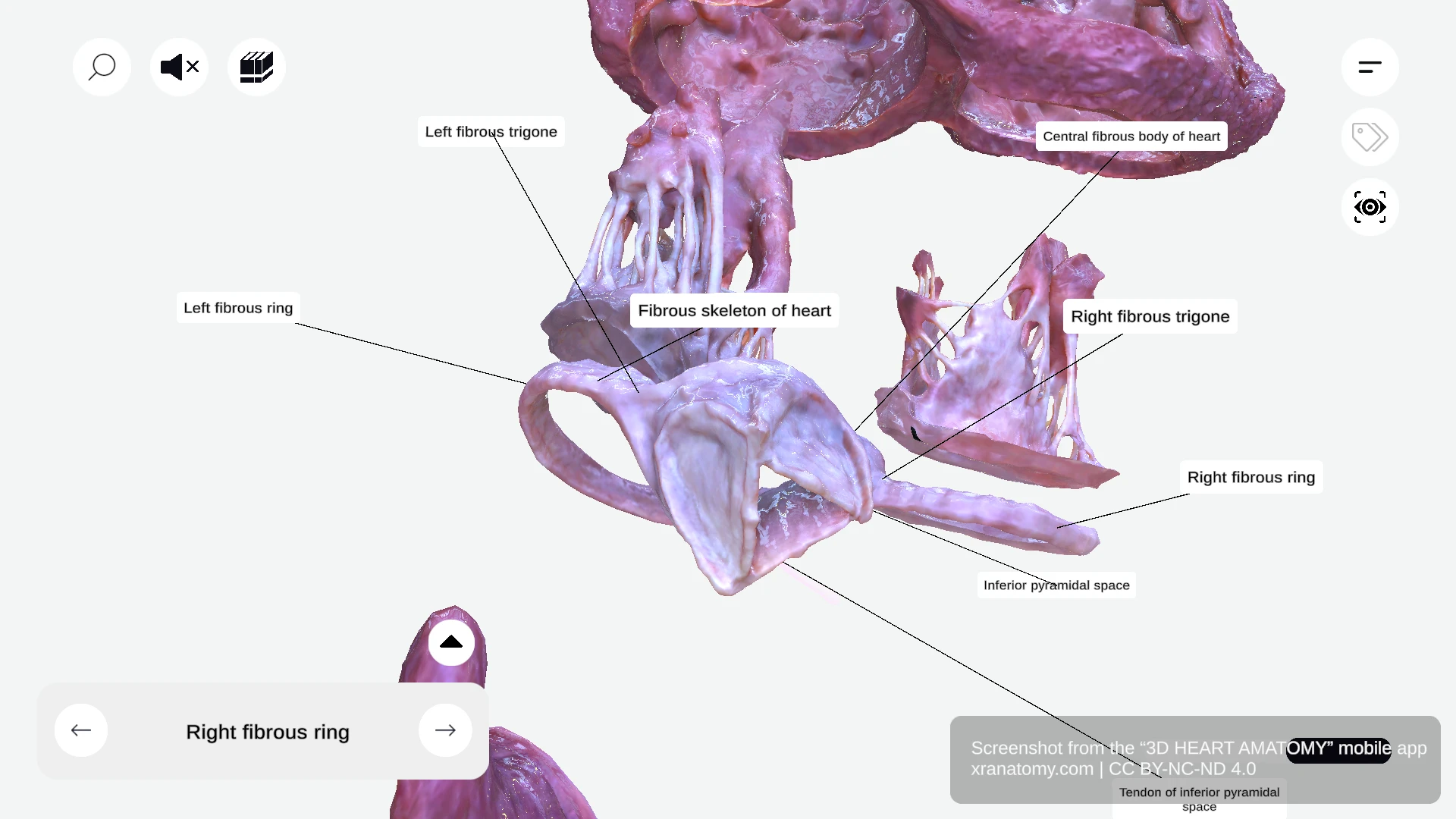
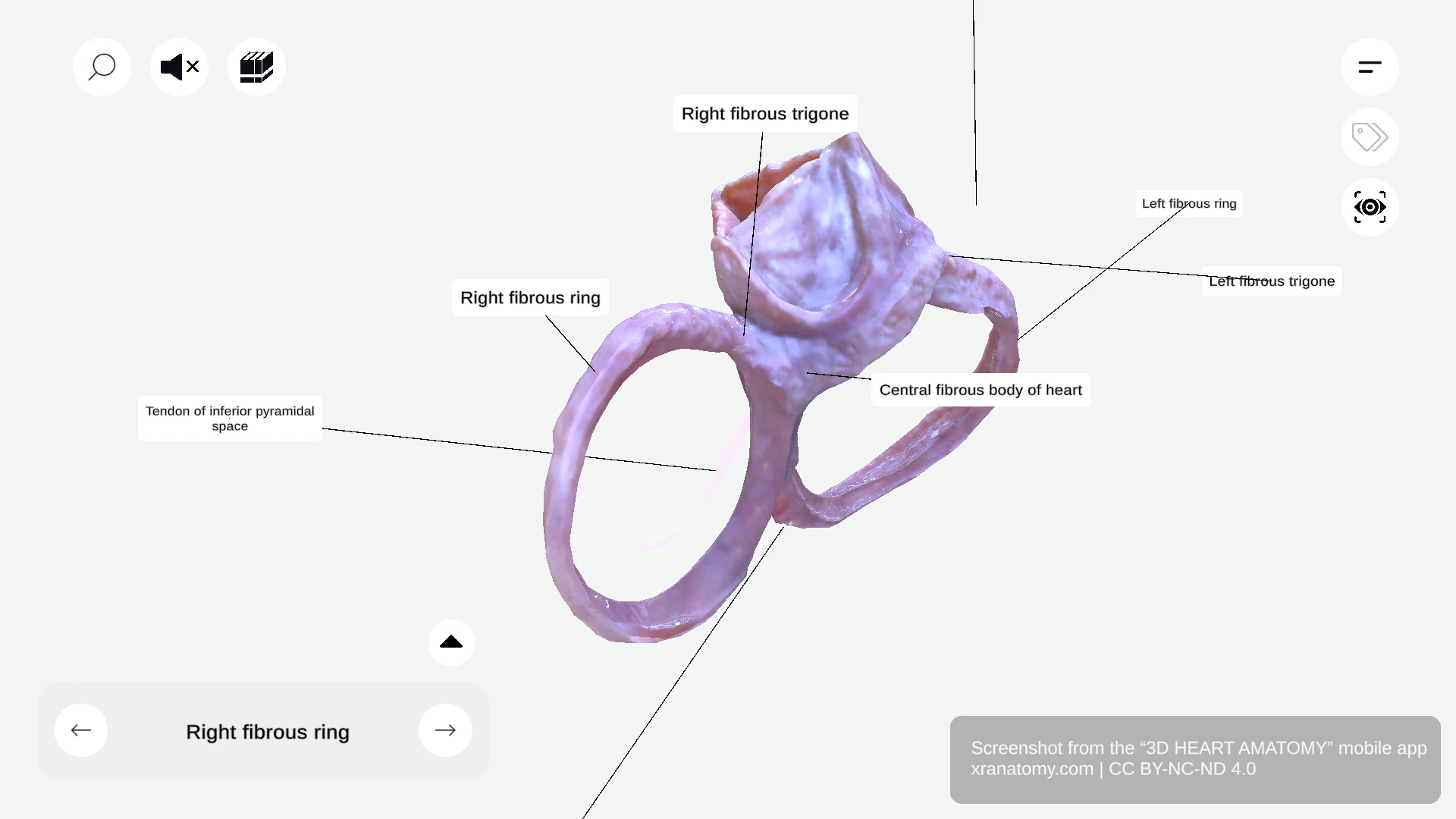
The fibrous skeleton consists of five components: the right fibrous ring, the left fibrous ring, the right fibrous trigone, the left fibrous trigone, and the central fibrous body.
FIBROUS RINGS
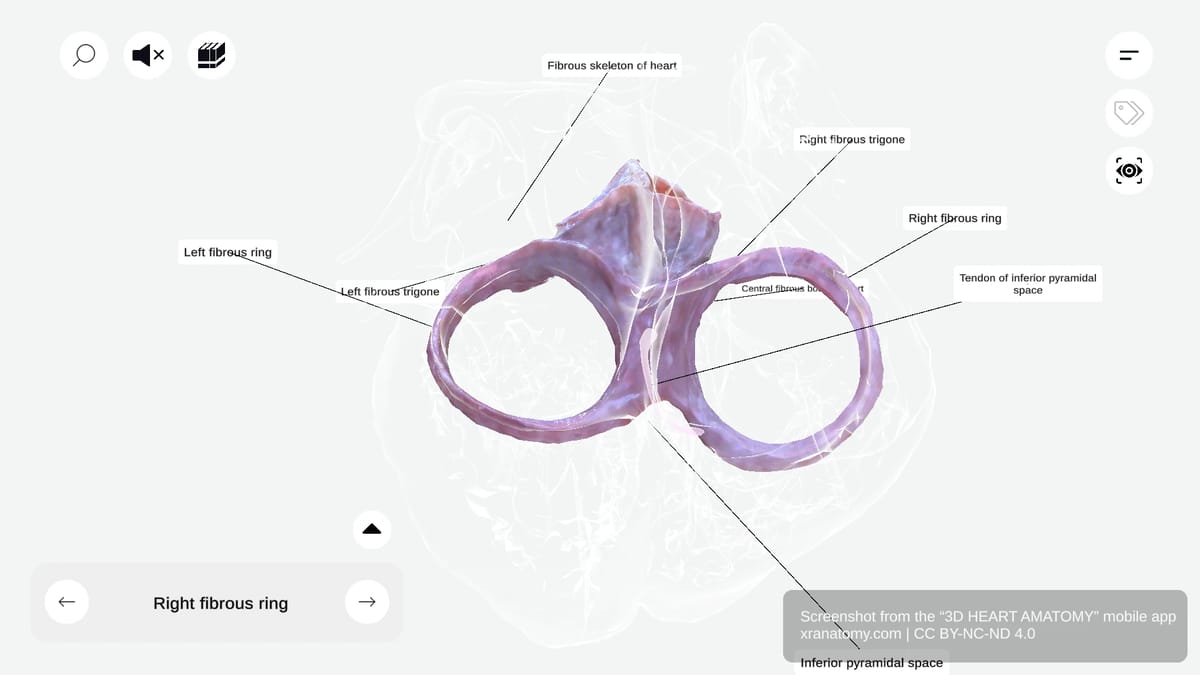
The fibrous rings are thickened areas of connective tissue surrounding your valve orifices. The right fibrous ring surrounds the tricuspid valve orifice, while the left fibrous ring surrounds the bicuspid (mitral) valve orifice. Both provide attachment for valve flaps and the muscle fibres of your ventricles and atria.
Right Fibrous Ring
The right fibrous ring is part of the fibrous cardiac skeleton. It is a thickened area of connective tissue that surrounds the tricuspid valve orifice. It provides attachment for valve flaps, the muscle fibres of your ventricles, and the muscle fibres of your atria.
Left Fibrous Ring
The left fibrous ring has a similar structure to the right fibrous ring. It surrounds the bicuspid (mitral) valve orifice and is a thickened area of connective tissue. It provides attachment for valve flaps, the muscle fibres of your ventricles, and the muscle fibres of your atria.
FIBROUS TRIGONES
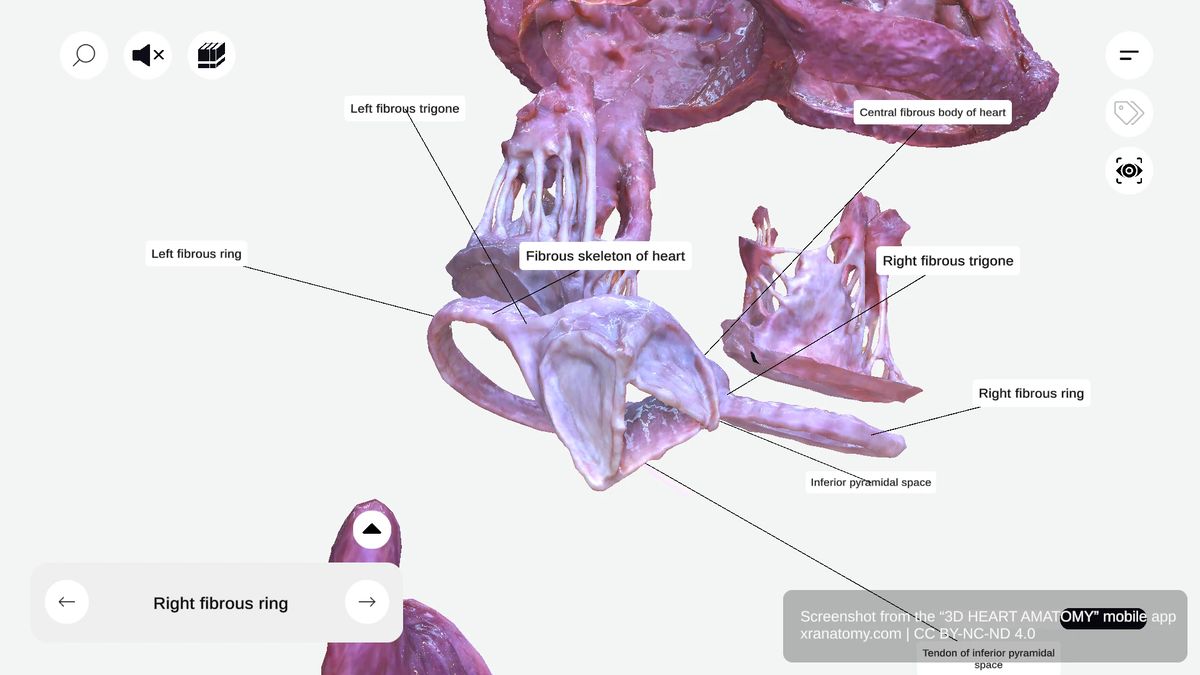
The fibrous trigones are thickened connective tissue formations positioned between the aortic valve and the atrioventricular valves. The right fibrous trigone sits between the aortic, tricuspid, and mitral valves and forms a major component of the central fibrous body. The left fibrous trigone is located where the aortic and mitral valves meet.
Right Fibrous Trigone
The right fibrous trigone is a triangular formation located between the aortic valve and the medial parts of the tricuspid and mitral valves. It is a major component of the central fibrous body.
Left Fibrous Trigone
The left fibrous trigone is a thick part of the fibrous cardiac skeleton. It is located where the aortic and mitral valves meet, at the left end where the left fibrous ring meets the aortic valve.
CENTRAL FIBROUS BODY OF HEART
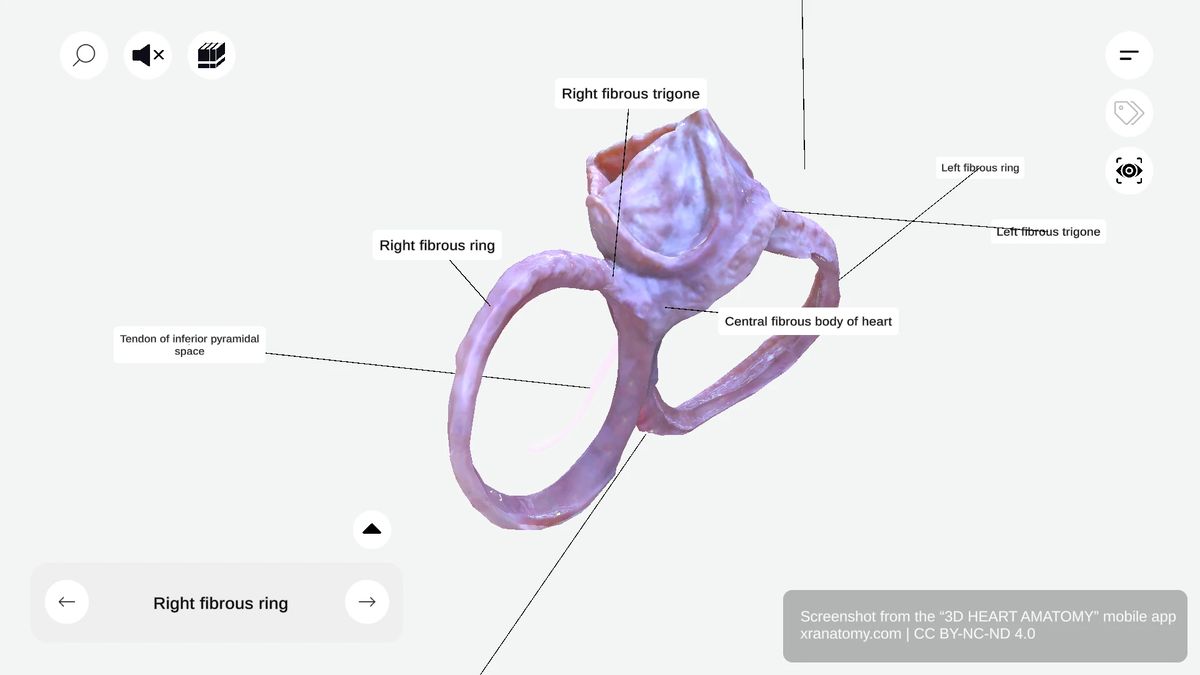
The central fibrous body is the largest thickening and strongest portion of the cardiac skeleton. It occupies a central position surrounded by valve rings and consists of electrically inert tissue.
Functions
The central fibrous body isolates your atria from your ventricles electrically. The only exception is at the site of AV conducting system penetration.
INFERIOR PYRAMIDAL SPACE
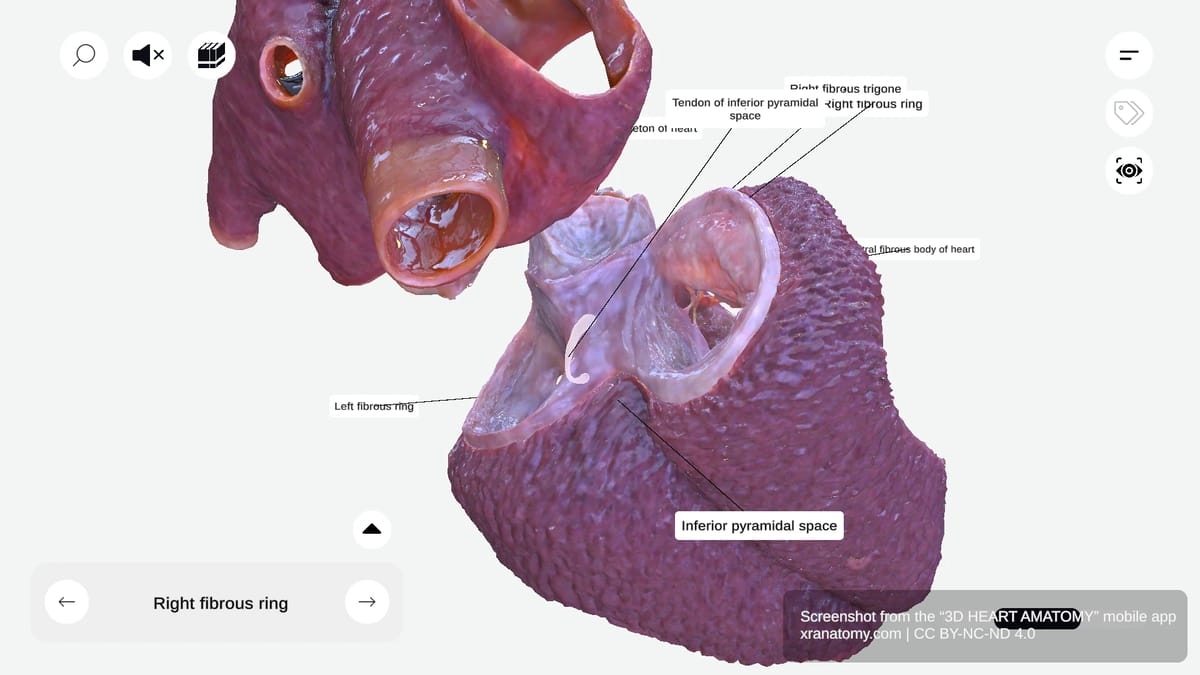
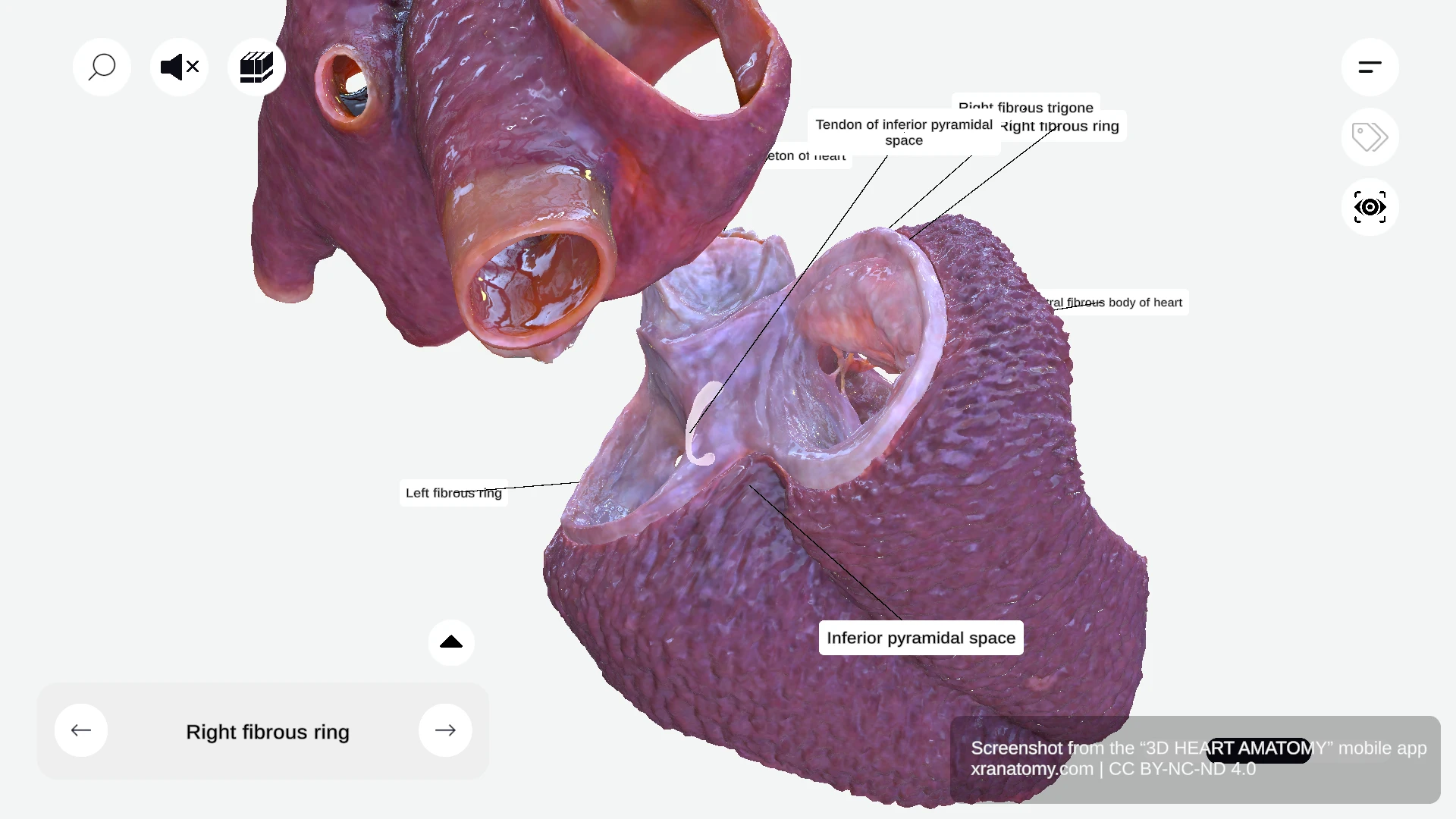
The inferior pyramidal space is an anatomical region of your heart where four grooves converge: the interatrial groove, the interventricular groove, the right atrioventricular groove, and the left atrioventricular groove. This region wedges toward the central fibrous body. The surrounding structures include the coronary arteries, coronary sinus, atrioventricular valve attachments, interatrial septum, interventricular septum, coronary aortic sinuses, and the cardiac conduction system.
Surrounding Structures
Several important structures surround the inferior pyramidal space. These include the coronary arteries, the coronary sinus, the atrioventricular valve attachments, the interatrial septum, the interventricular septum, the coronary aortic sinuses, and the cardiac conduction system.
Tendon of Inferior Pyramidal Space
The tendon of the inferior pyramidal space, also called the Tendon of Todaro, is a fibrous band within your right atrium. It serves as an anatomical landmark and defines boundaries of important structures and regions.
CHECK YOUR UNDERSTANDING
1. Name the five components of the fibrous skeleton of the heart.
Reveal Answer
The right fibrous ring, the left fibrous ring, the right fibrous trigone, the left fibrous trigone, and the central fibrous body.
2. What is the main function of the central fibrous body?
Reveal Answer
It electrically isolates the atria from the ventricles, except at the site of AV conducting system penetration.
3. Which four grooves converge at the inferior pyramidal space?
Reveal Answer
The interatrial groove, the interventricular groove, the right atrioventricular groove, and the left atrioventricular groove.
WHAT'S NEXT
Now that you understand the fibrous skeleton that supports your heart valves, the next page covers the Right Atrioventricular Valve (Tricuspid). You will explore its three leaflets, the right ventricular orifice, papillary muscles, and the tension apparatus that prevents valve inversion during contraction.
Review this page again in 3 days to reinforce what you have learned.
BIBLIOGRAPHY
1. Gray H, Lewis W. Angiology. In: Anatomy of the Human Body. 1918. p. 526–542.
2. Gosling JA, Harris PF, Humpherson JR, Whitmore I, Willan PLT. Human anatomy: color atlas and textbook. 6th ed. 2017. 45–58 p.
3. Anderson RH, Spicer DE, Hlavacek AM, Cook AC, Backer CL. (2013). Anatomy of the cardiac chambers. In Wilcox’s Surgical Anatomy of the Heart (4th ed., pp. 13–50). Cambridge University Press.
4. Fritsch H, Kuehnel W. Color Atlas of Human Anatomy. Vol. Volume 2, Color Atlas and Textbook of Human Anatomy. 2005. 10–42 p.
5. Moore K, Dalley A, Agur A. Clinically Oriented Anatomy. Vol. 7ed, Clinically Oriented Anatomy. 2014. 132–151 p.
6. Ho SYen. Anatomy for Cardiac Electrophysiologists: A Practical Handbook. Cardiotext Pub; 2012. 5–27 p.
7. Standring S, editor. Gray's Anatomy: The Anatomical Basis of Clinical Practice. 41st ed. London: Elsevier; 2016.
8. Moore KL, Agur AMR, Dalley AF. Essential Clinical Anatomy. 5th ed. Philadelphia: Wolters Kluwer; 2015.