LACRIMAL BONE ANATOMY
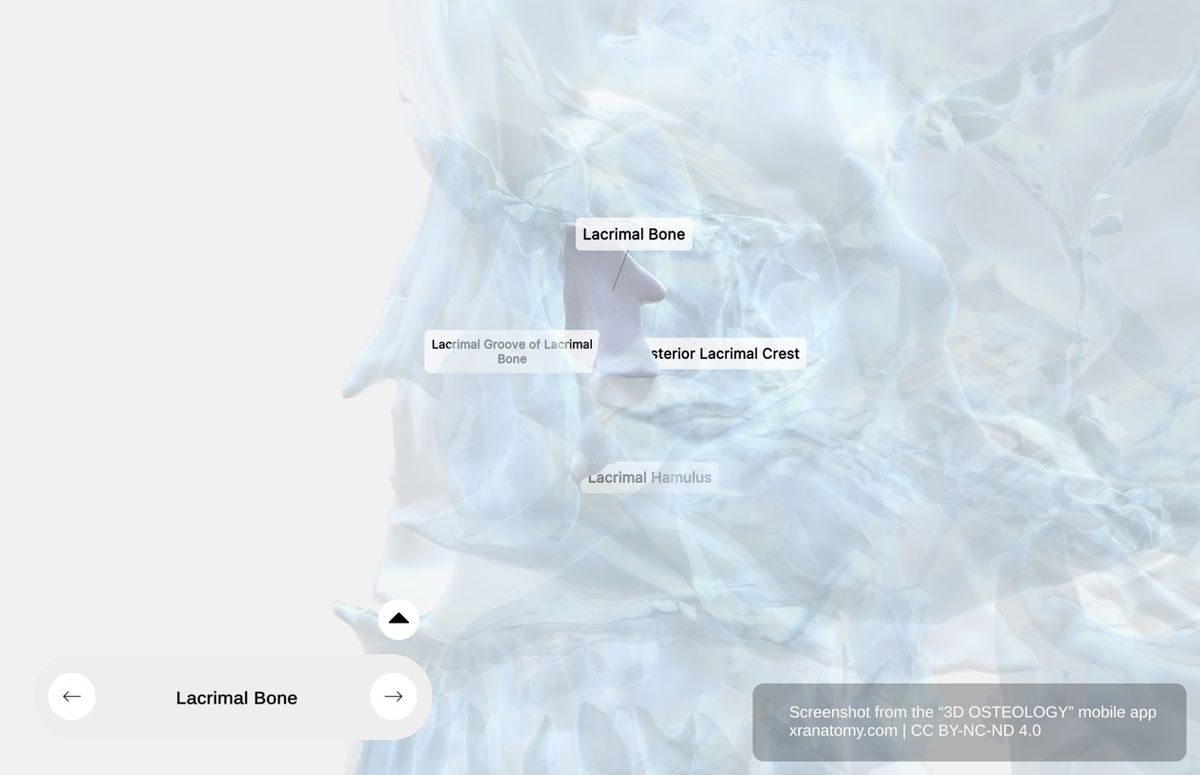
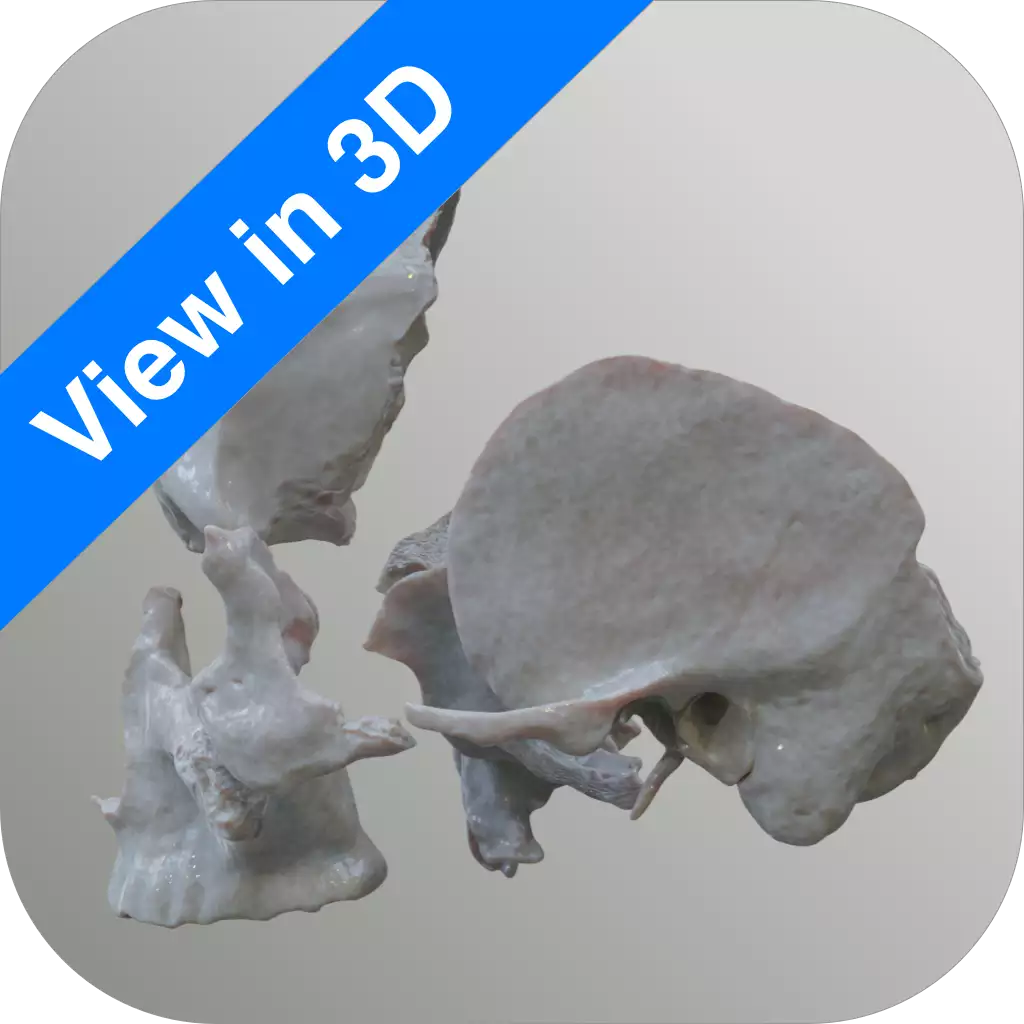
Lacrimal Bone - X-Ray View, Preview from the app. Download 3D OSTEOLOGY for full 3D control—multiple views, x-ray mode, and unlimited zoom.
WHY THIS MATTERS
The lacrimal bone is the smallest bone of your face, yet it plays a critical role in tear drainage. Understanding its groove, crest, and hamulus helps you see how this fingernail-sized bone channels tears from your eye to your nasal cavity.
In-Depth AR Atlas Available
Read the comprehensive anatomy description with AR illustrations and videos
Read AR Atlas →GENERAL CHARACTERISTICS
The lacrimal bone is a small paired facial bone situated in the anterior portion of your medial orbital wall. It is essential for orbital architecture and contributes to the function of the lacrimal apparatus, which is involved in your tear production and tear drainage.
ARTICULATIONS
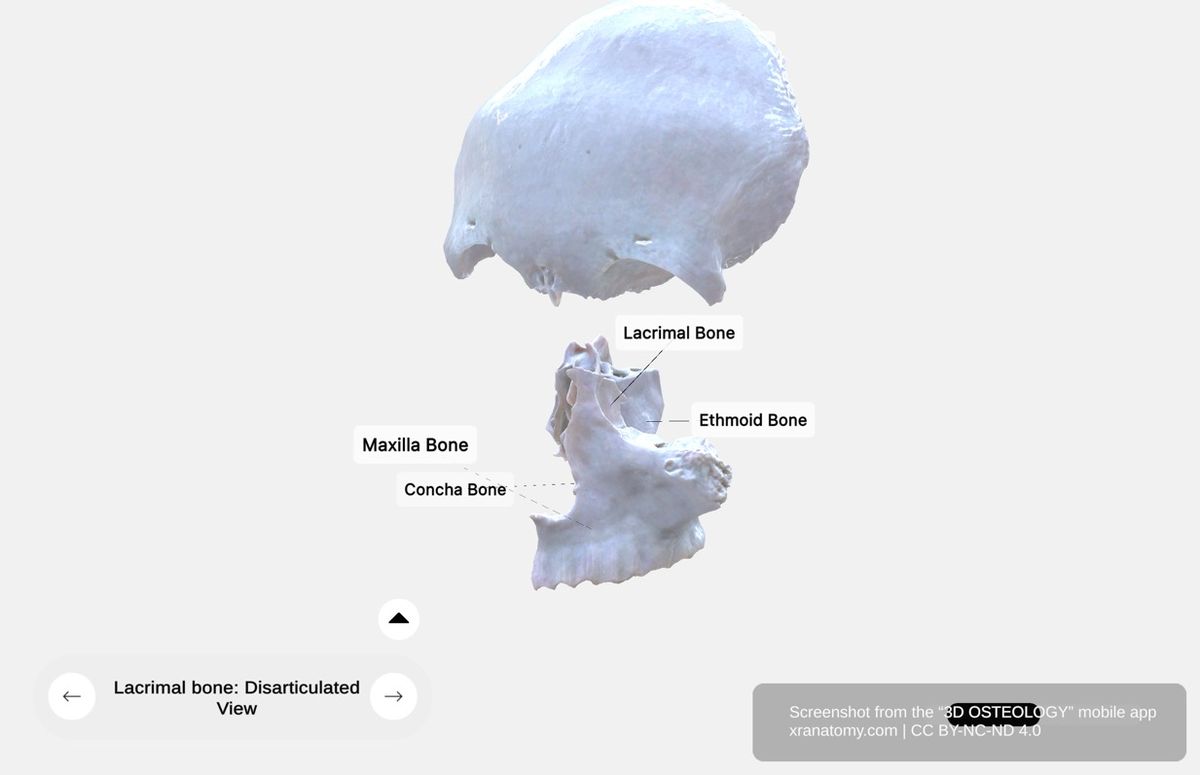
Lacrimal Bone - Disarticulated View, Preview from the app. Download 3D OSTEOLOGY for full 3D control—multiple views, x-ray mode, and unlimited zoom.
The lacrimal bone articulates with four bones: the frontal bone, the ethmoid bone, the maxilla, and the inferior nasal concha.
SURFACE FEATURES
The lacrimal bone has three notable surface features: the posterior lacrimal crest, the lacrimal groove, and the lacrimal hamulus.
Posterior Lacrimal Crest
The posterior lacrimal crest is a vertical ridge on the lateral surface of the bone. It provides attachment for the lacrimal part of orbicularis oculi and forms the posterior boundary of the lacrimal sac fossa. This crest participates in your tear collection and drainage.
Lacrimal Groove
The lacrimal groove is a longitudinal depression located anterior to the posterior lacrimal crest. It combines with the lacrimal groove of the maxilla to form the lacrimal fossa, which houses your lacrimal sac. This arrangement enables your tear flow from the ocular surface to the nasolacrimal duct.
Lacrimal Hamulus
The lacrimal hamulus is a small hook-shaped projection located at the inferior aspect of the bone. It extends downward and articulates with the maxilla. The hamulus contributes to your nasolacrimal canal formation.
CHECK YOUR UNDERSTANDING
1. Name the four bones that articulate with the lacrimal bone.
Reveal Answer
The frontal bone, the ethmoid bone, the maxilla, and the inferior nasal concha.
2. What two structures combine to form the lacrimal fossa, and what does it house?
Reveal Answer
The lacrimal groove of the lacrimal bone and the lacrimal groove of the maxilla combine to form the lacrimal fossa, which houses the lacrimal sac.
3. What is the lacrimal hamulus and where is it located?
Reveal Answer
The lacrimal hamulus is a small hook-shaped projection located at the inferior aspect of the lacrimal bone. It extends downward, articulates with the maxilla, and contributes to the formation of the nasolacrimal canal.
WHAT'S NEXT
Now that you understand the lacrimal bone and its role in tear drainage, the next page focuses on the Palatine Bone. You will explore this L-shaped bone through interactive 360-degree 3D views, examining its horizontal and perpendicular plates and the structures they form within the nasal cavity and hard palate.
Review this page again in 3 days to reinforce what you have learned.
BIBLIOGRAPHY
1. Henry G, Warren HL. Osteology. In: Anatomy of the Human Body. 20th ed. Philadelphia: Lea & Febiger; 1918. p. 129–97.
2. Standring S, editor. Gray's Anatomy: The Anatomical Basis of Clinical Practice. 41st ed. London: Elsevier; 2016.
3. Moore KL, Agur AMR, Dalley AF. Essential Clinical Anatomy. 5th ed. Philadelphia: Wolters Kluwer; 2015.