INFERIOR NASAL CONCHA ANATOMY
In-Depth AR Atlas Available
Read the comprehensive anatomy description with AR illustrations and videos
Read AR Atlas →
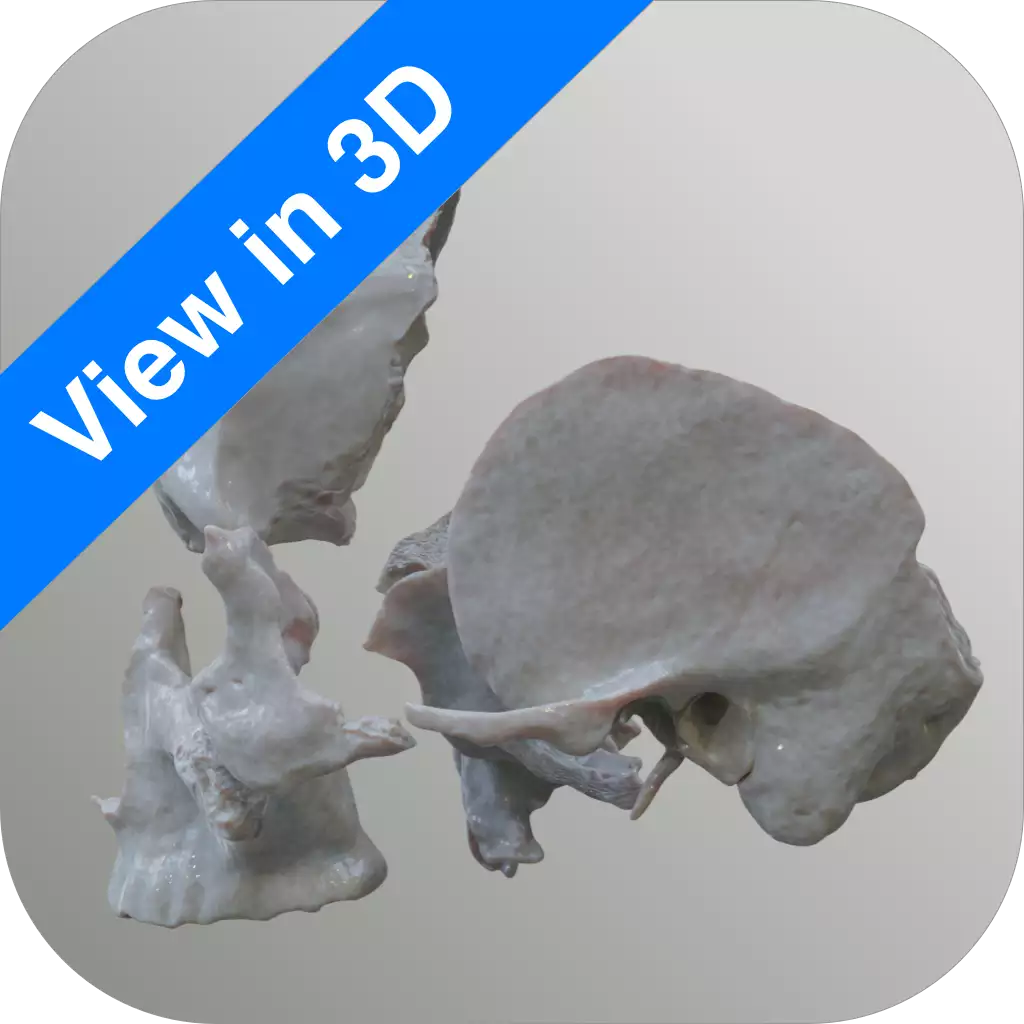
Inferior Nasal Concha - X-Ray View, Preview from the app. Download 3D OSTEOLOGY for full 3D control—multiple views, x-ray mode, and unlimited zoom.
WHY THIS MATTERS
The inferior nasal concha is one of the smallest independent bones in your skull, but it plays a major role in how you breathe. Understanding its shape, articulations, and processes helps you see how this thin, curved bone contributes to warming, humidifying, and filtering the air passing through your nasal cavity.
GENERAL CHARACTERISTICS
The inferior nasal concha is a scroll-shaped bone with a distinctive curved morphology. It is located on the lateral wall of your nasal cavity and is a paired structure, with one on each side of the nasal septum.
FUNCTIONAL SIGNIFICANCE
The inferior nasal concha increases surface area within your nasal cavity. This helps with warming and humidifying the air you inhale. It plays an important role in your respiratory system.
ARTICULATIONS
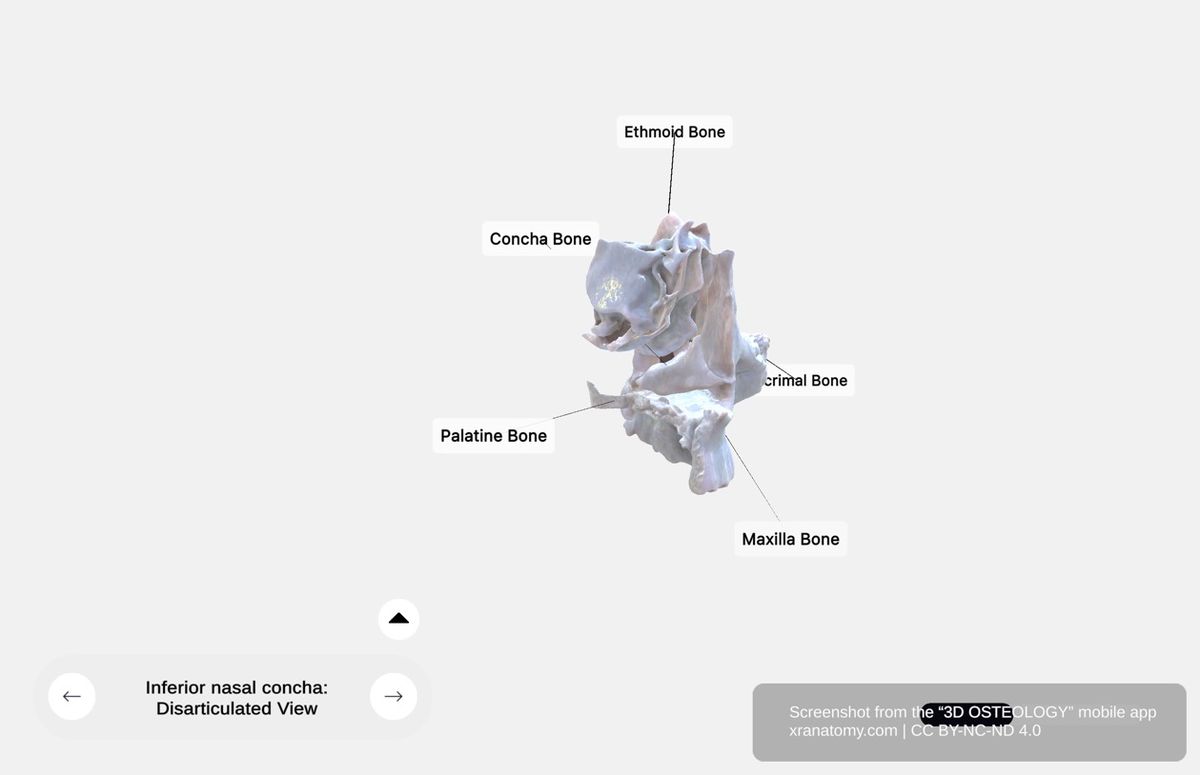
Inferior Nasal Concha - Disarticulated View, Preview from the app. Download 3D OSTEOLOGY for full 3D control—multiple views, x-ray mode, and unlimited zoom.
The inferior nasal concha articulates with four bones: the lacrimal bone, ethmoid bone, palatine bone, and maxilla. These articulations contribute to the architecture of your nasal cavity.
| Articulating Bone |
|---|
| Lacrimal bone |
| Ethmoid bone |
| Palatine bone |
| Maxilla |
PROCESSES
Maxillary Process
The maxillary process is a lateral extension of the inferior nasal concha. It articulates with the maxilla and contributes to the formation of your maxillary sinus wall. This process integrates the concha into your facial skeleton and provides structural support to your sinus.
CHECK YOUR UNDERSTANDING
1. What makes the inferior nasal concha different from the superior and middle conchae?
Reveal Answer
The inferior nasal concha is an independent bone, while the superior and middle conchae are part of the ethmoid bone.
2. Name the four bones that articulate with the inferior nasal concha.
Reveal Answer
The lacrimal bone, ethmoid bone, palatine bone, and maxilla.
3. What role does the maxillary process play?
Reveal Answer
The maxillary process is a lateral extension that articulates with the maxilla and contributes to the formation of the maxillary sinus wall, integrating the concha into the facial skeleton.
WHAT'S NEXT
Now that you understand the inferior nasal concha, the next page focuses on the Hyoid Bone. You will explore this unique U-shaped bone that sits in your neck and does not articulate directly with any other bone, supporting your tongue and larynx.
Review this page again in 3 days to reinforce what you have learned.
BIBLIOGRAPHY
1. Henry G, Warren HL. Osteology. In: Anatomy of the Human Body. 20th ed. Philadelphia: Lea & Febiger; 1918. p. 129–97.
2. Standring S, editor. Gray's Anatomy: The Anatomical Basis of Clinical Practice. 41st ed. London: Elsevier; 2016.
3. Moore KL, Agur AMR, Dalley AF. Essential Clinical Anatomy. 5th ed. Philadelphia: Wolters Kluwer; 2015.