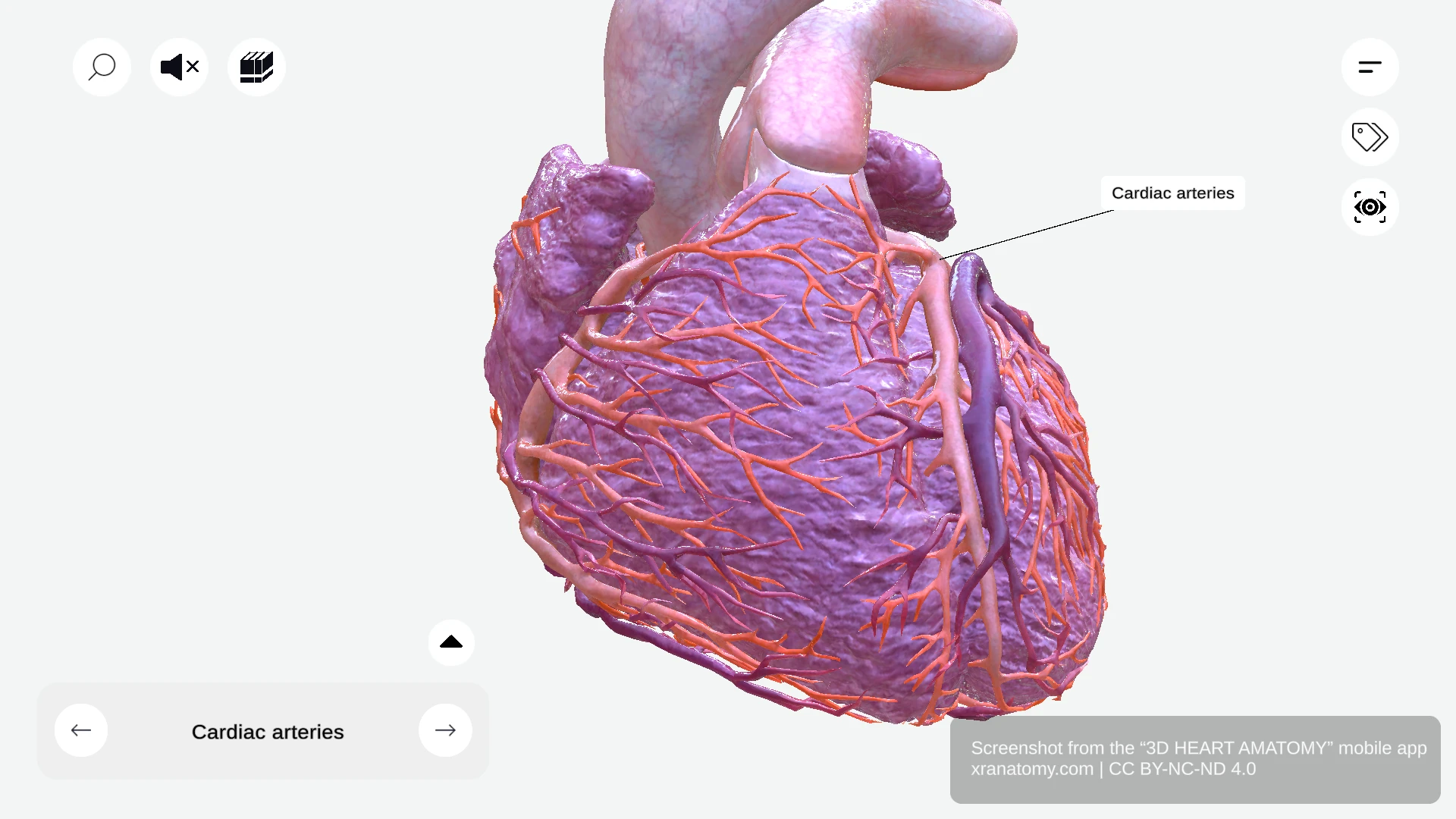
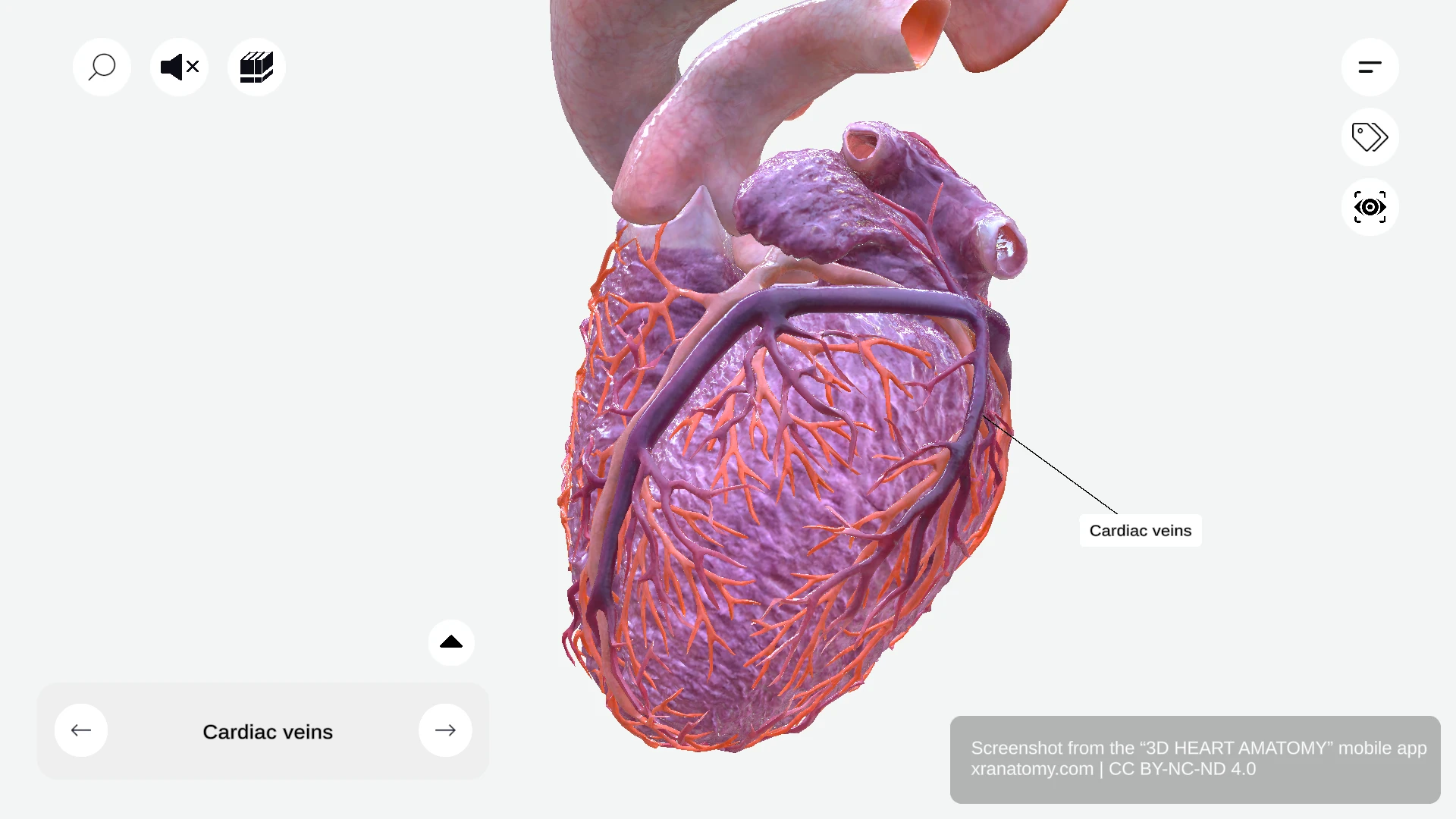
CARDIAC VESSELS
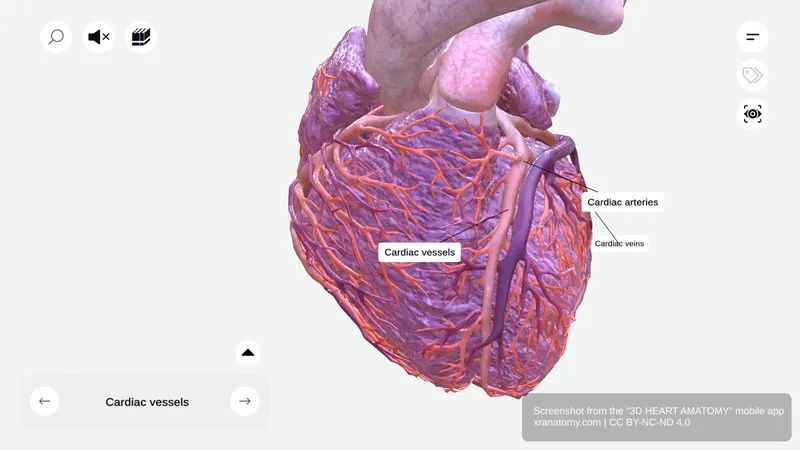
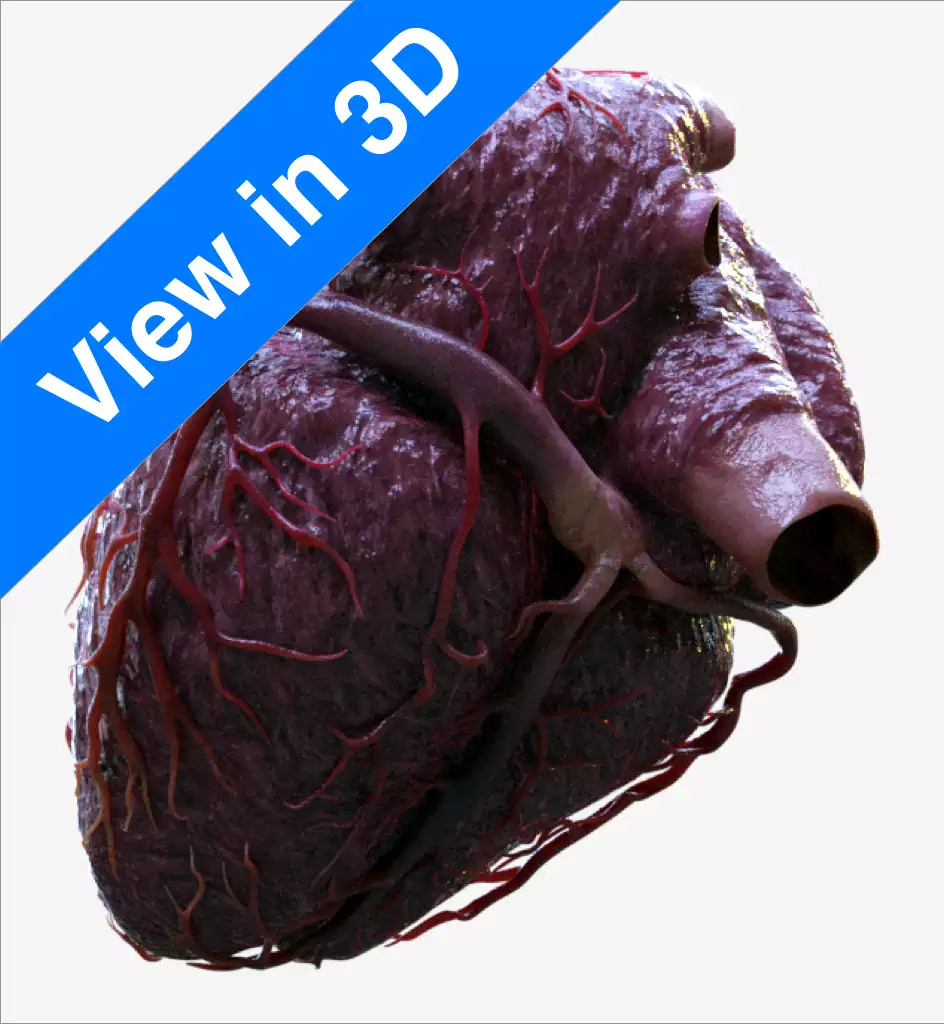
Cardiac Vessels - Overview, Preview from the app.
WHY THIS MATTERS
Your heart muscle needs its own dedicated blood supply to keep pumping. The cardiac vessels form a complex network of arteries and veins that deliver oxygen and nutrients to your myocardium and carry away metabolic waste. Understanding how these vessels branch, course, and drain helps you see how your heart sustains itself.
TABLE OF CONTENTS
CARDIAC VESSELS
The cardiac vessels, also known as coronary vessels, form a complex network of arteries and veins. They supply oxygen and nutrients to your heart muscle and remove metabolic waste products from your myocardium. These vessels fall into two main categories: the cardiac arteries and the cardiac veins.
CARDIAC ARTERIES
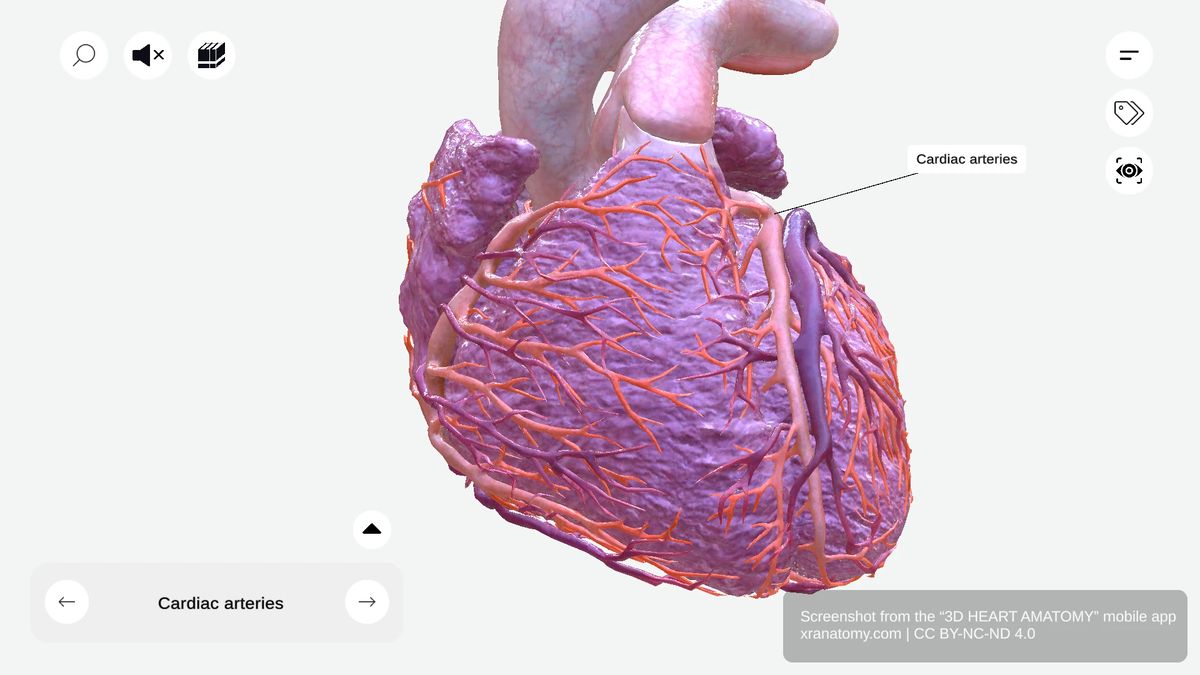
The cardiac arteries consist of two main vessels that branch from the aorta. They originate from the aortic sinuses and course along the atrioventricular groove. These arteries supply oxygenated blood to your myocardium.
CARDIAC VEINS
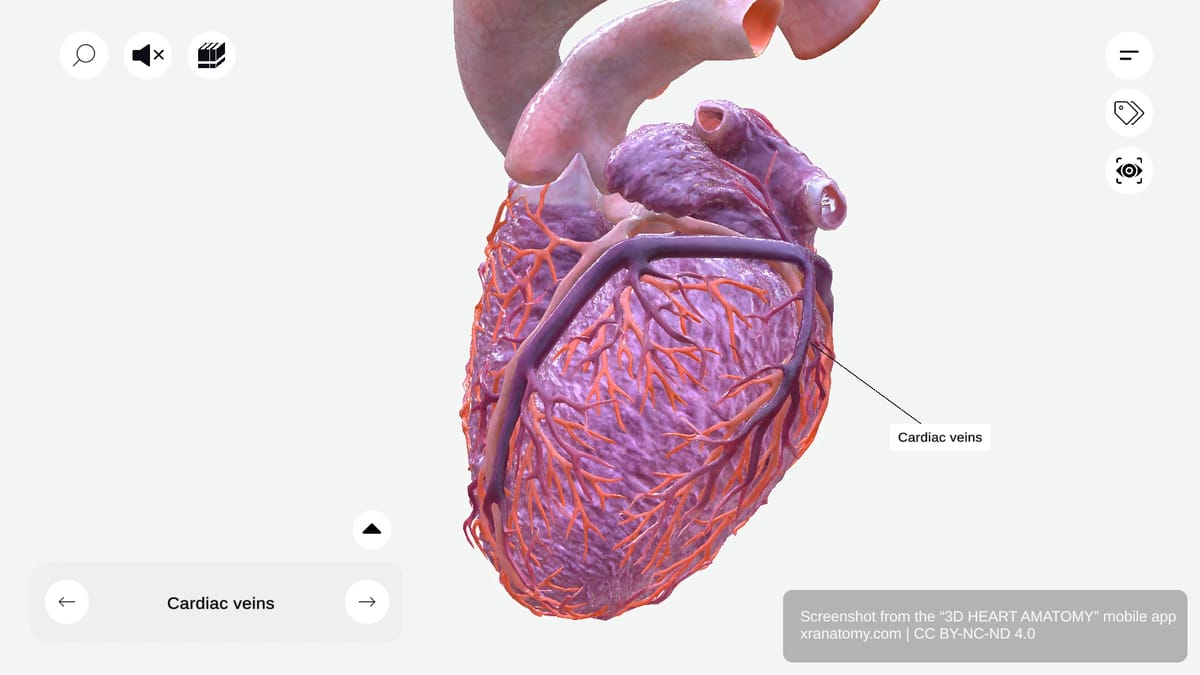
The cardiac veins form a network of veins that drain your myocardium and return deoxygenated blood to your right atrium. They include three main drainage routes: the coronary sinus collecting most venous blood, the anterior cardiac veins draining the anterior right ventricle directly into the right atrium, and the smallest cardiac veins (Thebesian veins) draining directly into the heart chambers.
Coronary Sinus
The coronary sinus is the main venous structure of your heart. It collects blood from the cardiac veins and empties into your right atrium.
Anterior Cardiac Veins
The anterior cardiac veins are small veins on the anterior surface of your heart. They drain the anterior surface of your right ventricle and empty directly into your right atrium.
Smallest Cardiac Veins
The smallest cardiac veins, also known as Thebesian veins, are minute veins within your heart wall. They drain directly into the heart chambers, primarily into the right atrium and also into the right ventricle.
CHECK YOUR UNDERSTANDING
1. What are the two main categories of cardiac vessels?
Reveal Answer
Cardiac arteries and cardiac veins.
2. Where do the cardiac arteries originate, and along which groove do they course?
Reveal Answer
They originate from the aortic sinuses and course along the atrioventricular groove.
3. What are the smallest cardiac veins also known as, and where do they drain?
Reveal Answer
They are also known as Thebesian veins. They drain directly into the heart chambers, primarily into the right atrium and also into the right ventricle.
WHAT'S NEXT
Now that you understand the overall network of cardiac vessels, the next page focuses on the Right Coronary Artery. You will explore one of the two main arterial branches from the aorta, its course along the atrioventricular groove, and its branches including the conal branch, SA nodal branch, right marginal branch, and inferior interventricular artery.
Review this page again in 3 days to reinforce what you have learned.
BIBLIOGRAPHY
1. Gray H, Lewis W. Angiology. In: Anatomy of the Human Body. 1918. p. 526–542.
2. Gosling JA, Harris PF, Humpherson JR, Whitmore I, Willan PLT. Human anatomy: color atlas and textbook. 6th ed. 2017. 45–58 p.
3. Anderson RH, Spicer DE, Hlavacek AM, Cook AC, Backer CL. (2013). Anatomy of the cardiac chambers. In Wilcox’s Surgical Anatomy of the Heart (4th ed., pp. 13–50). Cambridge University Press.
4. Fritsch H, Kuehnel W. Color Atlas of Human Anatomy. Vol. Volume 2, Color Atlas and Textbook of Human Anatomy. 2005. 10–42 p.
5. Moore K, Dalley A, Agur A. Clinically Oriented Anatomy. Vol. 7ed, Clinically Oriented Anatomy. 2014. 132–151 p.
6. Ho SYen. Anatomy for Cardiac Electrophysiologists: A Practical Handbook. Cardiotext Pub; 2012. 5–27 p.
7. Standring S, editor. Gray's Anatomy: The Anatomical Basis of Clinical Practice. 41st ed. London: Elsevier; 2016.
8. Moore KL, Agur AMR, Dalley AF. Essential Clinical Anatomy. 5th ed. Philadelphia: Wolters Kluwer; 2015.