CARDIAC VEINS
In-Depth AR Atlas Available
Read the comprehensive anatomy description with AR illustrations and videos
Read AR Atlas →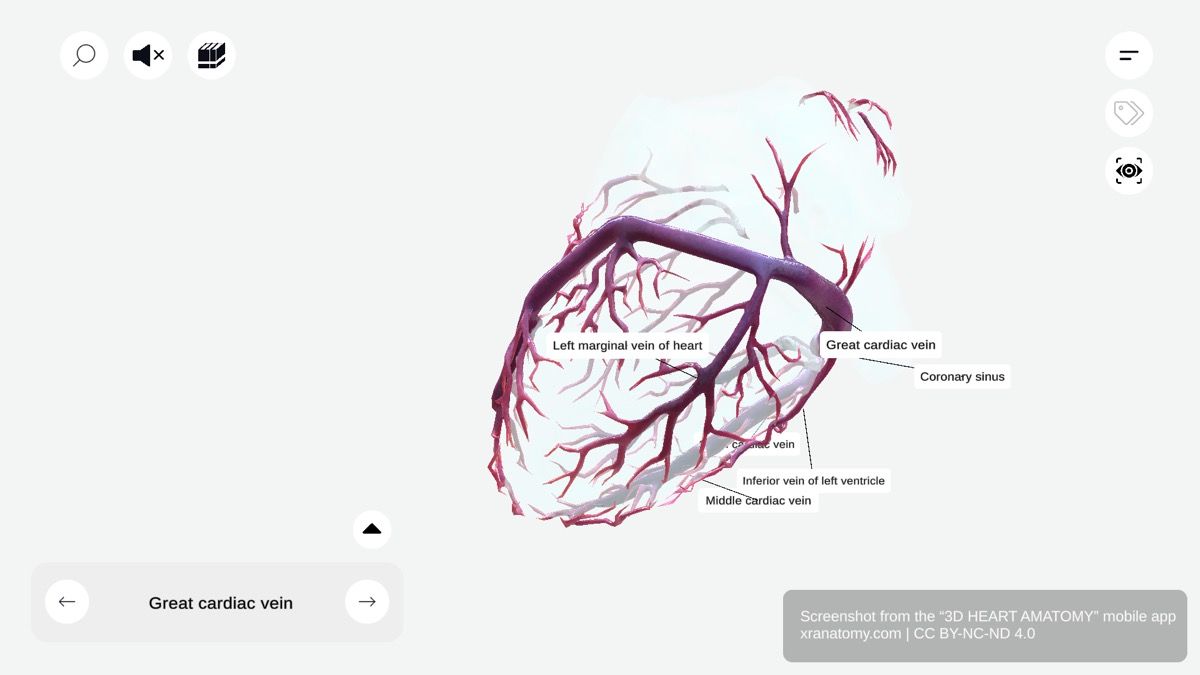
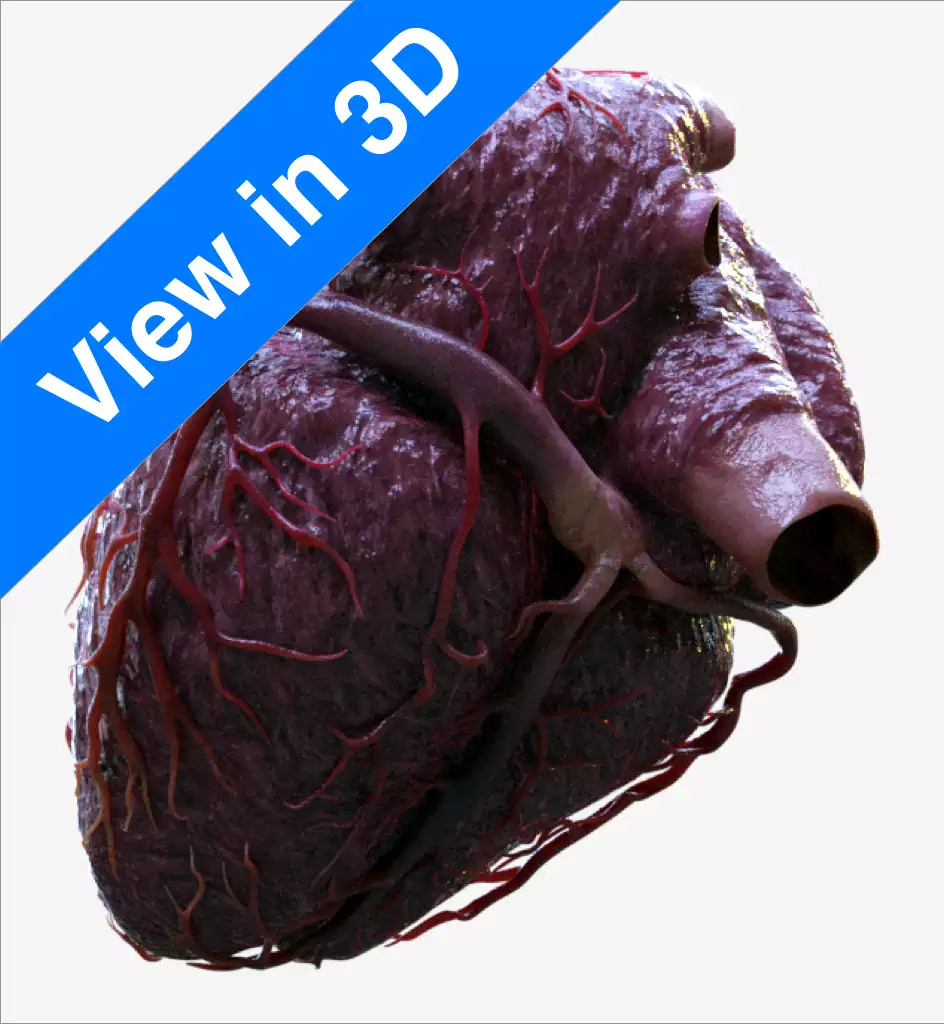
Cardiac Veins - Overview, Preview from the app.
WHY THIS MATTERS
The cardiac veins are the vessels that return deoxygenated blood from your heart muscle back to your right atrium. Most of this blood travels through the coronary sinus, while the anterior cardiac veins drain directly into your right atrium. Understanding how these veins are arranged helps you see the complete picture of your heart's own blood supply.
TABLE OF CONTENTS
CARDIAC VEINS
The cardiac veins form a network of vessels that drain your myocardium. They return deoxygenated blood to your right atrium through two pathways: the coronary sinus and direct drainage into your right atrium.
Two Drainage Pathways
Your cardiac veins use two drainage pathways. Most veins drain via the coronary sinus. The remaining veins empty through direct drainage into your right atrium.
CORONARY SINUS
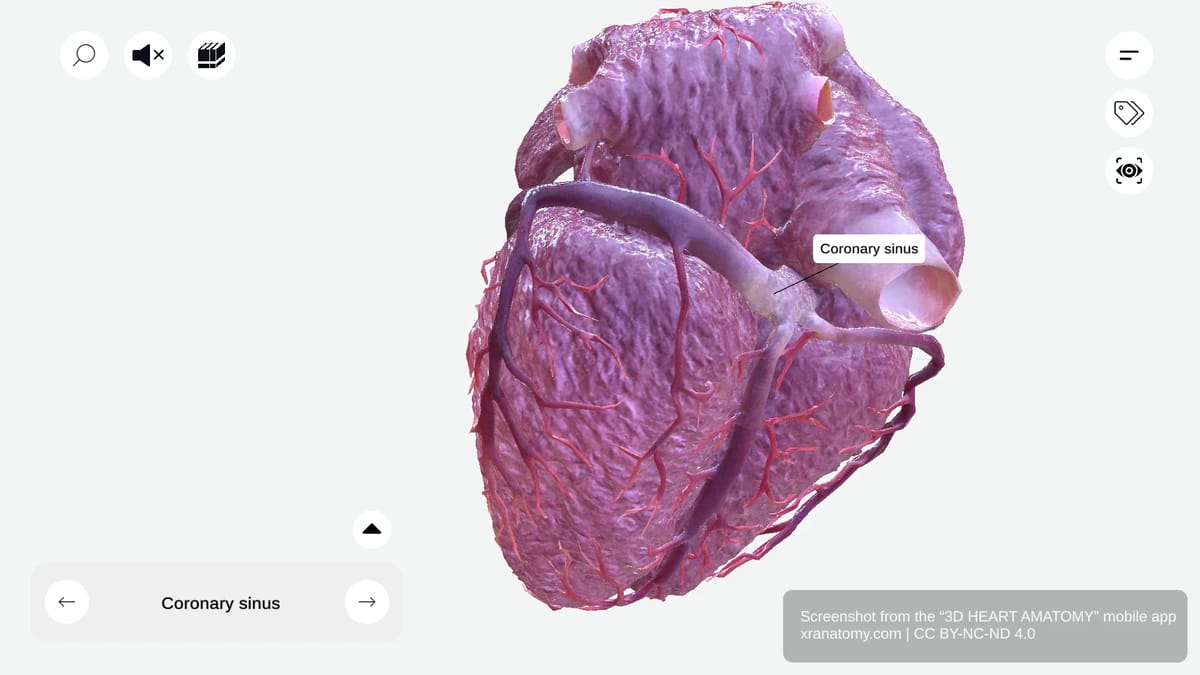
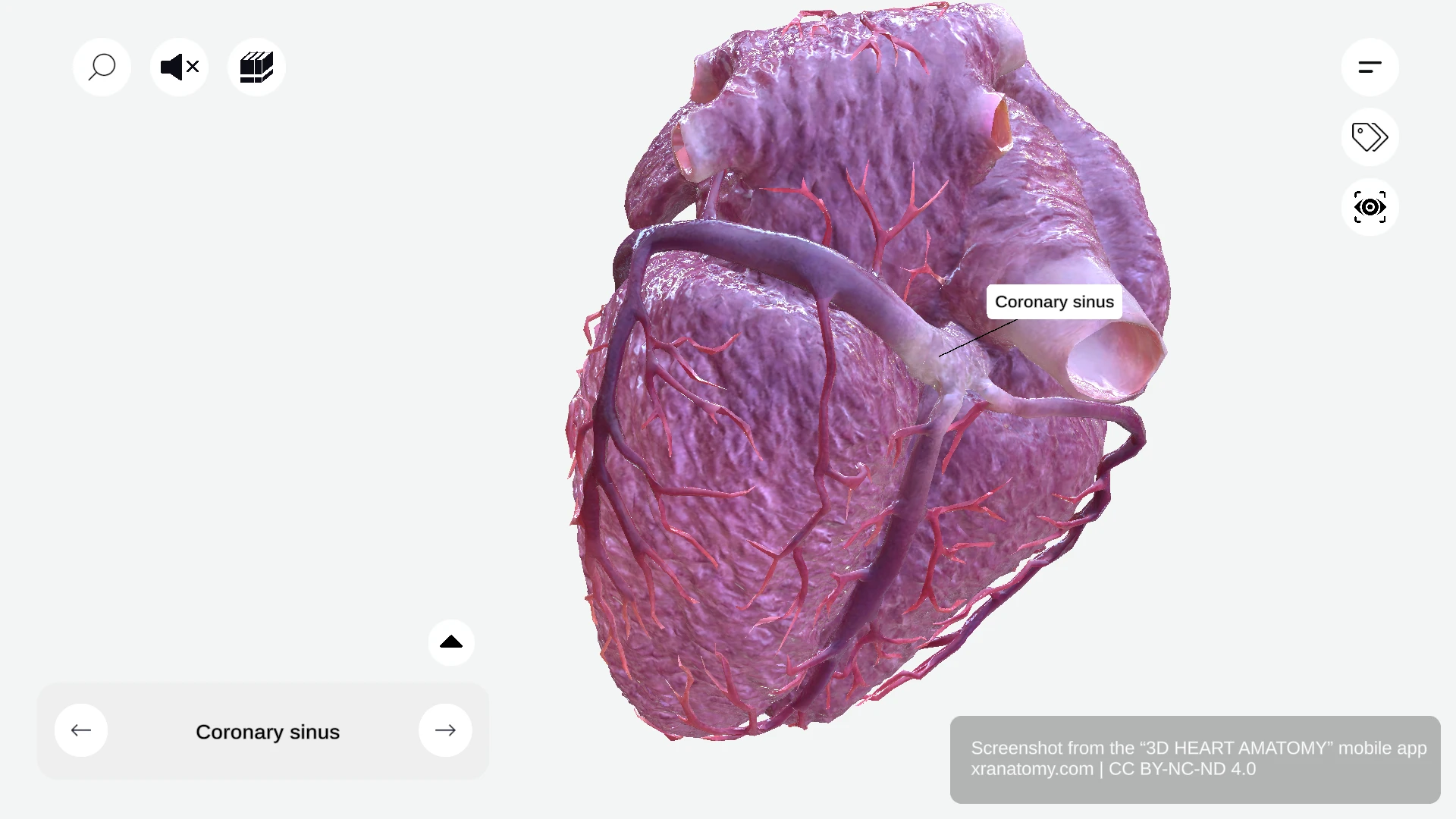
The coronary sinus is the primary venous structure of your heart. It receives the larger veins draining your myocardium and empties into your right atrium. It courses within the posterior atrioventricular groove (coronary sulcus) on the diaphragmatic surface, lying between your left atrium and left ventricle. Its tributaries include the great cardiac vein, middle cardiac vein, small cardiac vein, oblique vein of left atrium, and inferior vein of left ventricle.
Location
The coronary sinus courses within the posterior atrioventricular groove (coronary sulcus). It sits on the diaphragmatic surface of your heart, lying between your left atrium and left ventricle.
Tributaries
Five veins drain into the coronary sinus: the great cardiac vein, middle cardiac vein, small cardiac vein, oblique vein of left atrium, and the inferior vein of left ventricle.
GREAT CARDIAC VEIN
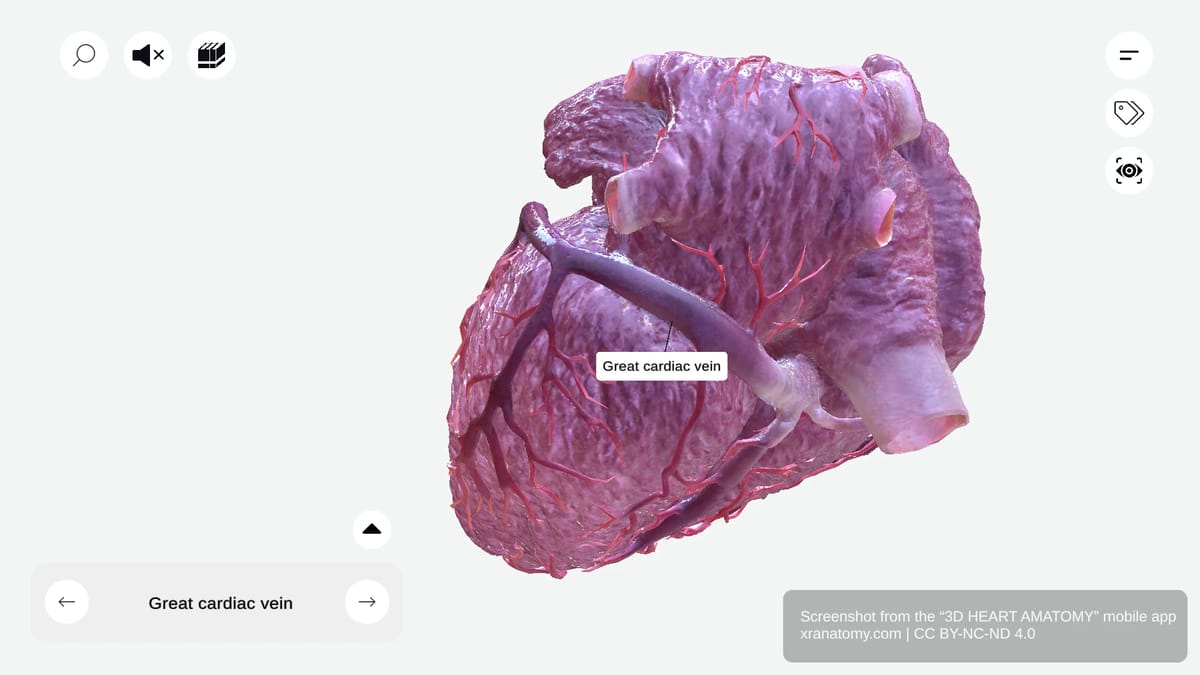
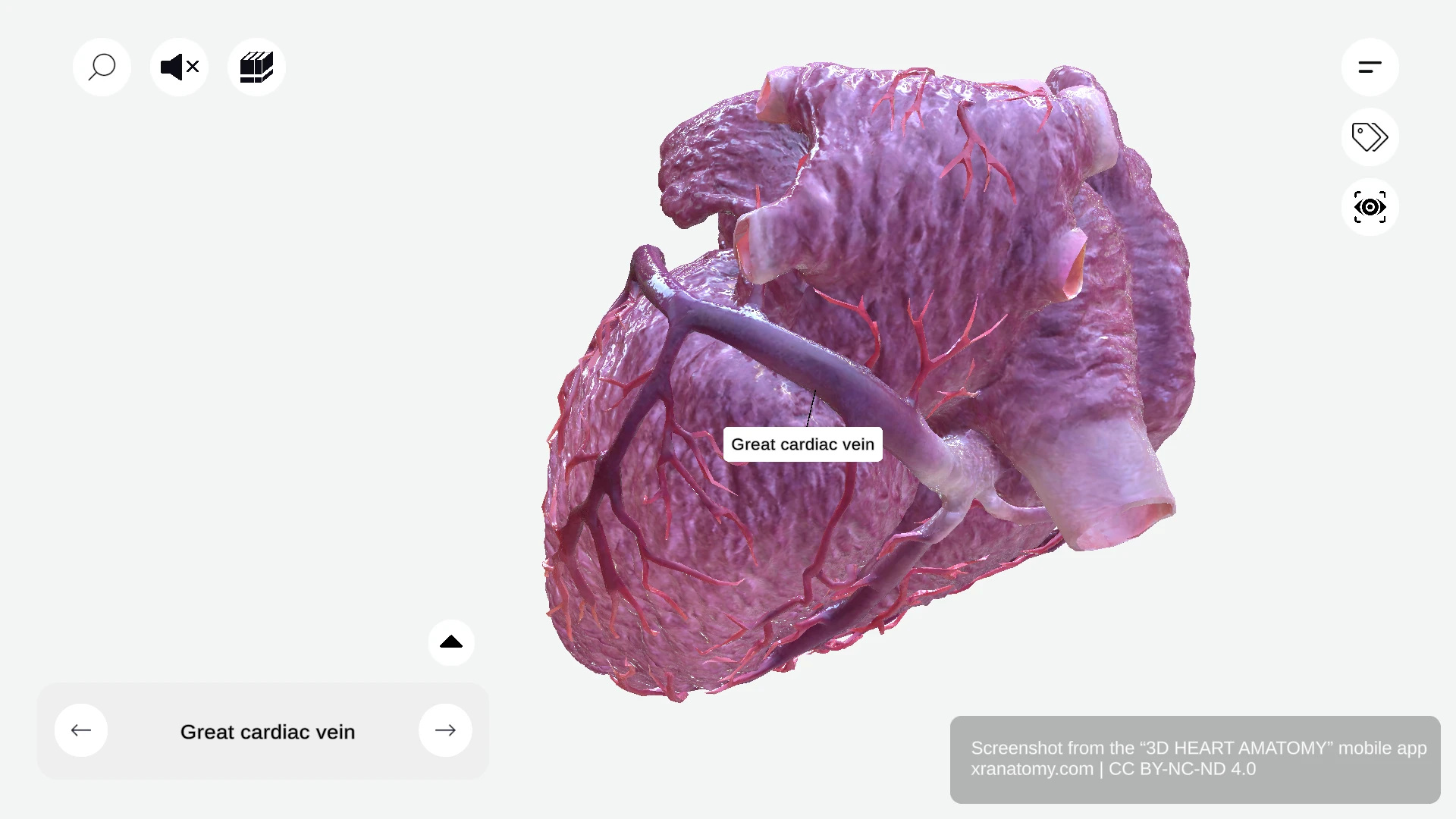
The great cardiac vein is a major cardiac vein that courses within the left atrioventricular groove. It runs alongside your left circumflex artery and drains a wide territory including the left ventricular apex, anterior interventricular septum, anterior portions of both ventricles, and part of your left atrium.
Drainage Territory
The great cardiac vein collects blood from your left ventricular apex, the anterior interventricular septum, the anterior portions of both ventricles, and part of your left atrium.
ANTERIOR INTERVENTRICULAR VEIN
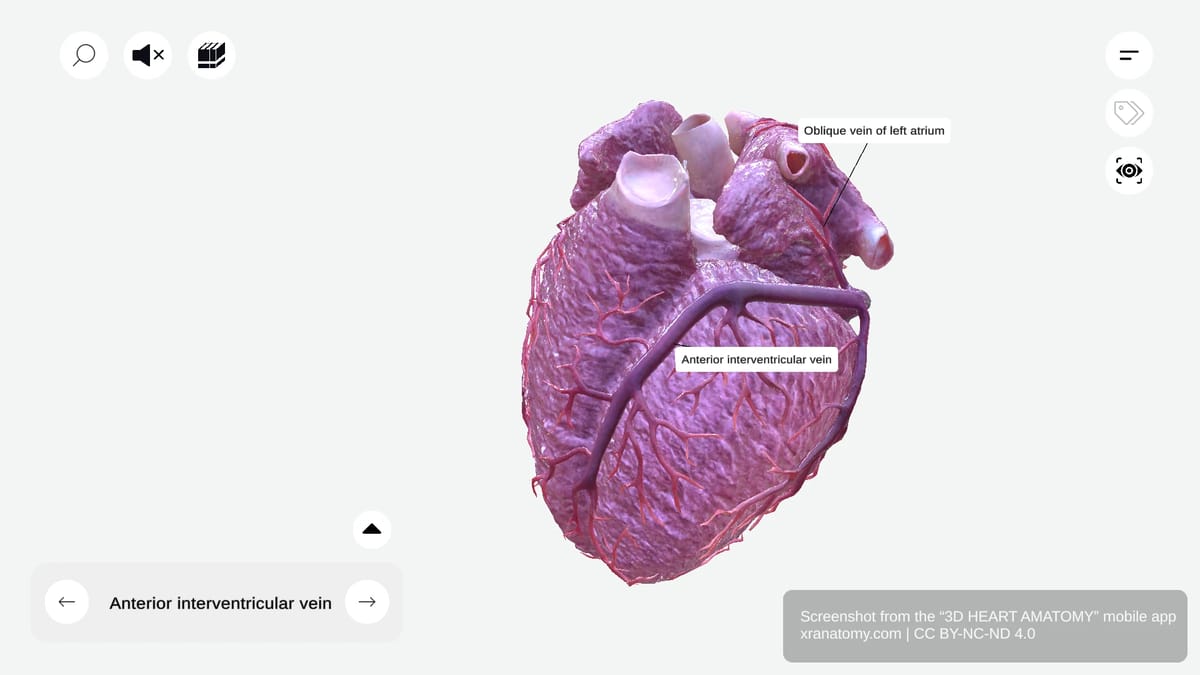
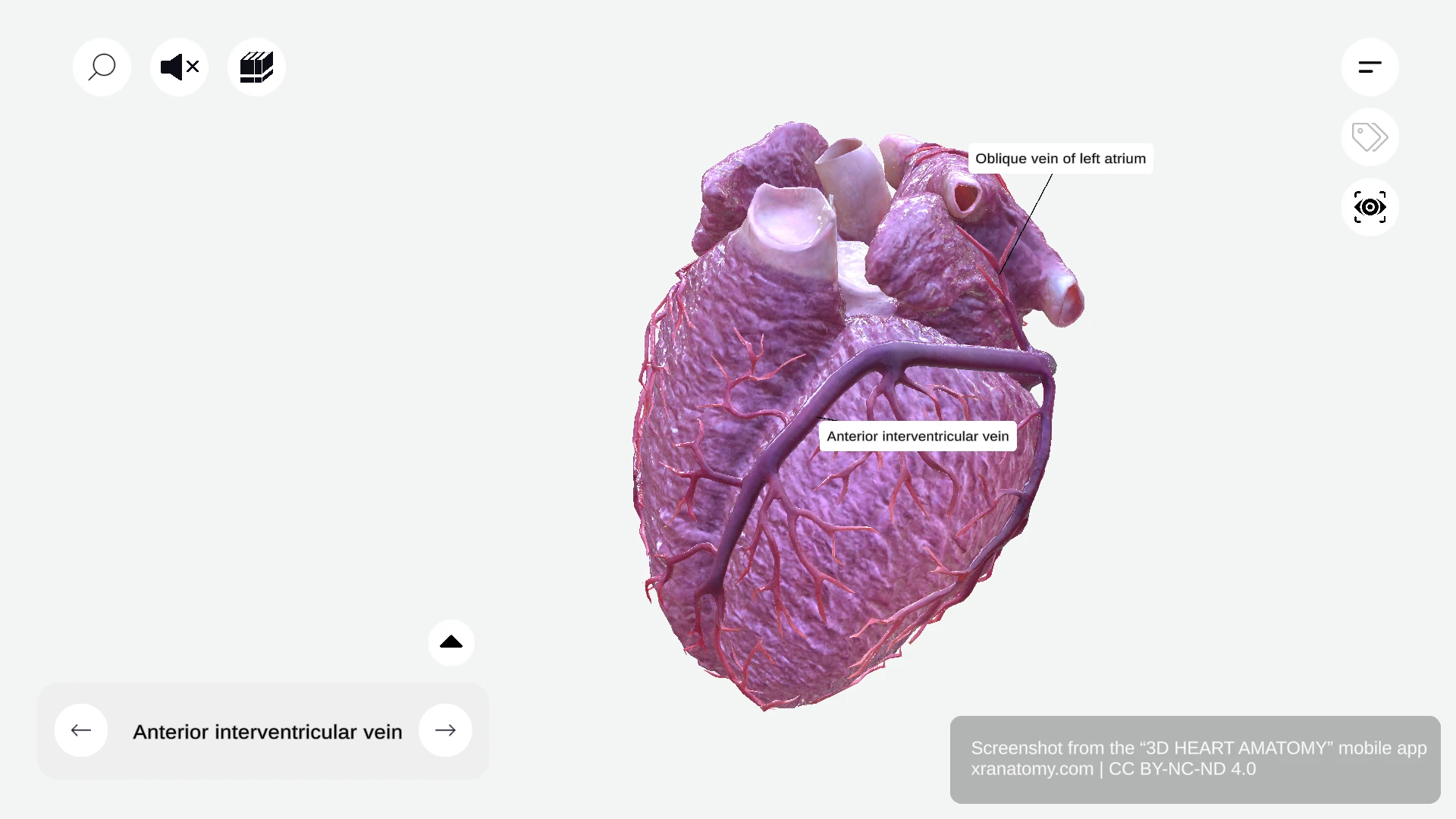
The anterior interventricular vein travels in the anterior interventricular groove and accompanies your left anterior descending artery. It drains the left ventricular apex, anterior interventricular septum, and anterior portions of both ventricles.
Drainage Territory
This vein collects blood from your left ventricular apex, the anterior interventricular septum, and the anterior portions of both ventricles.
LEFT MARGINAL VEIN
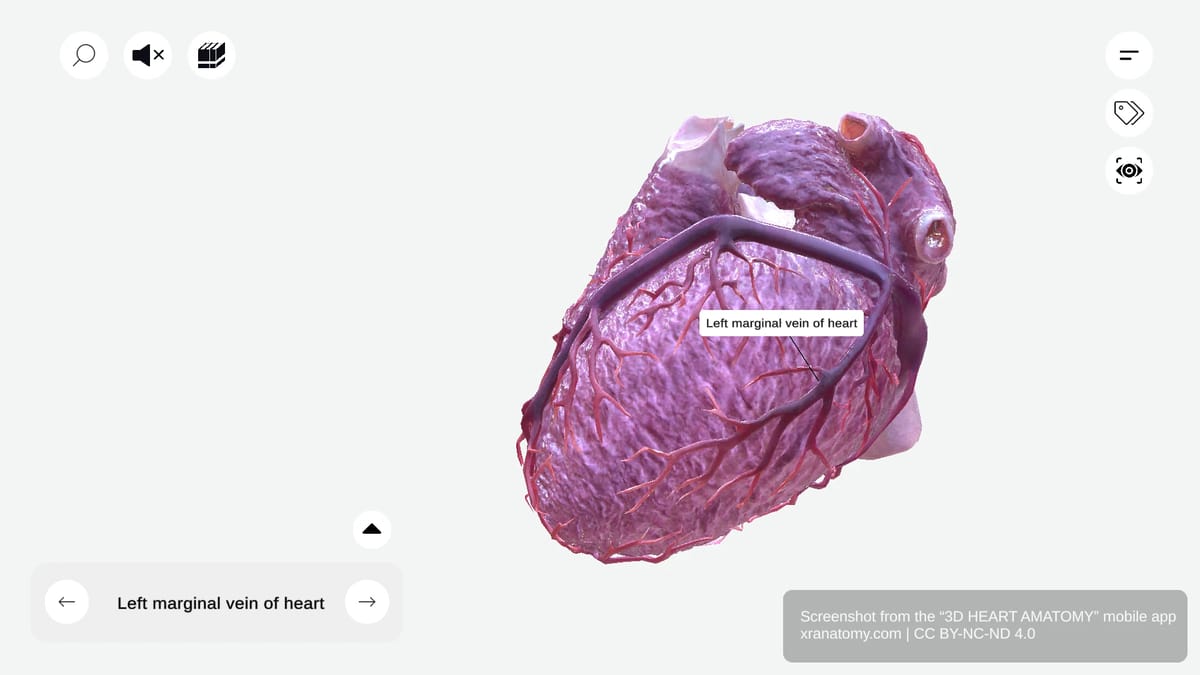
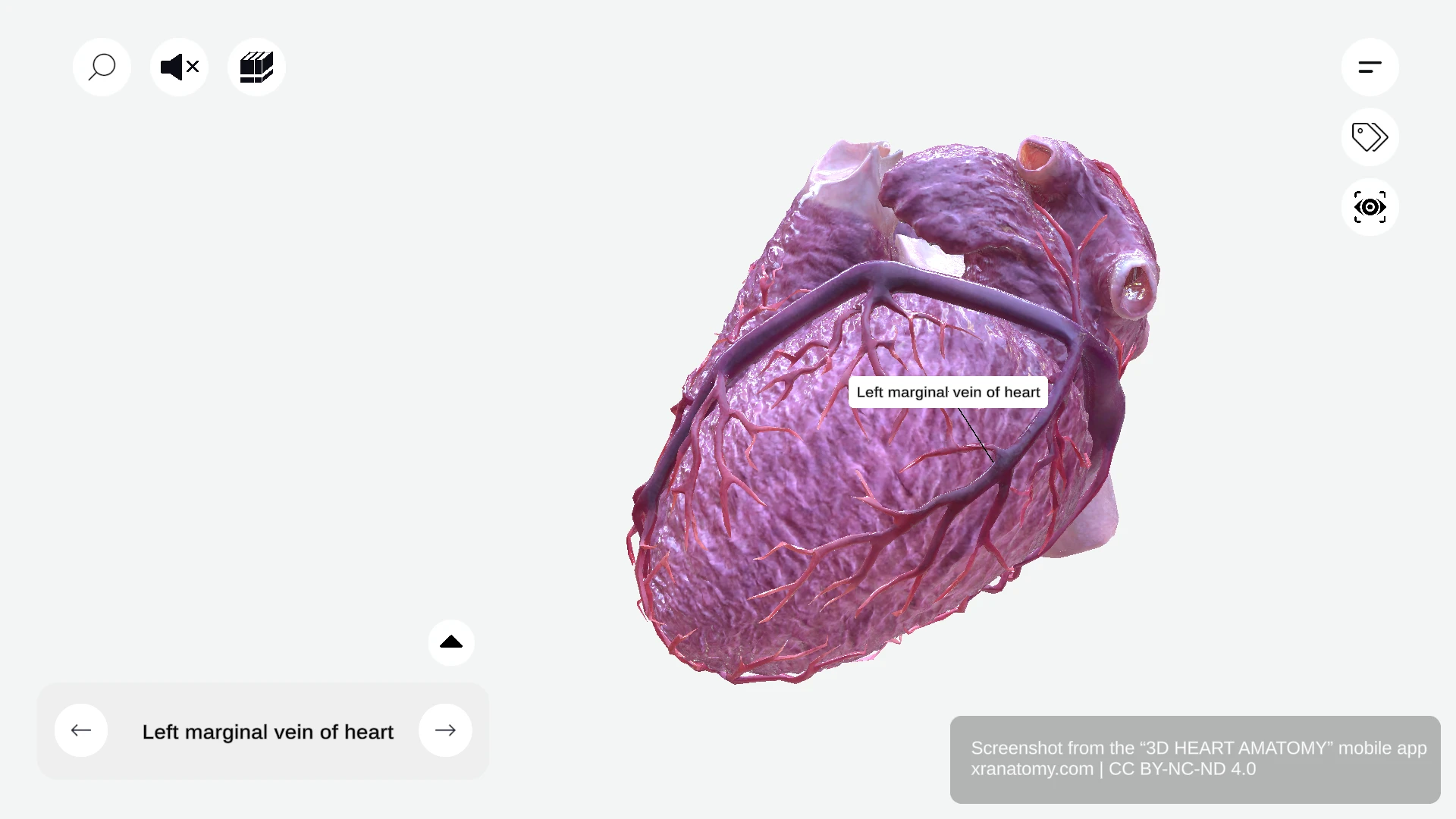
The left marginal vein drains the lateral wall of your left ventricle along with the posterior and inferior wall of your left ventricle.
INFERIOR VEIN OF LEFT VENTRICLE
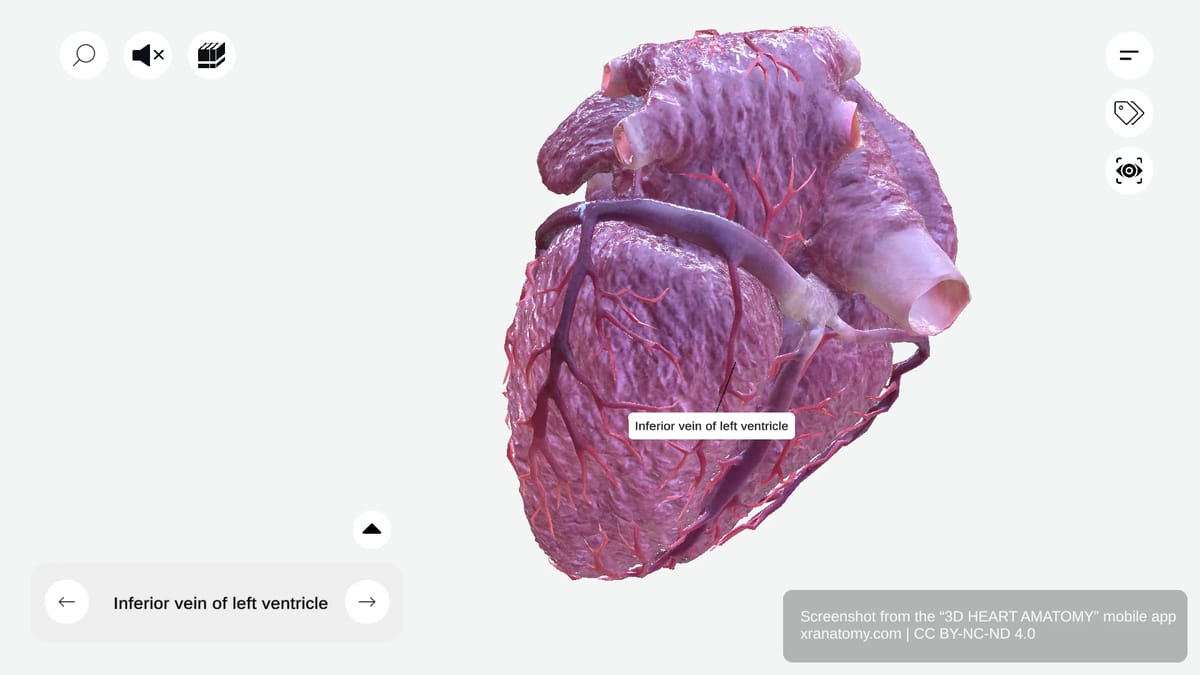
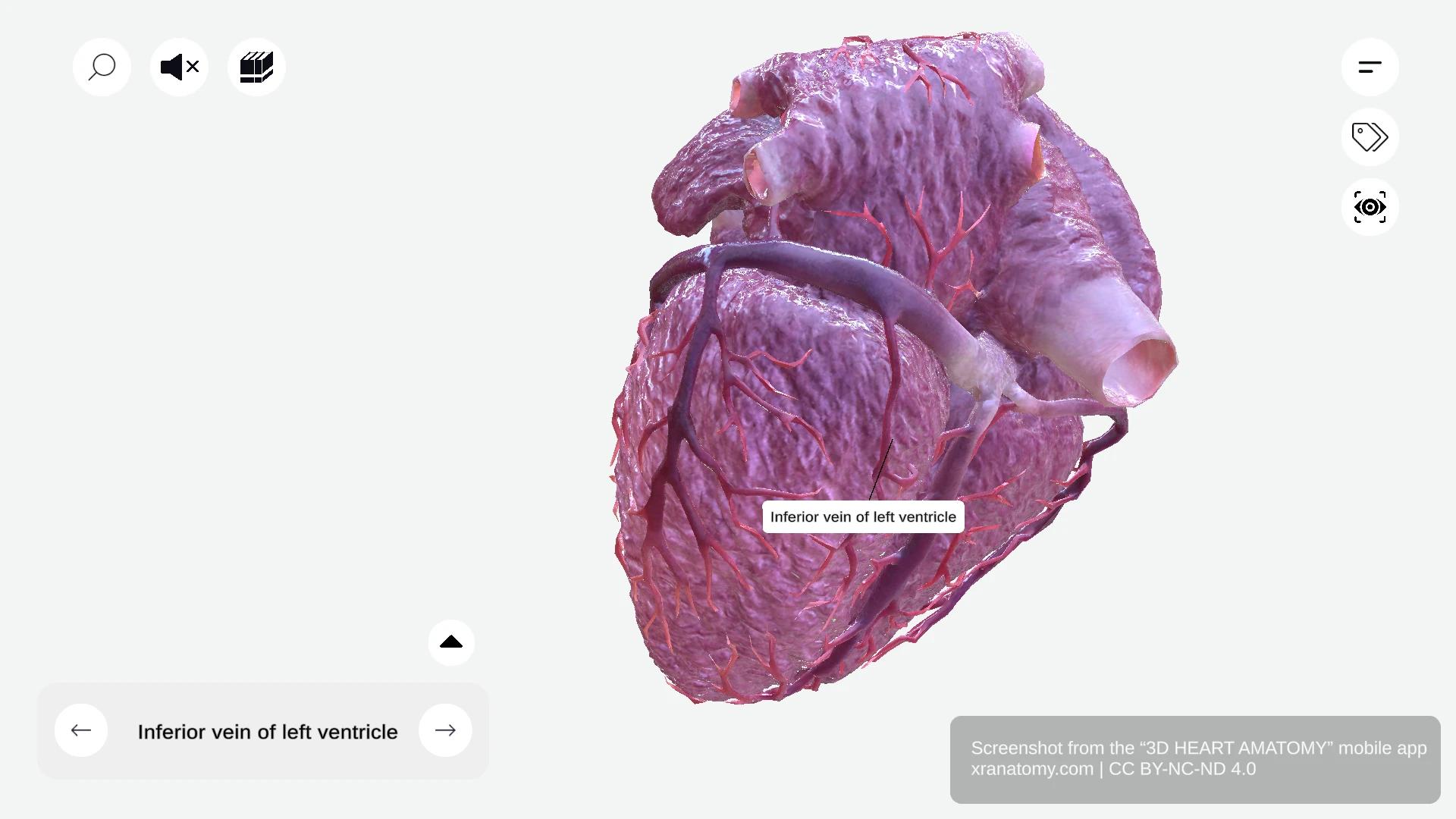
The inferior vein of left ventricle is a tributary that drains your inferior left ventricular wall. It usually joins the great cardiac vein, though it may drain directly into the coronary sinus.
OBLIQUE VEIN OF LEFT ATRIUM
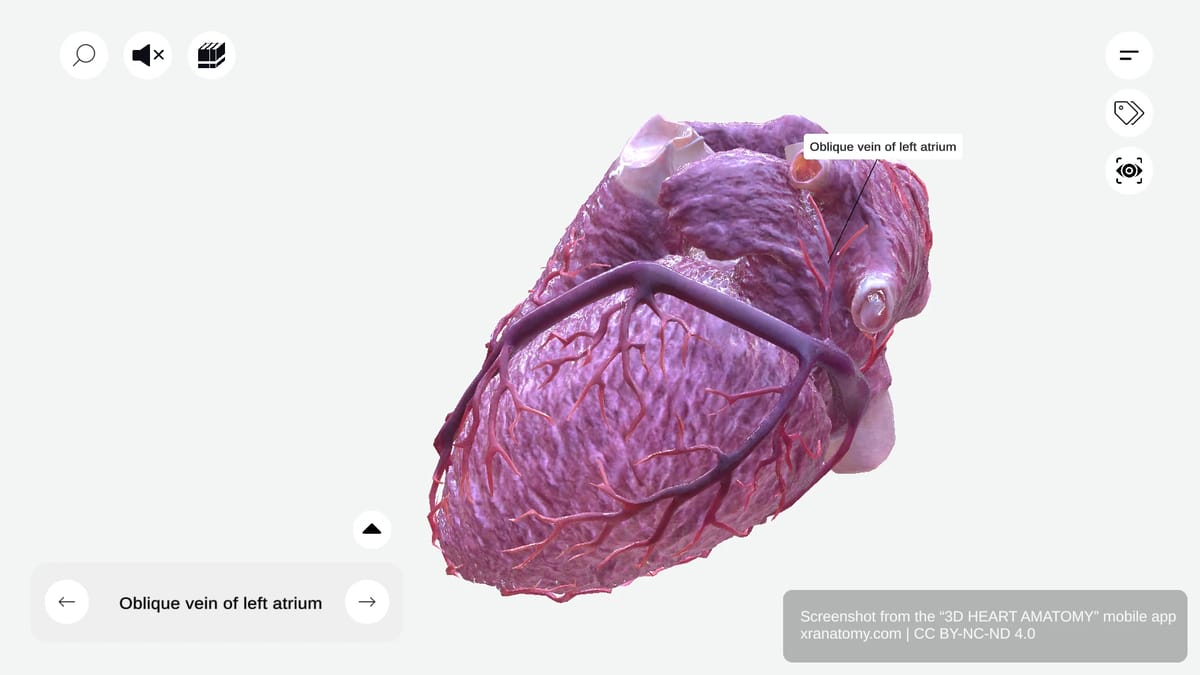
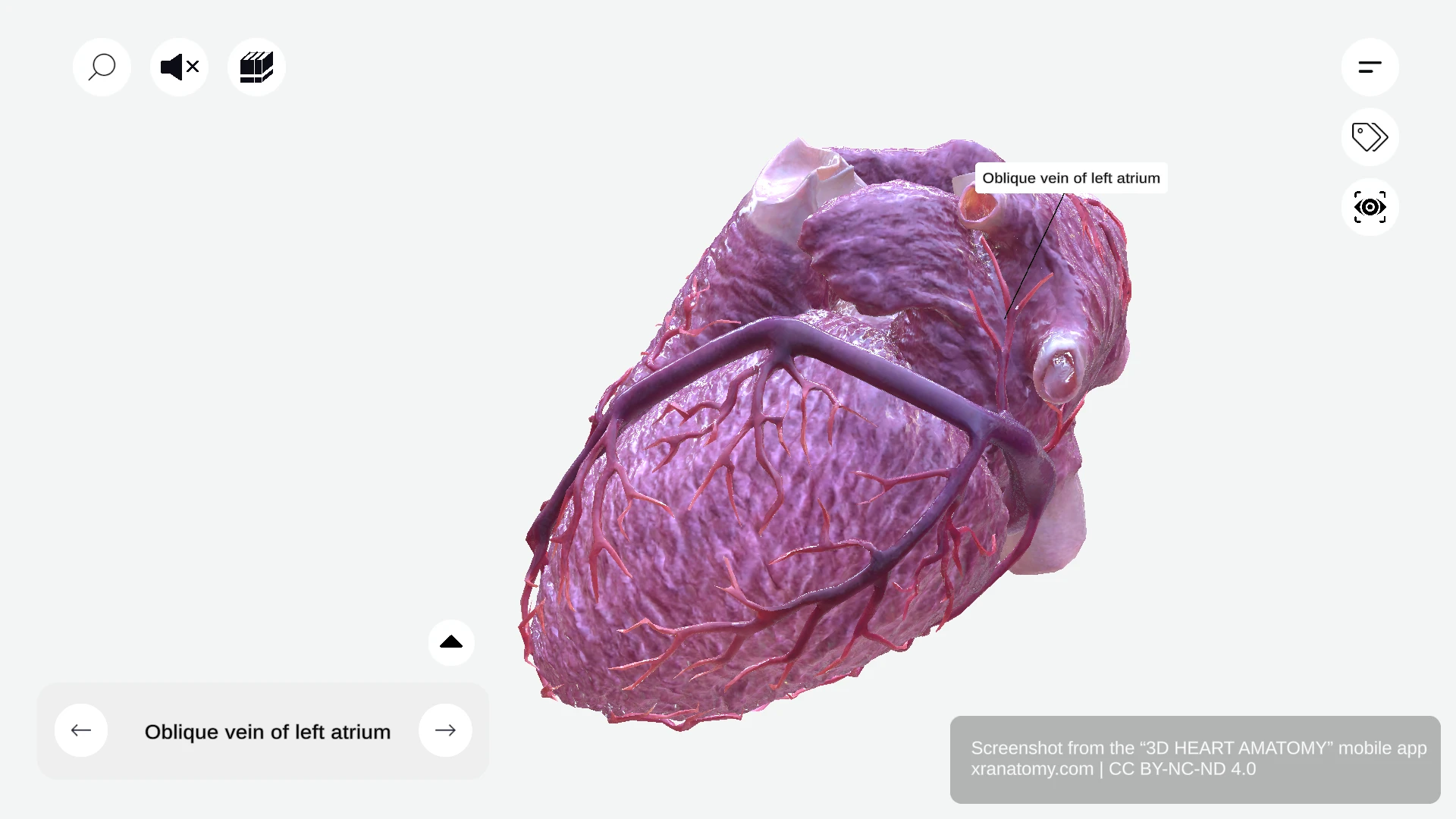
The oblique vein of left atrium is a small vessel on your left atrium, also known as the vein of Marshall. It collects blood from your inferior left atrial wall and drains into the coronary sinus.
MIDDLE CARDIAC VEIN
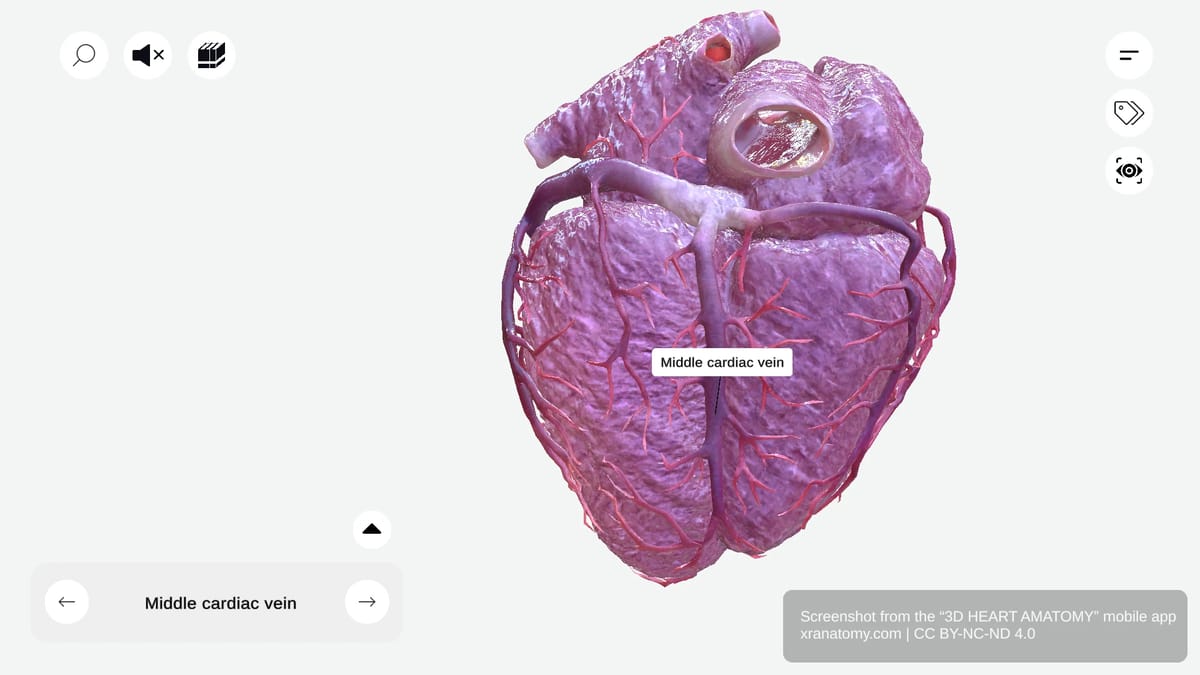
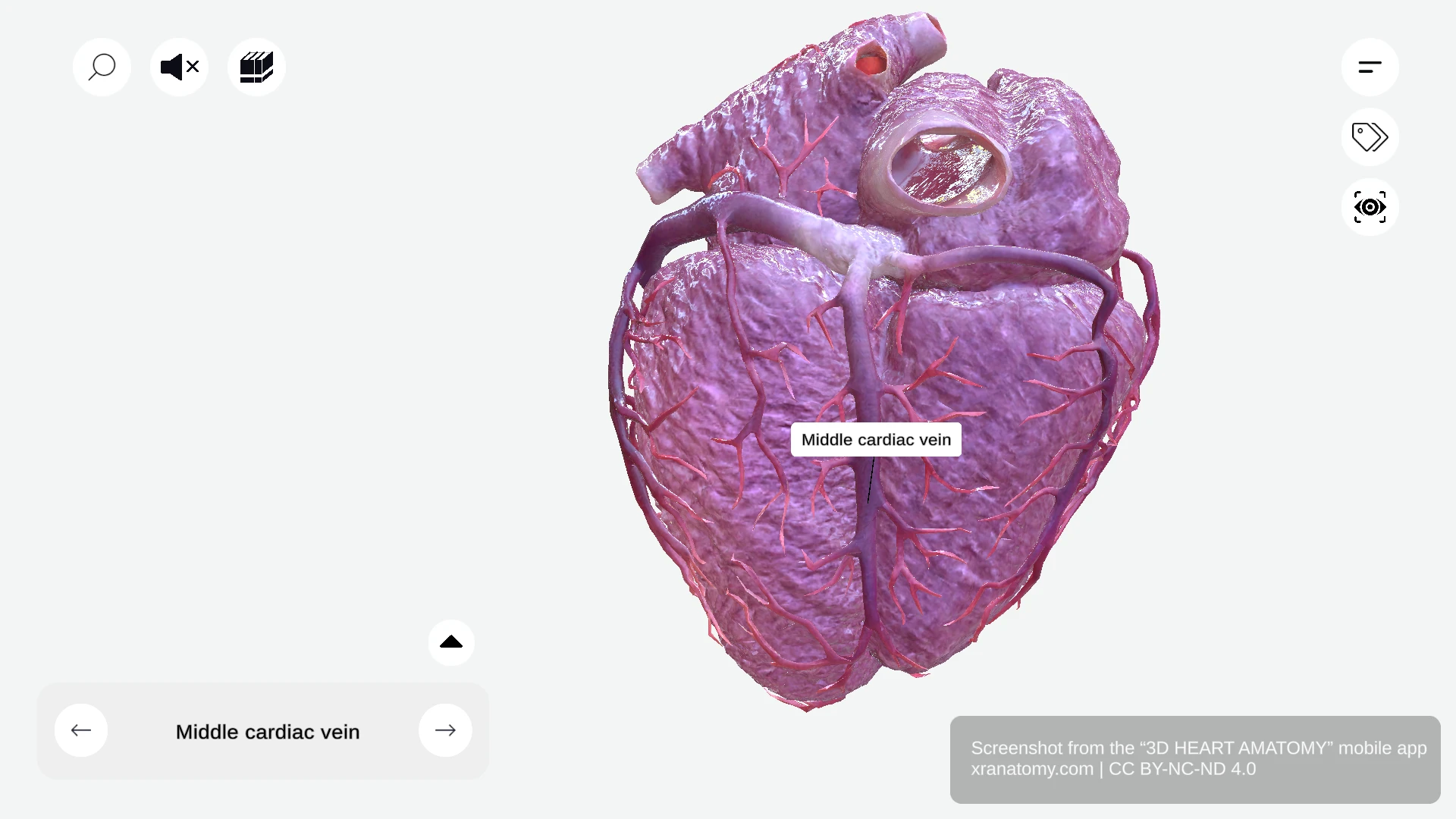
The middle cardiac vein travels in the posterior interventricular sulcus alongside your posterior interventricular artery. It drains into your coronary sinus.
SMALL CARDIAC VEIN
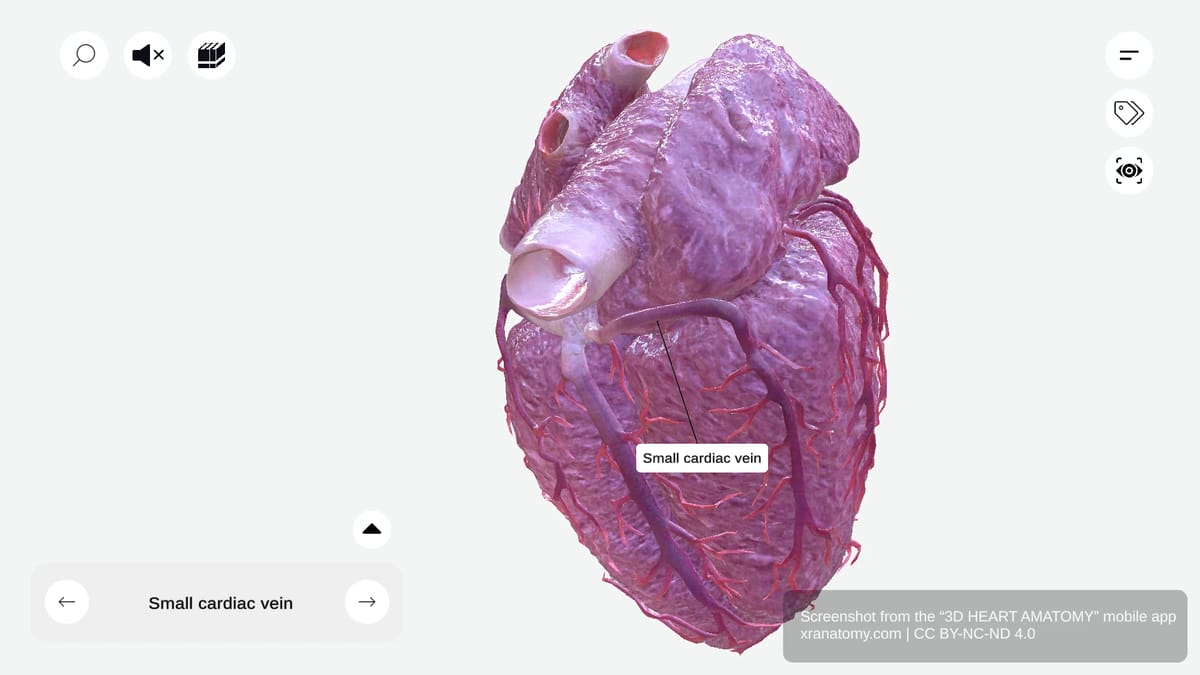
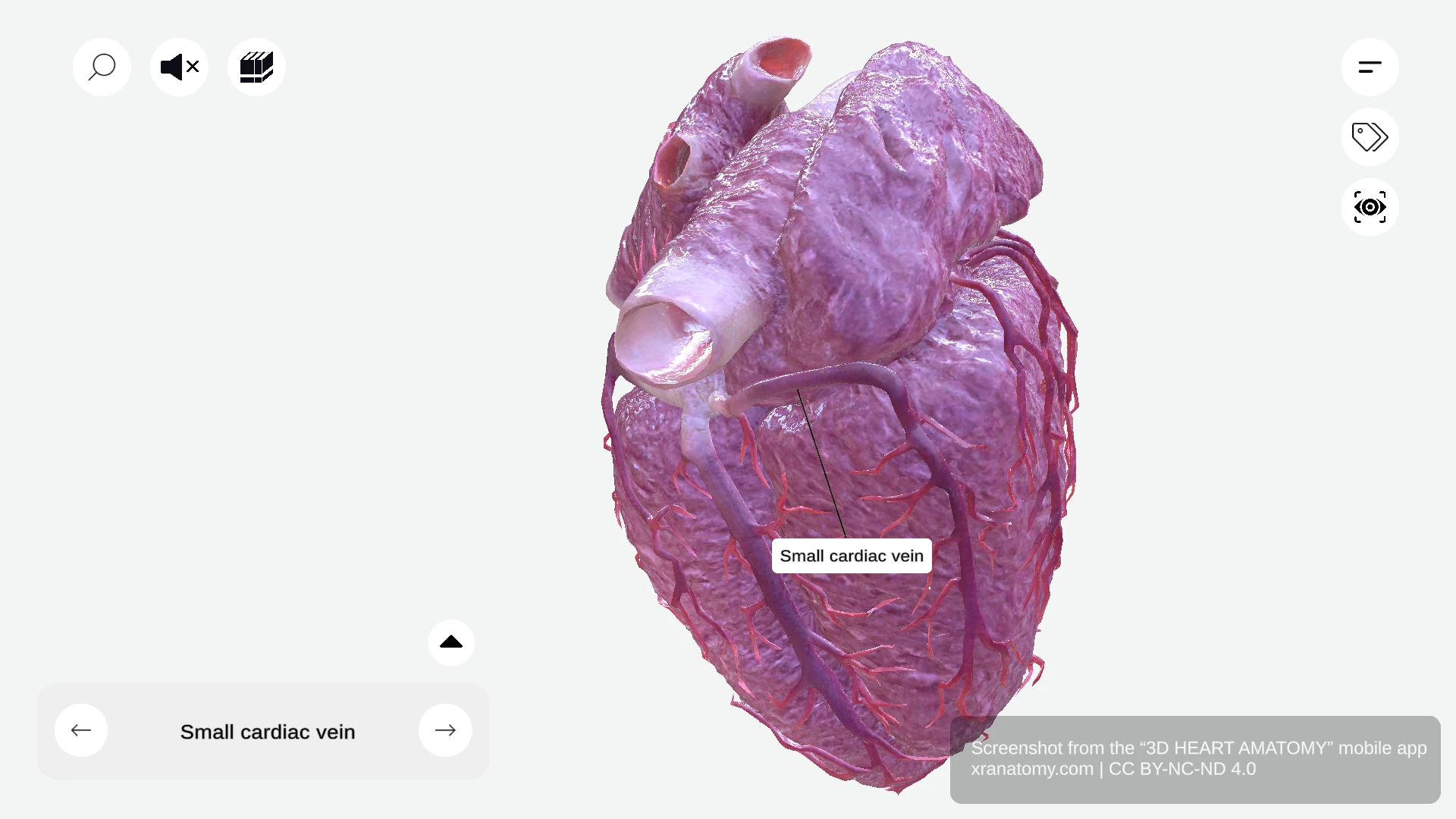
The small cardiac vein courses alongside your right coronary artery in the right atrioventricular groove. It typically drains into your coronary sinus.
Drainage Territory
The small cardiac vein drains the inferior wall of your right ventricle.
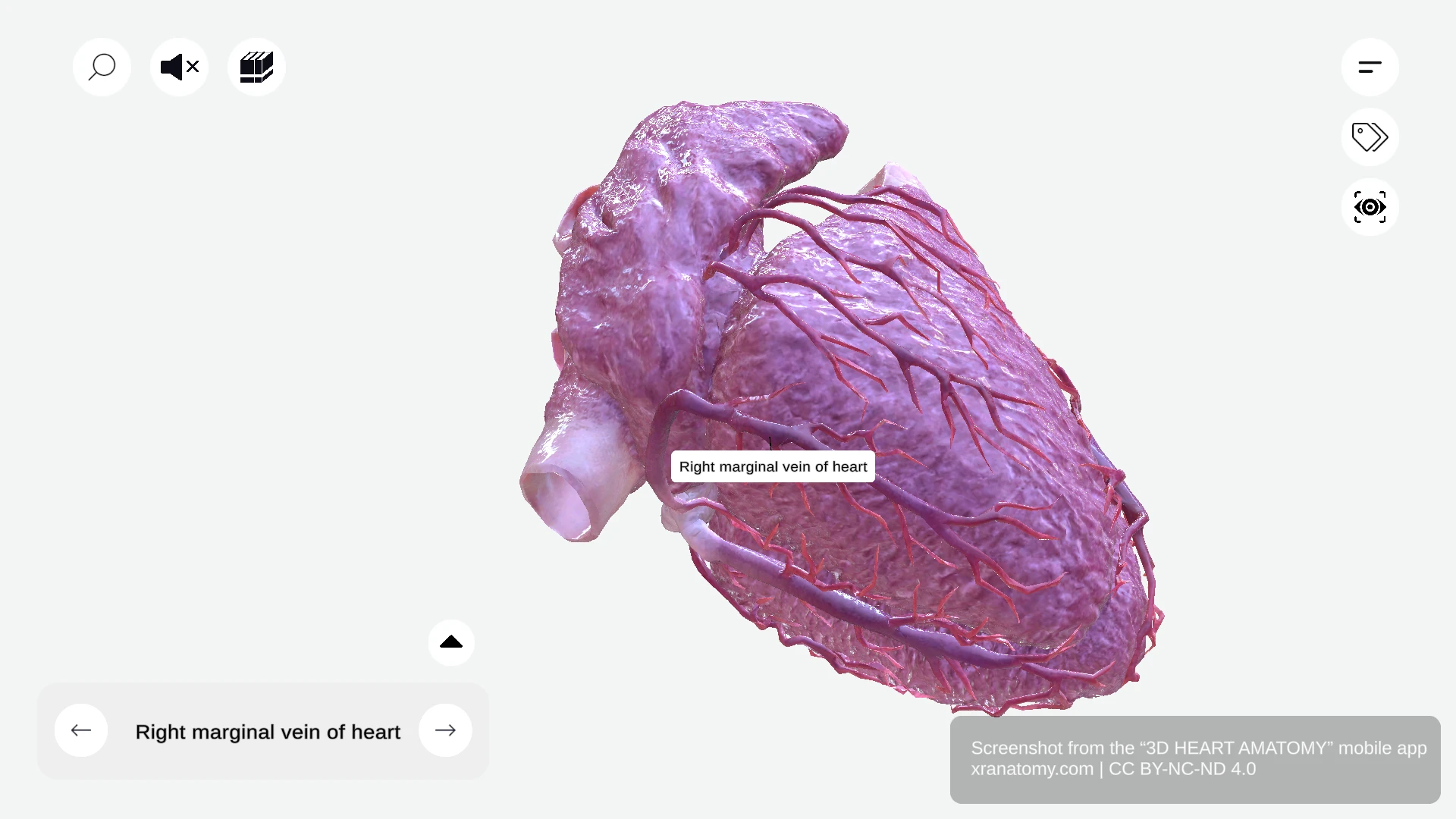
RIGHT MARGINAL VEIN
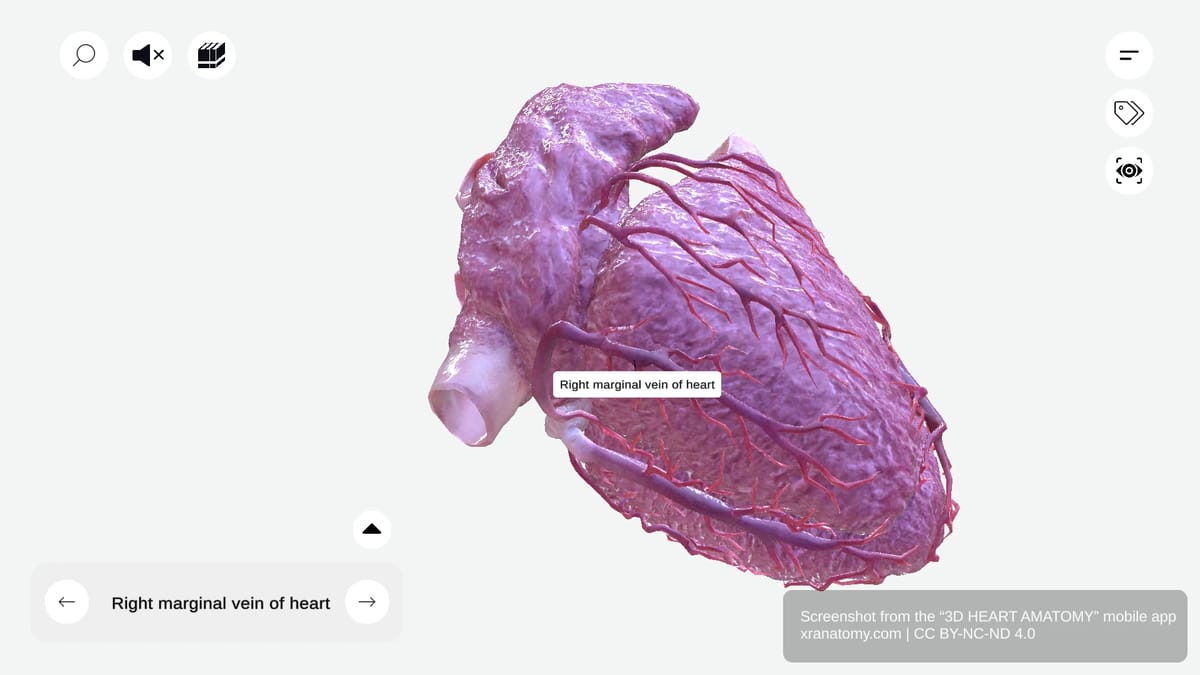
The right marginal vein courses alongside your right marginal artery and follows the lateral wall of your right ventricle.
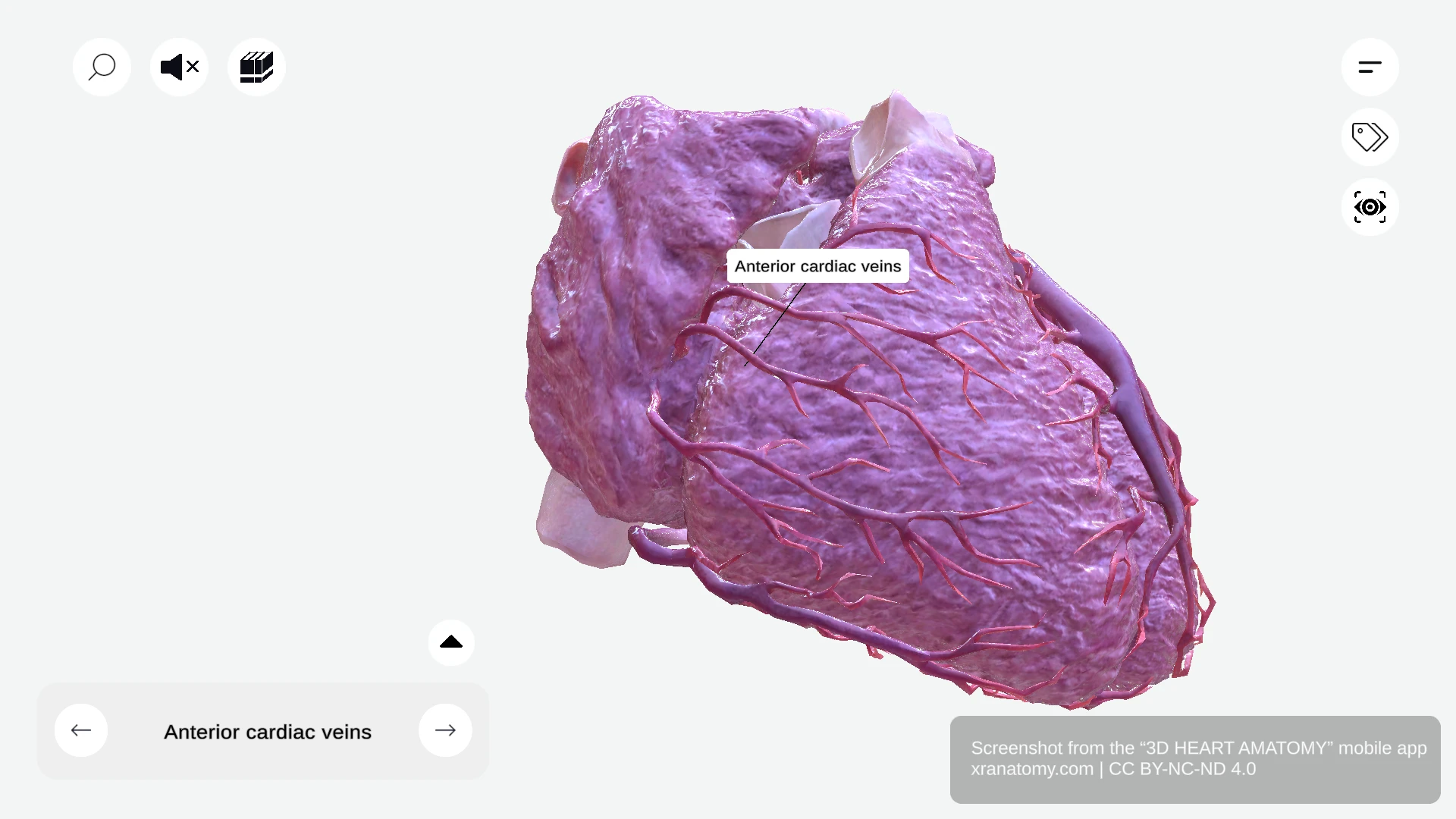
ANTERIOR CARDIAC VEINS
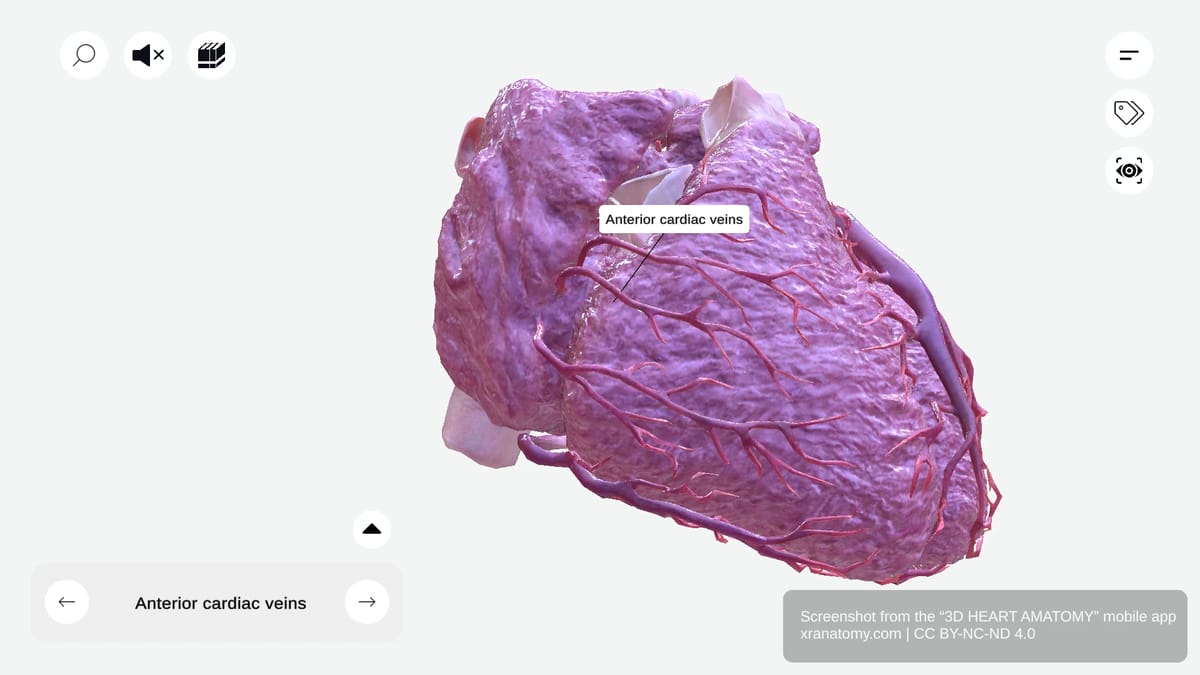
The anterior cardiac veins are a variable group of veins that drain a significant portion of your right ventricle. They empty directly into your right atrium, entering above the right atrioventricular groove. These veins do not drain through the coronary sinus.
CHECK YOUR UNDERSTANDING
1. What are the two drainage pathways the cardiac veins use to return blood to the right atrium?
Reveal Answer
Via the coronary sinus, and by direct drainage into the right atrium (used by the anterior cardiac veins).
2. Name the five tributaries of the coronary sinus.
Reveal Answer
The great cardiac vein, middle cardiac vein, small cardiac vein, oblique vein of left atrium, and inferior vein of left ventricle.
3. Which cardiac vein travels alongside the left anterior descending artery?
Reveal Answer
The anterior interventricular vein travels in the anterior interventricular groove alongside the left anterior descending artery.
WHAT'S NEXT
You have completed the heart anatomy series. To review, head back to Heart Surfaces and Borders and work through the pages again.
Review this page again in 3 days to reinforce what you have learned.
BIBLIOGRAPHY
1. Gray H, Lewis W. Angiology. In: Anatomy of the Human Body. 1918. p. 526–542.
2. Gosling JA, Harris PF, Humpherson JR, Whitmore I, Willan PLT. Human anatomy: color atlas and textbook. 6th ed. 2017. 45–58 p.
3. Anderson RH, Spicer DE, Hlavacek AM, Cook AC, Backer CL. (2013). Anatomy of the cardiac chambers. In Wilcox’s Surgical Anatomy of the Heart (4th ed., pp. 13–50). Cambridge University Press.
4. Fritsch H, Kuehnel W. Color Atlas of Human Anatomy. Vol. Volume 2, Color Atlas and Textbook of Human Anatomy. 2005. 10–42 p.
5. Moore K, Dalley A, Agur A. Clinically Oriented Anatomy. Vol. 7ed, Clinically Oriented Anatomy. 2014. 132–151 p.
6. Ho SYen. Anatomy for Cardiac Electrophysiologists: A Practical Handbook. Cardiotext Pub; 2012. 5–27 p.
7. Standring S, editor. Gray's Anatomy: The Anatomical Basis of Clinical Practice. 41st ed. London: Elsevier; 2016.
8. Moore KL, Agur AMR, Dalley AF. Essential Clinical Anatomy. 5th ed. Philadelphia: Wolters Kluwer; 2015.